Providenciales, the most developed of the forty or so islands and cays that make up the Turks and Caicos archipelago, stretches roughly 30 kilometres from Leeward in the northeast to Malcolm Roads in the southwest. It is home to around 75 per cent of the country's population, the sole international airport and, along its northern shore, what many regard as one of the finest beaches in the Caribbean. For travellers weighing up where to stay in Turks and Caicos, the choice comes down to a handful of distinct neighbourhoods, each with a markedly different character. Our curated collection of Providenciales villas covers the areas we return to most, and this guide explains why each one earns its place.
What strikes us every time we land at Howard Hamilton International Airport (PLS) is how quickly the pace shifts. The terminal is small, immigration is straightforward, and most villa rentals sit within a 15 to 25-minute drive. There is no motorway to contend with, no traffic-clogged ring road. Providenciales runs on island time from the moment you collect your hire car.
Why does Grace Bay dominate the conversation?
Grace Bay Beach runs for roughly five kilometres along the north coast of Providenciales, protected by a barrier reef that keeps the water impossibly calm and clear. It is the area most visitors picture when they think of Turks and Caicos, and for good reason: the sand is fine and chalk-white, the sea shifts between pale aquamarine and deep turquoise depending on the hour, and the beach never feels overcrowded despite its fame.
What kind of villas line Grace Bay?
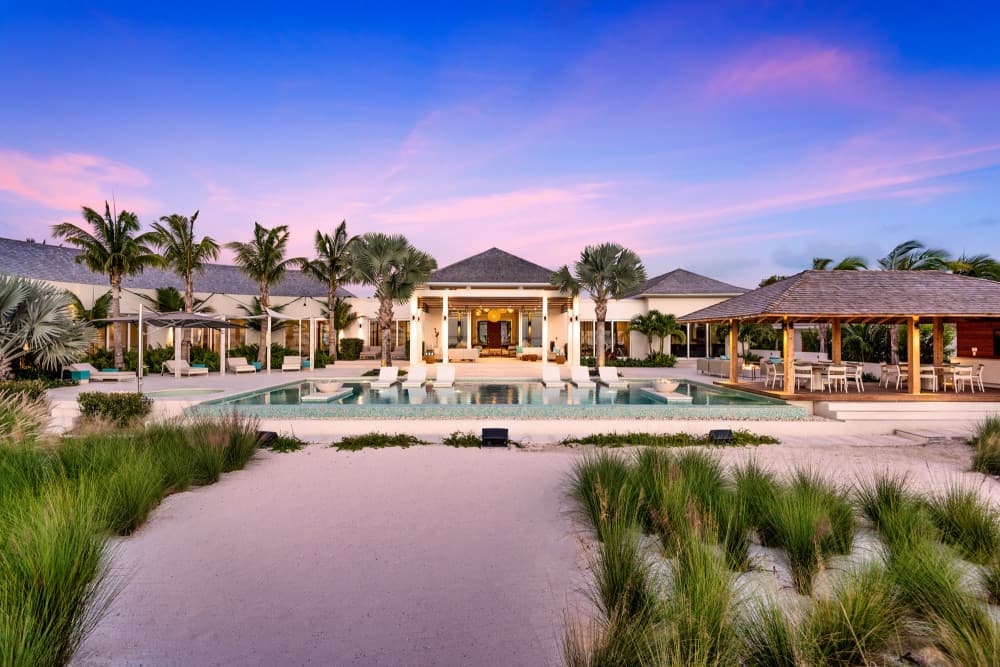
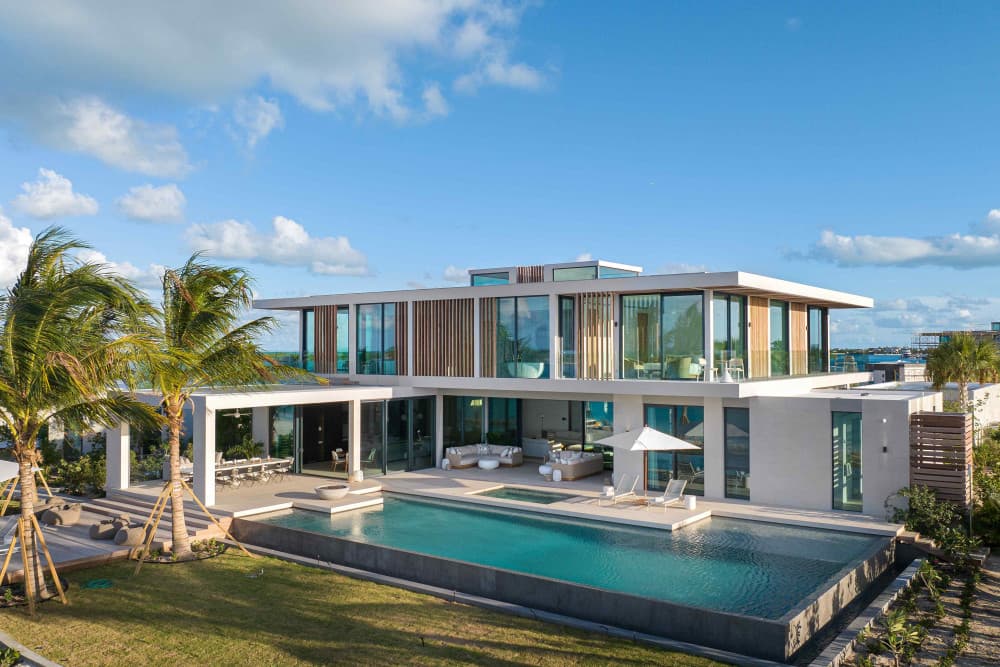
The beachfront along Grace Bay hosts a mix of resort-style condominium buildings and private villa compounds. Turks and Caicos villas in this stretch tend to sit within gated complexes, many with direct beach access, infinity pools and full concierge teams. Expect modern Caribbean architecture with clean lines, louvred shutters and outdoor living spaces designed around the prevailing trade winds.
Grace Bay suits first-time visitors, couples and families who want to walk from their front door to the sand without driving. The strip behind the beach, known locally as Grace Bay Road, holds the island's greatest concentration of restaurants, from casual beachside grills to more polished spots like Infinitely and Coco Bistro. Grocery shopping is easy too, with IGA and Graceway Gourmet both within a few minutes' drive.
The trade-off is proximity to others. Grace Bay is the most populated stretch of Providenciales, and during peak season (mid-December through April) the beach chairs multiply. If seclusion matters more than convenience, read on.
Is Leeward the best area for a private villa rental?
Leeward, at the northeastern tip of Providenciales, is where much of the island's high-end villa development has concentrated over the past decade. The neighbourhood sits just beyond Grace Bay, roughly a 20-minute drive from the airport, and feels noticeably quieter despite being only a few minutes from the main restaurant strip.
What makes Leeward different from Grace Bay?
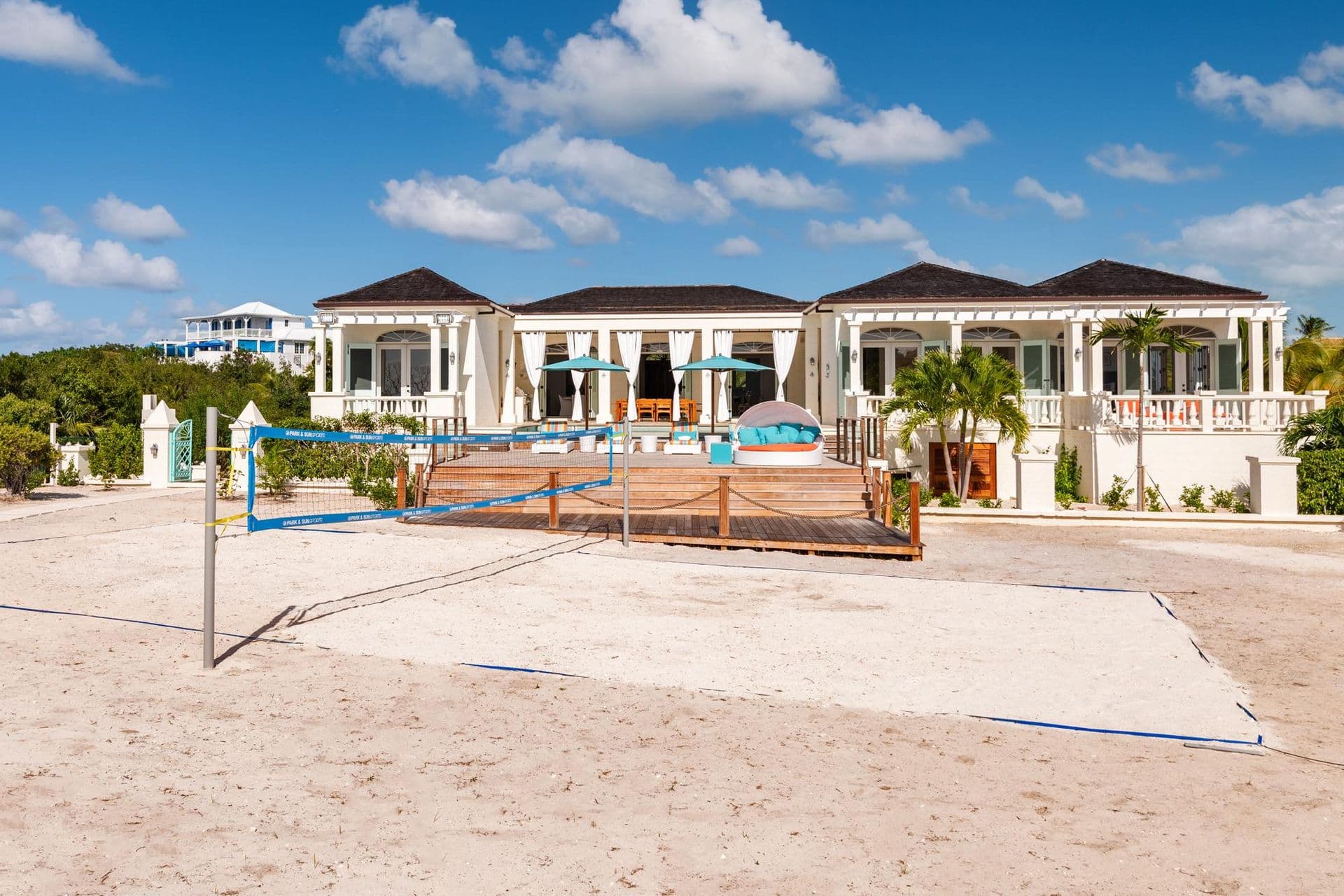
The key distinction is space. Providenciales villa rentals in Leeward tend to occupy larger plots, often with private docks, generous gardens and unobstructed views across the Leeward Channel towards Little Water Cay. Many properties here face the calmer, shallower waters on the channel side rather than the open ocean, which makes them particularly well suited to families with young children or groups who plan to spend time on the water.
Leeward is also the departure point for boat trips to the uninhabited cays, including the iguana sanctuary on Little Water Cay and the pristine sandbars at Half Moon Bay. If your idea of a perfect morning involves stepping off your dock onto a centre-console boat, this is the neighbourhood to prioritise.
The area has fewer restaurants within walking distance than Grace Bay, so a hire car is essential. That said, the drive to Coco Bistro or Grace's Cottage takes under ten minutes, and the relative isolation is precisely what draws repeat visitors back.
What about the Chalk Sound and Sapodilla Bay area?
Chalk Sound National Park, on the southwestern side of Providenciales, is one of the most visually arresting lagoons in the Caribbean. Its shallow, vivid turquoise water is dotted with hundreds of small rocky islets covered in low scrub, creating a landscape that looks almost unreal from the villas that line its southern shore.
Who should stay near Chalk Sound?
This area suits travellers who value scenery and tranquillity over beach access. The lagoon itself is not ideal for swimming in most spots (the bottom is rocky and silty in places), but kayaking and paddleboarding across its still surface is extraordinary. For beach days, Sapodilla Bay and Taylor Bay sit a short drive to the south, both with calm, knee-deep water that is perfect for small children.
Luxury villas in Turks and Caicos along the Chalk Sound shoreline tend to be standalone houses rather than compounds, often with private infinity pools that seem to merge with the lagoon beyond. The architecture leans towards contemporary Caribbean, with floor-to-ceiling glass designed to frame the water from every room.
Sapodilla Bay itself, a small crescent of soft sand roughly 15 minutes from the airport, has a gentle, neighbourly feel. There is a scattering of local restaurants nearby, including Las Brisas for reliable Caribbean fare, but this is not a dining destination. You come here for the quiet.
Should we consider the northwest coast: Blue Hills and beyond?
Blue Hills, along the northern coast west of Grace Bay, is the cultural heart of Providenciales. This is where many of the island's Belonger families (the term for native Turks Islanders) have lived for generations, and it retains a character quite different from the resort-oriented east.
What is the villa scene like in Blue Hills?
The villa scene here is smaller and more eclectic. Properties tend to be individually owned rather than part of managed complexes, and they range from modest beach cottages to architecturally distinctive homes set back from the shore. The stretch of beach through Blue Hills is less manicured than Grace Bay but often empty, and the snorkelling along the reef here is excellent, particularly around the area known as Bight Reef.
Blue Hills is also where you will find some of the island's most authentic food. Da Conch Shack, an open-air restaurant on the sand, serves cracked conch and rum punch in a setting that feels genuinely local. For travellers who have visited the Caribbean before and want something beyond the resort experience, this neighbourhood delivers.
The drive to the airport takes around 15 to 20 minutes. Access to Grace Bay restaurants is easy, typically under ten minutes by car. The area is less developed in terms of infrastructure, so a hire car is non-negotiable.
What about Long Bay Beach on the south coast?
Long Bay Beach, on Providenciales' southern shore, has emerged as the island's kiteboarding and watersports hub. The shallow, wind-exposed flats here create ideal conditions from November through to July, and the beach stretches for several kilometres with very few people on it outside the kite schools.
Is Long Bay suited to non-kitesurfers too?
Absolutely. The beach itself is beautiful, the water is warm and shallow for hundreds of metres out, and the villas along this stretch tend to be more contemporary in design, with many built in the last five to ten years. Long Bay appeals to groups who want generous outdoor space, privacy and a sense of being slightly off the beaten path without sacrificing quality.
Several of the more ambitious villa developments on the island have taken shape here, with properties featuring rooftop terraces, private gyms and chef's kitchens. The trade-off is that swimming conditions can be less consistent than at Grace Bay: the water is shallower and, depending on wind direction, can accumulate seagrass. Most villa guests here spend mornings on the south shore and drive to Grace Bay or Sapodilla Bay for afternoon swims.
Long Bay sits roughly 20 to 25 minutes from the airport. The Leeward Highway connects it to the rest of the island, and a handful of casual dining spots have opened nearby in recent years, though the area remains quieter than the north coast.
When is the best time to visit Providenciales?
The dry season, from November through May, brings the most reliable weather: warm days in the high 20s to low 30s (Celsius), light trade winds and very little rain. This is also peak season, with the highest villa rates and the busiest beaches, particularly from mid-December through Easter.
We find the sweet spots to be late November to mid-December and late April to May. During these windows, the weather remains excellent, villa availability improves and rates can drop by 20 to 30 per cent compared to the Christmas and New Year peak. The water temperature hovers around 26 to 28°C year-round, so even the "cooler" months feel warm by any standard.
Hurricane season runs officially from June through November, with the highest risk between August and October. Providenciales sits at the southern edge of the main hurricane belt and is struck less frequently than islands further north, but travel insurance and flexible booking terms are essential during these months.
For those who appreciate the rhythm of seasonal travel, our guide to timing a villa stay on the Amalfi Coast covers a similar approach to booking around the calendar. And if you enjoy comparing Caribbean and Mediterranean options, the Turks and Caicos destination page gives a broader overview.
How does Providenciales compare to other villa destinations?
Providenciales occupies a particular niche in the luxury villa landscape. It combines Caribbean warmth and ease with a level of infrastructure and safety that many competing islands cannot match. The beach quality is genuinely exceptional, the diving and snorkelling rank among the best in the Atlantic, and the villa stock has matured considerably over the past decade.
Travellers who split their year between the Caribbean and the Mediterranean often draw comparisons with the Greek Cyclades or Ibiza for the quality of light and the emphasis on outdoor living. The difference, of course, is climate: Providenciales delivers warm water and sunshine when much of Europe is still in winter coat season.
For those exploring the broader Caribbean, the Dominican Republic's coast provides another reference point, though the experience is quite different in terms of scale and character.
Frequently asked questions
Where should first-time visitors to Turks and Caicos stay?
Grace Bay is the most straightforward choice for a first visit. The beach is within walking distance of most villas and condominiums, restaurants and shops are close at hand, and the area gives an immediate sense of what makes Providenciales special. First-timers who prefer more privacy should look at Leeward, which is only minutes away but feels noticeably more secluded.
Do we need a hire car on Providenciales?
A hire car makes a significant difference to your stay. While Grace Bay is walkable for beach and dining, exploring Chalk Sound, Sapodilla Bay, Long Bay and Blue Hills requires wheels. Taxis exist but are expensive for regular use, and there is no public transport to speak of. Most villa rental companies can arrange a vehicle as part of the booking process, and we recommend reserving well ahead during peak season.
How far is the airport from Grace Bay?
Howard Hamilton International Airport (PLS) sits roughly 10 to 15 minutes by car from the heart of Grace Bay, depending on traffic. Leeward is around 20 minutes away, and Chalk Sound or Sapodilla Bay approximately 15 minutes. These short transfer times are one of the practical advantages Providenciales holds over larger Caribbean islands.
What is the typical price range for a luxury villa in Providenciales?
Rates vary widely depending on location, size and season. A well-appointed three-bedroom villa on Grace Bay or in Leeward typically starts from around $1,500 to $3,000 per night during peak season, with larger beachfront properties reaching $5,000 or more. Shoulder-season rates (May, June, November) can be 20 to 40 per cent lower. Villas in Chalk Sound and Long Bay sometimes come in below Grace Bay equivalents for comparable quality, reflecting the slightly less central position.
Is Providenciales suitable for families with young children?
Providenciales is one of the most family-friendly islands in the Caribbean. The calm, shallow waters at Grace Bay, Taylor Bay and Sapodilla Bay are ideal for small children, and many villas come equipped with cots, high chairs and pool fencing on request. The island feels safe, the medical facilities are adequate for routine needs, and the short airport transfer means minimal travel stress on arrival.
Can we visit other islands from Providenciales?
Several of the surrounding cays are accessible by boat from Providenciales. Half Moon Bay, a spectacular sandbar between two small cays, takes around 30 minutes by boat from Leeward Marina. Little Water Cay, home to the Turks and Caicos rock iguana, is a short hop from the same departure point. For the more adventurous, day trips to North Caicos and Middle Caicos are possible by ferry from Walkin Marina, giving a glimpse of the quieter, less developed side of the archipelago.