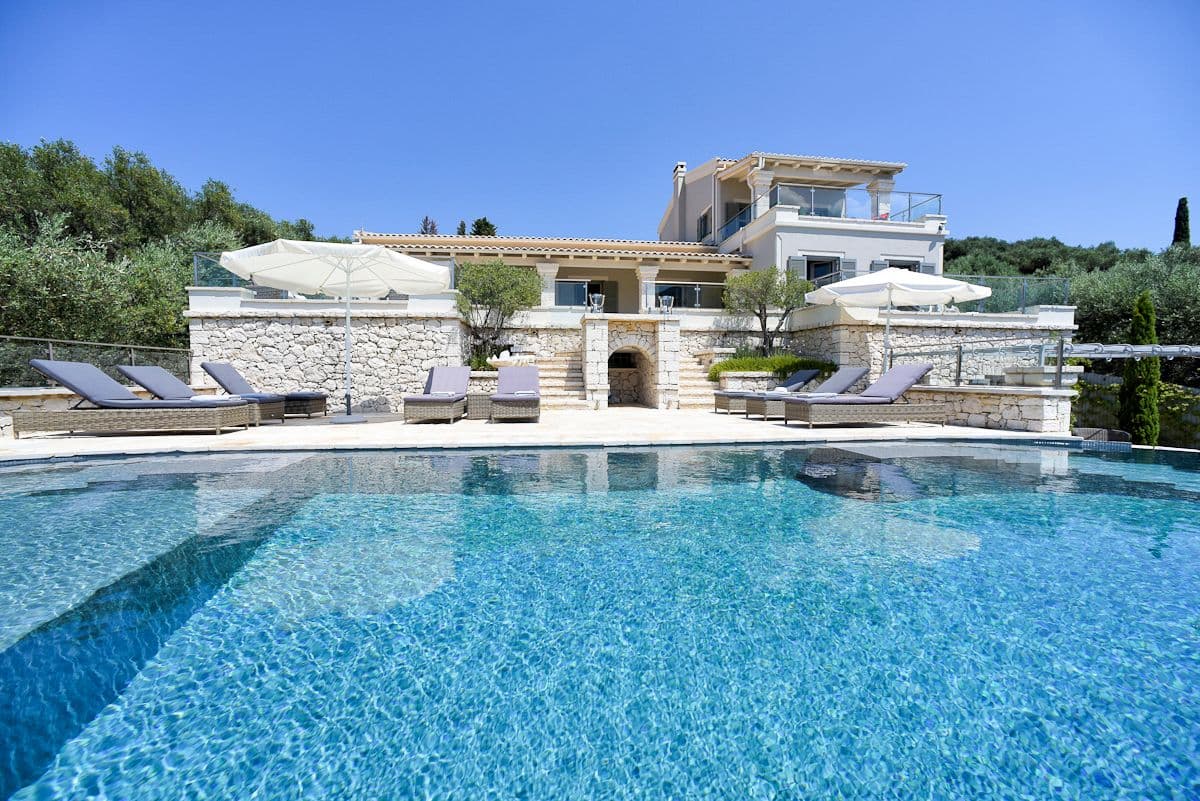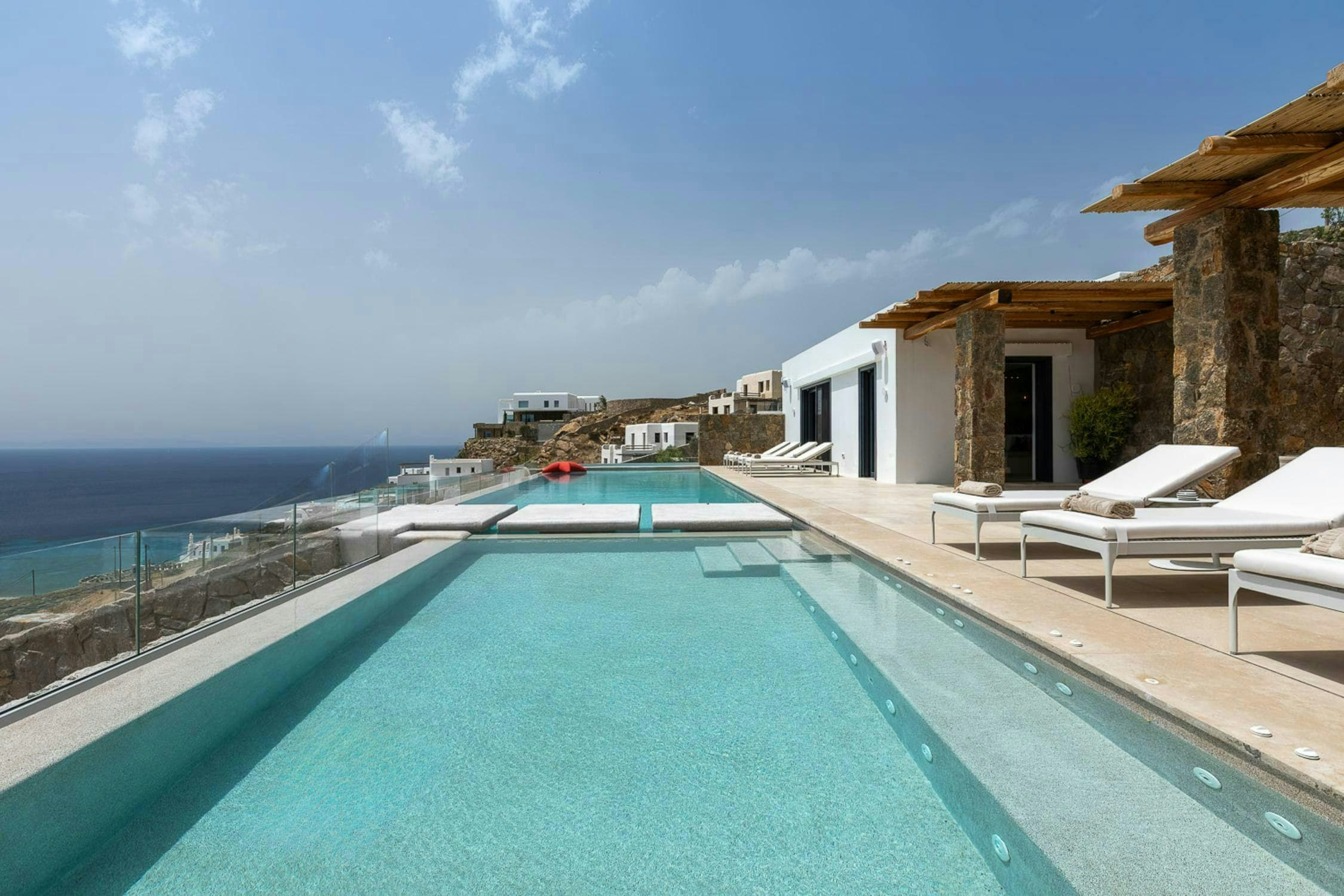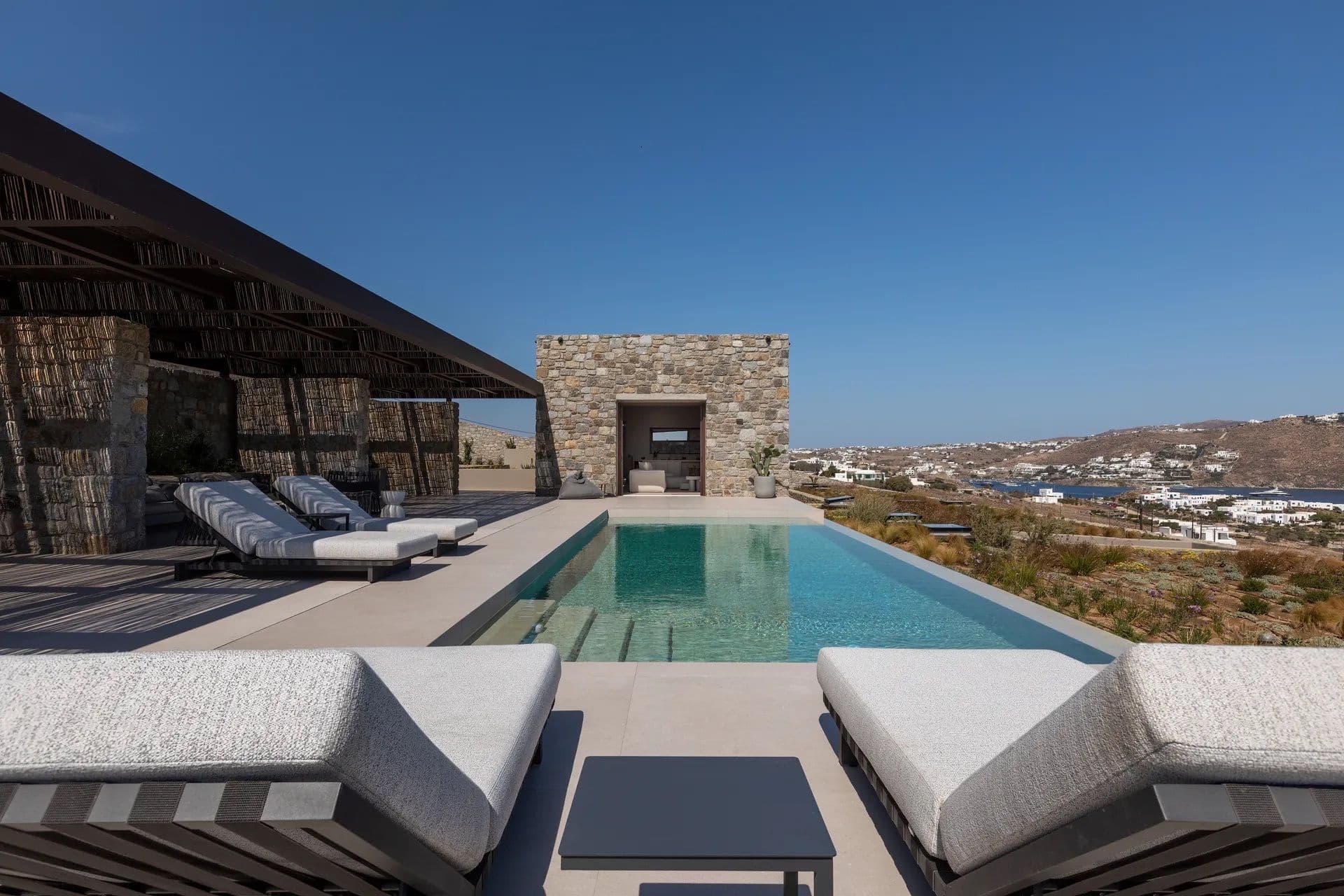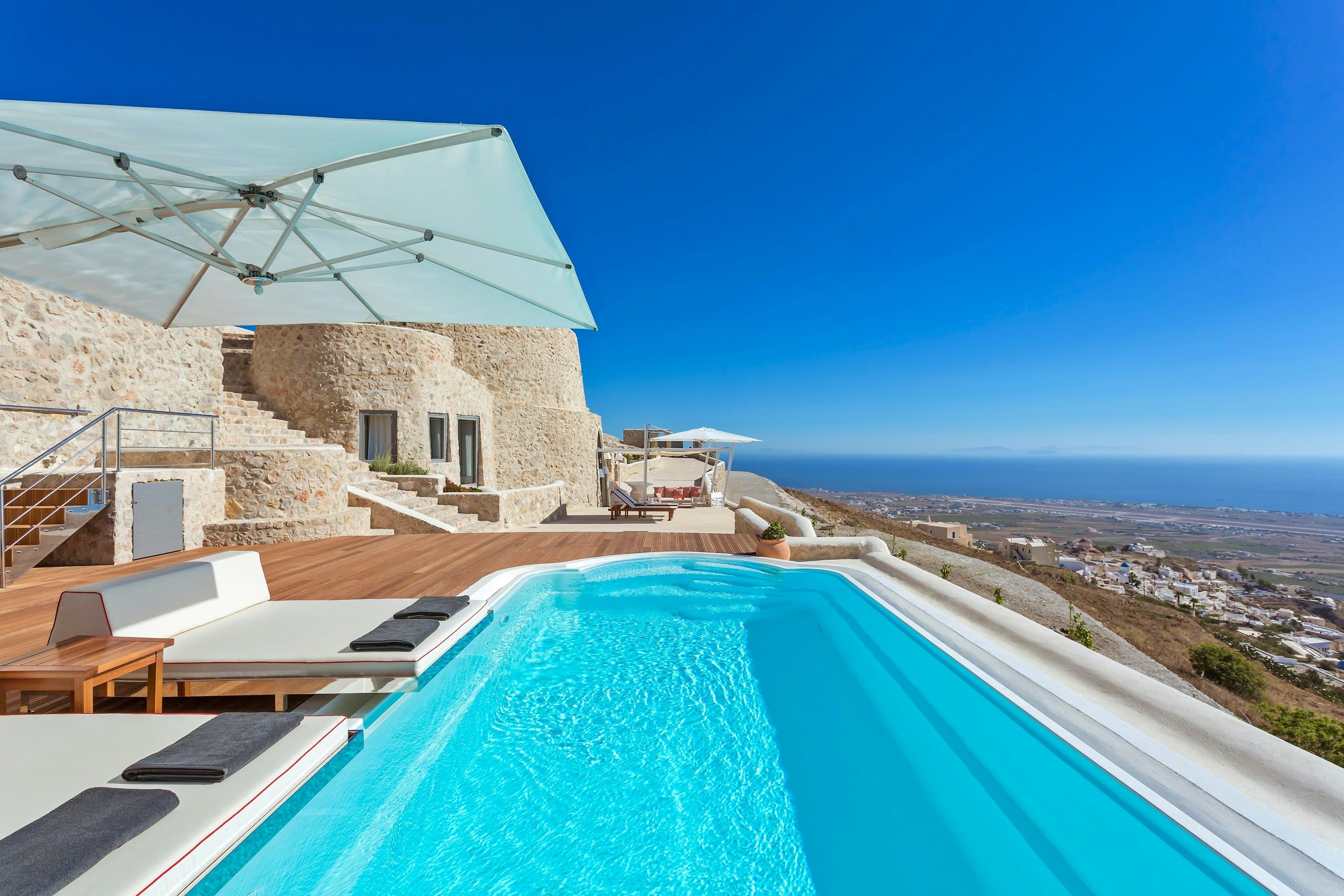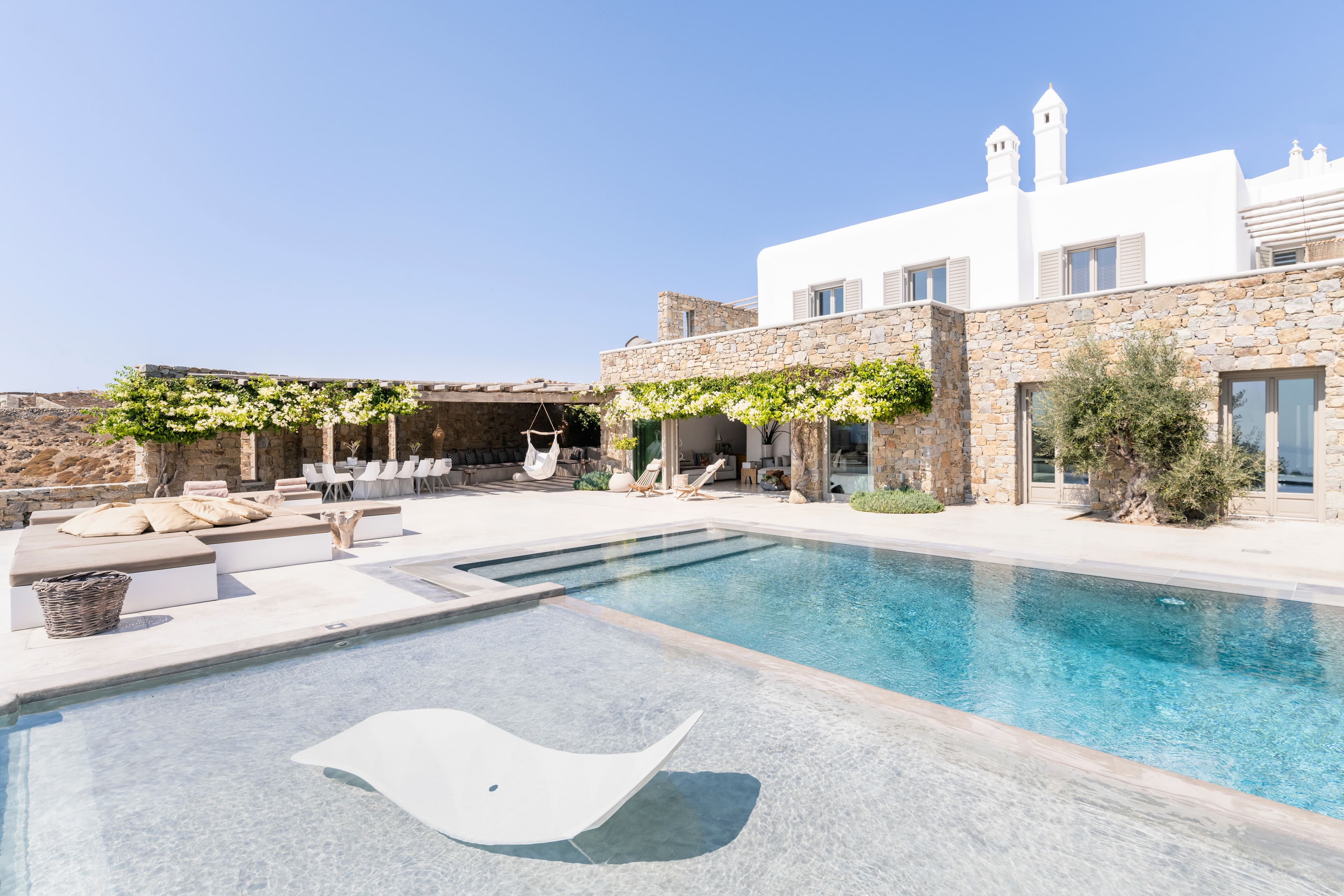

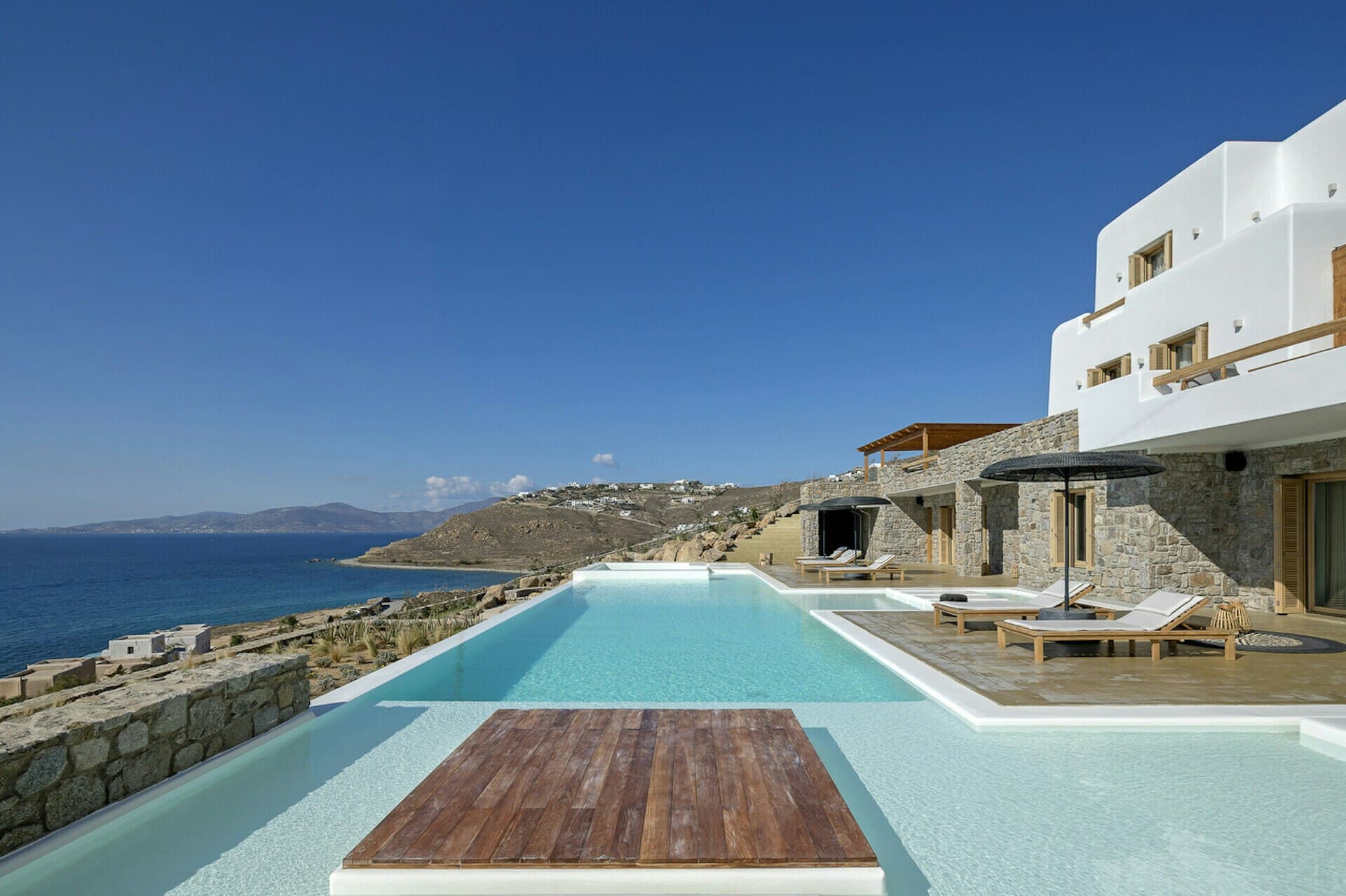
Greece spans more than 130,000 square kilometres of mainland and roughly 6,000 islands, making it one of Europe's most geographically varied countries for a villa holiday. That sheer scale means the question of where to stay in Greece depends less on "Greece" as a single idea and more on the specific coastline, island group or hilltop village that matches your pace. We have spent years returning to different corners of the country, and each time the character shifts remarkably: the light changes, the architecture changes, the food changes. In our guide to private villas in Greece, we focus on properties that reward this kind of regional curiosity, places rooted in their landscape rather than simply dropped onto it.
Below, we break the country into its most compelling areas for villa stays, moving from the headline islands to quieter stretches of coast that many travellers overlook entirely.
Why choose the Cyclades for a villa stay?
The Cyclades sit in the central Aegean Sea, roughly a 30-minute to 50-minute flight from Athens or a two-to-five-hour ferry crossing depending on the island. This is Greece at its most iconic: whitewashed cubes, cobalt domes, volcanic geology and light so sharp it seems to hum.
Which Cycladic islands suit villa guests?
Santorini and Mykonos attract the greatest number of visitors, but both reward guests who stay in private villas rather than hotels precisely because the villas pull you away from the crowds. On Santorini, the caldera-edge villages of Oia and Imerovigli hold villas with plunge pools that face due west, ideal for that famous sunset without a cruise-ship deck beneath your feet. Mykonos works best from a villa above Agios Ioannis or near Elia Beach, where the nightlife energy of Mykonos Town sits a ten-minute drive away rather than outside your window.
For something quieter, Paros and Antiparos have grown steadily in recent years. Paros benefits from one of the Cyclades' best-connected airports (direct flights from several European cities from May to October) and a landscape that mixes golden-sand beaches like Kolymbithres with the traditional marble-laned village of Lefkes. Antiparos, reached by a short car ferry from Paros, feels a generation slower. Villas here tend to be low-slung, stone-built and oriented toward the Aegean with large terraces and private pools.
Tinos, often called the "holy island" for its Panagia Evangelistria church and its tradition of pilgrimage, has emerged as a favourite among architects and artists. The island holds more than 40 traditional stone-built dovecotes, and many of its newer villas draw on that same geometric masonry. We think of Tinos as the Cyclades for people who have done Santorini and want depth over drama.
Who do the Cyclades suit best?
Couples and small groups travelling in June or September will find the best balance of weather and space. July and August bring temperatures above 35°C and ferry crowds that can test patience. Families with young children should note that many Cycladic villas sit on steep, stepped terrain, so pool fencing and terrace design matter. Our curated collection of private villas in Greece with pool flags properties with gated pool areas specifically for families.
What makes Crete different from the islands?
Crete is Greece's largest island, stretching roughly 260 kilometres from west to east, and it functions more like a small country than a typical Greek island. It has its own dialect, its own culinary tradition (think dakos, kalitsounia and lamb cooked with stamnagathi greens) and a rugged interior of gorges, plateaux and snow-capped peaks that rise above 2,400 metres in the White Mountains.
Where should you base yourself on Crete?
The western third of the island, around Chania, tends to draw the most villa guests. Chania's Venetian harbour is one of the most beautiful small ports in the Mediterranean, and the surrounding Apokoronas district holds dozens of restored stone farmhouses and contemporary villas set among olive groves. The international airport at Chania (Ioannis Daskalogiannis) receives direct flights from the UK, Germany and Scandinavia throughout summer, putting most western Crete villas within a 30-to-60-minute drive of arrivals.
The south coast around Sfakia and Loutro remains genuinely remote. Some villages here are accessible only by boat or on foot, and villa options tend to be simpler: thick-walled stone houses with terraces above the Libyan Sea. We love this stretch for travellers who want to hike the Samariá Gorge (open roughly May to mid-October) and return to solitude each evening.
Eastern Crete, around Agios Nikolaos and Elounda, carries a different feel: calmer seas, a slightly drier climate and the kind of polished luxury that attracts a well-heeled international crowd. Villas in Elounda often feature infinity pools that seem to tip into the Gulf of Mirabello.
How long should you spend on Crete?
We recommend at least a week, and ten days if you want to explore both the west and east coasts. A hire car is essential on Crete; the island's bus network covers main routes but misses the villages and beaches that make a villa stay worthwhile.
Is the Peloponnese a good alternative to the islands?
The Peloponnese is mainland Greece's southernmost peninsula, connected to Attica by the Corinth Canal (just 80 kilometres west of Athens) and reachable without a single ferry. For travellers who want ancient ruins, vineyard country and long coastal drives without the logistics of island-hopping, it provides one of the best areas to stay in Greece.
Which parts of the Peloponnese work for villa holidays?
The Mani peninsula, the middle "finger" of the southern Peloponnese, is dramatic and austere. Stone tower houses, originally built as family fortifications, have been converted into some of Greece's most atmospheric villas. Areopoli and Kardamyli are the main settlements; the latter gained literary fame through Patrick Leigh Fermor, whose house now operates as a cultural centre. Beaches here are pebbly and uncrowded, and the swimming is superb.
Costa Navarino, on the western coast near Pylos, has become a hub for upmarket family travel. While the resort complexes dominate the headlines, the surrounding countryside of Messinia holds private villas set among olive groves, many within a 15-minute drive of Voidokilia Beach, a near-perfect semicircle of sand backed by a lagoon.
Nafplio, the first capital of modern Greece, sits on the eastern coast and makes a fine base for exploring Epidaurus (a 30-minute drive), Mycenae (roughly 45 minutes) and the Argolic Gulf. Villas around Nafplio tend to be neo-classical or mid-century in style, reflecting the town's more urban heritage.
How do you reach the Peloponnese?
Most travellers fly into Athens International Airport and drive. The motorway to Corinth takes about an hour, and from there the road network fans out across the peninsula. Kalamata, in the south, also has a small airport with seasonal flights from several European cities, cutting drive times to the Mani or Messinia to under an hour.
Why consider the Ionian Islands?
The Ionian Islands line Greece's western coast, facing Italy across the Adriatic. They receive more rainfall than the Aegean islands, and the difference shows: the landscape is greener, lusher and thickly wooded with cypress, olive and pine.
Which Ionian islands have the best villas?
Corfu is the most developed and the easiest to reach, with a busy international airport just two kilometres from Corfu Town. The northeast coast, around Kassiopi and Agios Stefanos, holds a high concentration of well-appointed villas, many with direct sea access and views across to the Albanian mountains. The island's Venetian, French and British colonial history gives its architecture a layered complexity you rarely find in the Cyclades.
Kefalonia, the largest Ionian island, suits travellers who want space. The famous Myrtos Beach lies on the western coast, and villas around Fiskardo, at the island's northern tip, look across a narrow strait to Ithaca. Paxos and its satellite Antipaxos remain tiny and exclusive; reaching Paxos requires a ferry from Corfu (roughly 60 to 90 minutes) or Igoumenitsa on the mainland.
Lefkada connects to the mainland by a short causeway, making it one of the few Greek islands accessible by car without a ferry. Porto Katsiki and Egremni, on the west coast, rank among the most beautiful beaches in Europe, and villas in the hills above Vassiliki enjoy long views over a bay popular with windsurfers.
Who should choose the Ionians over the Aegean?
Families with young children do well here. The Ionian Sea is generally calmer and shallower near shore than the Aegean, and the green, shaded landscapes feel gentler in the peak heat of July and August. The islands also suit anyone who finds the Cycladic aesthetic too stark. Our Ionian villas collection features properties with private pools and gardens that feel almost subtropical.
Are the Sporades and lesser-known islands worth visiting?
The Sporades, a small group of islands in the northwestern Aegean, remain under-visited by international travellers despite appearing in popular culture (Skiathos, Skopelos and Alonnisos served as filming locations and inspirations for the Mamma Mia films). Skopelos, in particular, holds thick pine forests, quiet coves and a scattering of villas in Greece that feel genuinely secluded.
How do you reach the Sporades?
Skiathos has a small airport with seasonal European flights. Skopelos and Alonnisos rely on ferries from Volos (roughly two to three hours) or fast boats from Skiathos. The extra effort filters out casual visitors, and the result is a pace of life that feels closer to the Greece of thirty years ago.
Alonnisos sits at the heart of the National Marine Park of Alonnisos, the largest marine protected area in Europe, covering roughly 2,200 square kilometres. Villas here tend to be modest in scale, and the main draw is the water: clear, protected and rich with marine life including monk seals.
When is the best time to stay in Greece?
Late May to late June and September to mid-October are our preferred windows. Temperatures hover between 24°C and 30°C, the sea is warm enough for comfortable swimming (particularly from June onward) and villa availability is broader than in the compressed peak of mid-July to mid-August.
July and August suit travellers who want the full energy of island life, open-air cinemas, harbourside tavernas packed until midnight and warm evenings on the terrace. Expect daytime temperatures regularly above 34°C and higher villa rates.
Easter in Greece (which follows the Orthodox calendar and often falls in April or early May) is a magical time to visit the mainland or Crete. Villages hold candlelit processions, families roast lamb on outdoor spits and the hillsides blaze with wildflowers. Not all villas open before May, so check availability carefully.
For those considering a winter or early-spring villa stay, the Peloponnese and Crete both have mild enough climates to make a February or March visit feasible, particularly if your interests lean toward hiking, archaeology and quiet village meals rather than beach days.
We always recommend booking villas in Greece at least three to four months ahead for summer travel, and further ahead for groups of eight or more. The best properties in Santorini, Mykonos and Chania fill by early spring. Our latest additions to the Greece collection update monthly and often include properties that have only recently joined the directory.
Frequently asked questions
What are the best areas to stay in Greece for first-time visitors?
Crete and the Cyclades (particularly Santorini or Paros) give first-time visitors the clearest sense of what makes Greece extraordinary. Crete combines beaches, mountain scenery and exceptional food in a single island, while the Cyclades deliver the iconic white-and-blue architecture most people picture when they think of Greece. Both regions have well-connected airports and a strong range of private villas.
Do you need a hire car for a villa holiday in Greece?
On Crete, the Peloponnese and the larger Ionian islands such as Corfu and Kefalonia, a hire car is essential. Roads are generally well maintained, and driving allows you to reach beaches, tavernas and villages that no bus route covers. On smaller Cycladic islands like Antiparos or Paxos in the Ionians, a car is less necessary and in some cases impractical given narrow roads and limited parking.
When is the cheapest time to book villas in Greece?
Late May and the first two weeks of June, along with late September and early October, typically carry lower rates than the July and August peak. Booking early (January to March) also helps secure better pricing, as many villa owners and managers set tiered rates that reward advance commitment.
Are private villas in Greece with pool suitable for families?
Many are designed with families in mind. Look for properties that specify gated or fenced pool areas, shallow entry steps and shaded outdoor spaces for younger children. Crete, Corfu and the Peloponnese all hold excellent family-friendly villas with pools, gardens and enough interior space for multi-generational groups.
How far in advance should you book?
For July and August in popular areas such as Mykonos, Santorini and Chania, we suggest booking six months or more ahead. For shoulder-season travel in May, June, September or October, three to four months is usually sufficient, though standout properties in any region can fill earlier.
Is the Peloponnese suitable for a beach holiday?
The Peloponnese has superb beaches, particularly on its western and southern coasts. Voidokilia near Pylos is among the most photographed in Greece, and the Mani coast holds dozens of small, uncrowded coves. The eastern Argolic coast is gentler and more sheltered. While the Peloponnese lacks the turquoise-lagoon drama of some Ionian or Cycladic beaches, the combination of sand, history and vineyard-dotted countryside makes it a compelling choice for travellers who want more than a sun lounger.