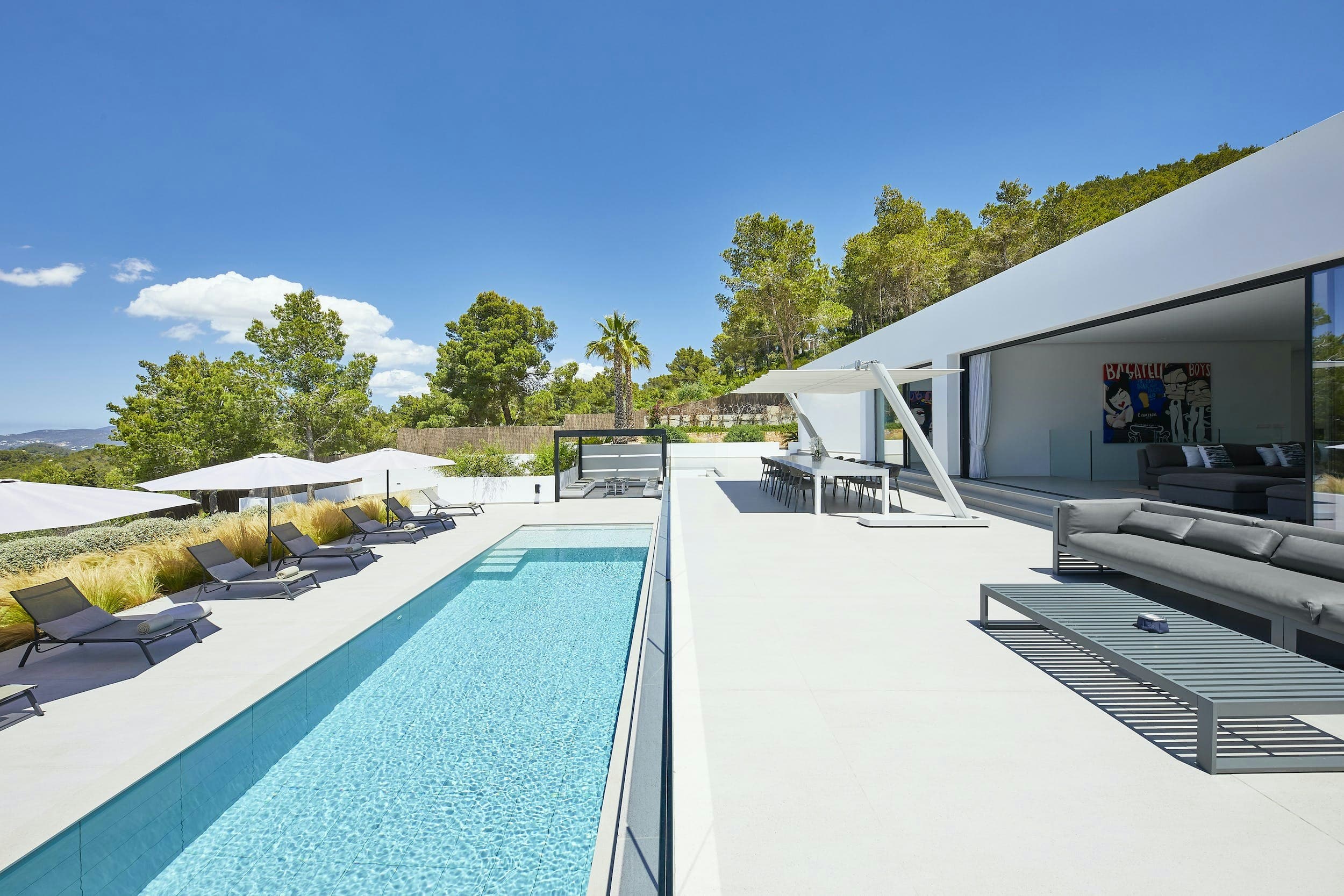

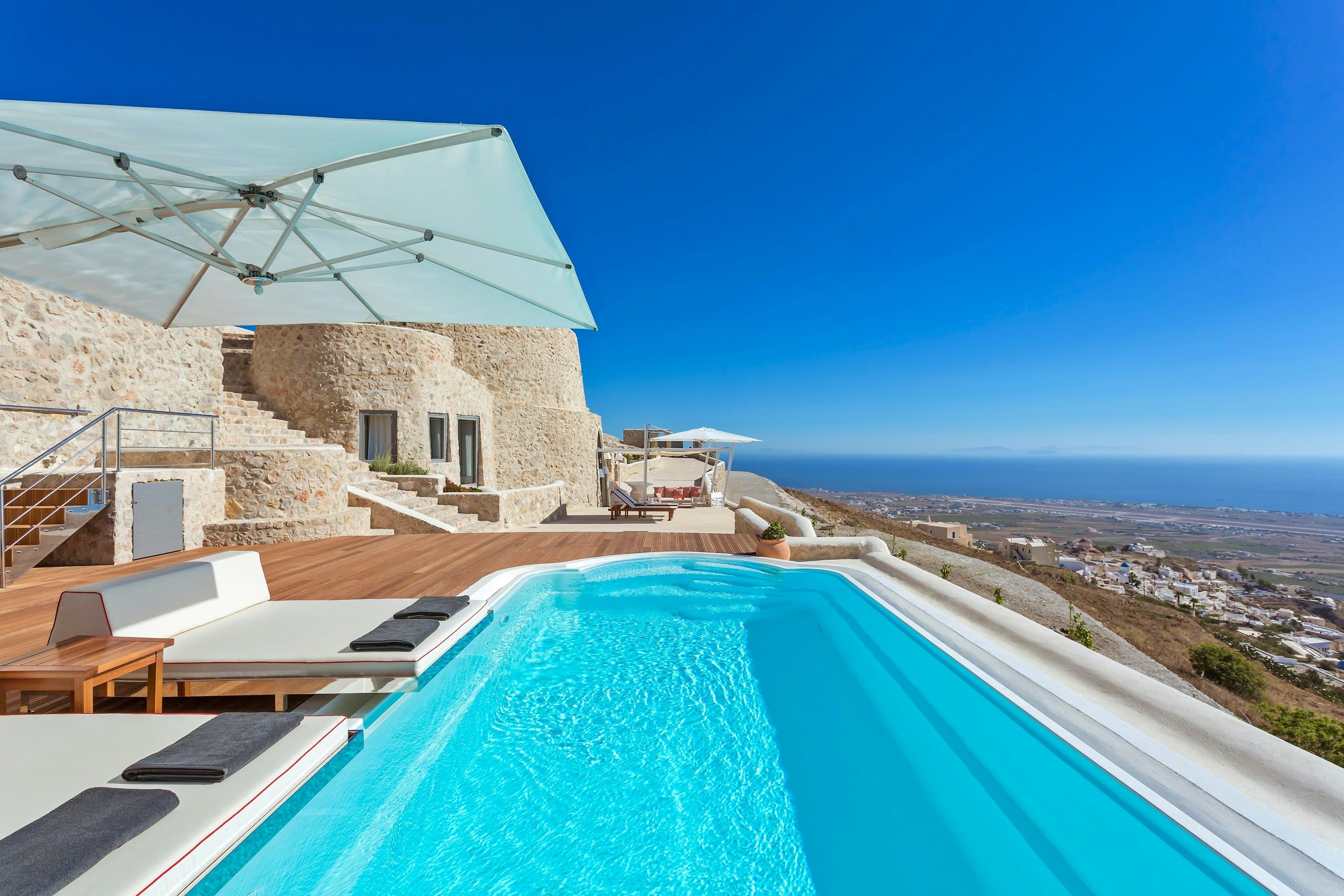
Greece spans roughly 132,000 square kilometres across a mainland peninsula and more than 6,000 islands, of which only around 200 are inhabited. That sheer variety means the question of where to stay is less about finding one perfect spot and more about matching a landscape to a mood. We have spent years returning to different corners of the country, from the volcanic cliffs of Santorini to the cypress-green hills of Corfu, and our curated collection of Greece villas reflects that range. What follows is our honest, region-by-region guide to choosing the right base, with practical detail on access, timing and the character of each area.
Why do the Cyclades dominate the conversation about luxury villas in Greece?
The Cyclades earn their reputation. This arc of around 30 islands in the central Aegean delivers the white-cube architecture, cobalt sea and unfiltered light that define the Greek postcard. But beyond aesthetics, the group holds genuine diversity: Santorini's caldera drama, Mykonos's sociable energy, Paros's quieter confidence and Milos's geological oddity each attract a different traveller.
Which Cycladic island suits a first visit?
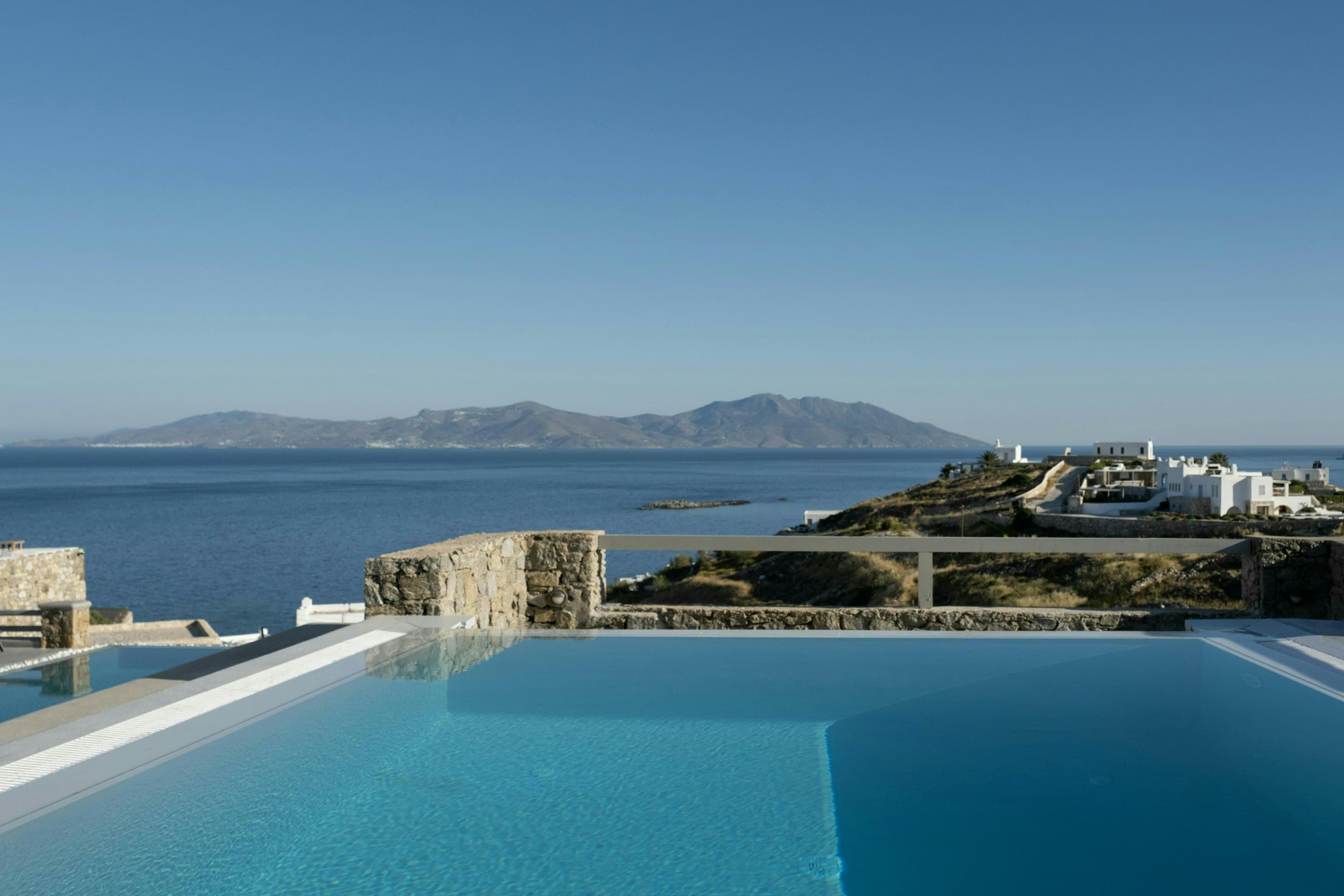
Santorini remains the most logical starting point for anyone seeking a short, high-impact trip. Direct flights from London, Paris and several other European capitals land at Thira Airport (JTR), and the island measures only about 18 kilometres from tip to tip. Accommodation here tends to sit along or above the caldera rim, where the volcanic drop to the sea creates that famous layered effect. We particularly admire Island Azure Haven, a retreat on the Cyclades cliffs, for its uninterrupted views and the way it balances privacy with proximity to Fira.
For those who want the caldera setting but crave something more intimate, Cave Chic on Santorini carves its rooms directly into the volcanic rock. The result is cool, sculptural interiors that feel genuinely rooted in the geology rather than simply placed on top of it.
What about Mykonos and the less-visited Cycladic islands?
Mykonos suits travellers who want easy access to excellent restaurants, late-night energy and polished beach clubs alongside their villa privacy. Mykonos Airport (JMK) handles direct European flights from May to October, and the island's compact size, roughly 10 by 13 kilometres, means nowhere is more than a 25-minute drive from anywhere else.
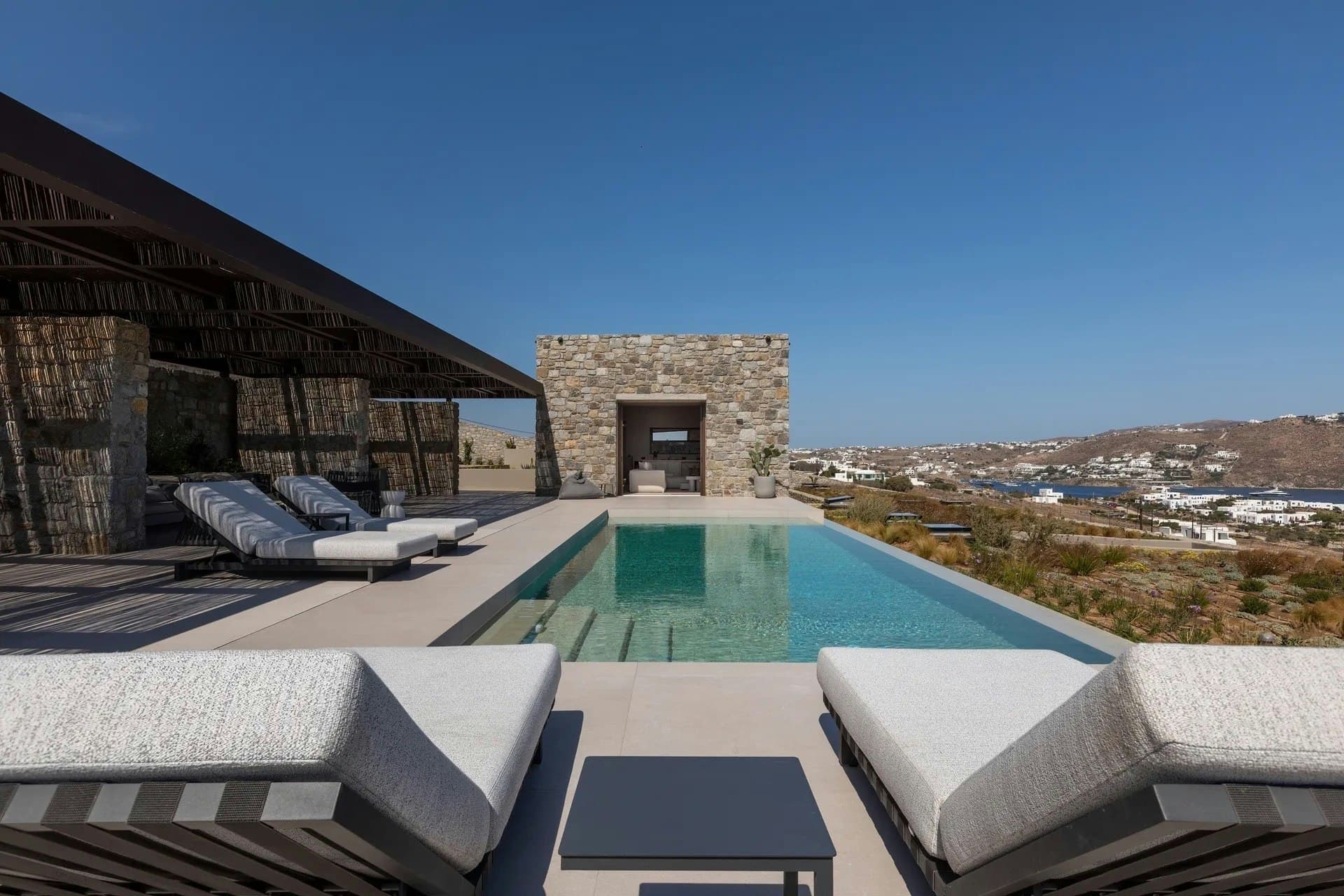
Yet some of our favourite Cycladic stays sit on quieter islands. Heavenly Joy on the Cyclades combines a sense of seclusion with the kind of design detail that rivals anything on Mykonos or Santorini. And Indigo Light, also in the Cyclades, brings a calm, light-filled character that rewards longer stays. For travellers who want atmosphere without crowds, these less-publicised islands deliver something Mykonos cannot always guarantee in July and August.
We also hold a particular fondness for Earth Haven in the Cyclades, a property that draws on raw, natural materials and earthy tones to create a mood more grounded and contemplative than the typical whitewashed villa. It suits couples and small groups seeking quiet days shaped by swimming, reading and long lunches.
Are the Ionian Islands a genuine alternative?
Absolutely. The Ionian chain, running down the western coast of the mainland, trades the Cyclades' arid minimalism for something greener, softer and more Italianate. Corfu, Kefalonia, Zakynthos, Lefkada and Paxos all sit within this group, and their character reflects centuries of Venetian, French and British influence rather than purely Ottoman and Byzantine heritage.
What makes Corfu different from the Aegean islands?
Corfu's landscape surprised us on our first visit. The interior is hilly and thickly forested with olive groves, some containing trees 500 years old. The northeast coast looks across a narrow strait to the Albanian mountains, creating a backdrop that feels almost fjord-like on still mornings. Corfu International Airport (CFU) sits just two kilometres south of Corfu Town and receives direct flights from the UK, Germany, Scandinavia and elsewhere from April through to late October.
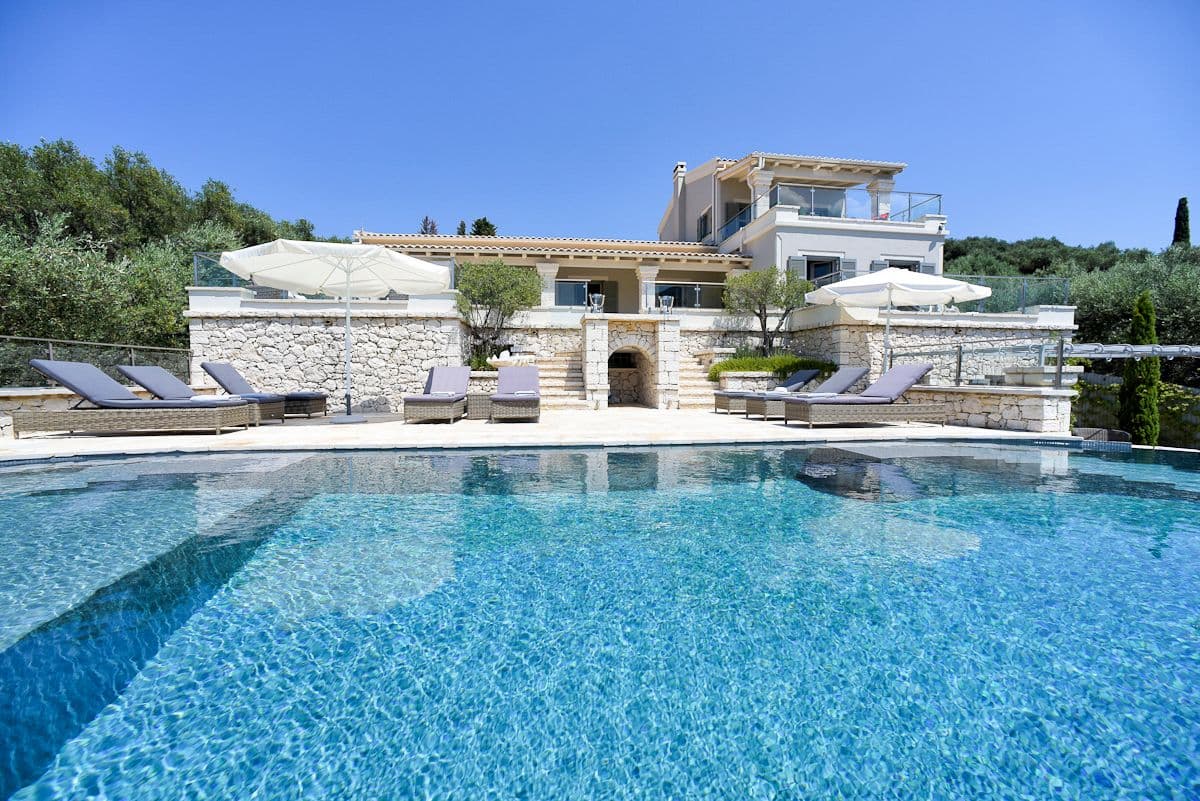
Villa architecture on Corfu tends towards stone-built Venetian farmhouses or converted estate buildings rather than the cubic Cycladic forms. Villa Pearl on the Ionian Islands captures this character beautifully, with interiors that blend period detail and modern comfort in a way that feels natural rather than contrived. The Ionian islands generally suit families and groups who want lush gardens, cooler evenings and a landscape that invites exploration by hire car.
How accessible are Kefalonia and Zakynthos?
Kefalonia, the largest Ionian island at roughly 780 square kilometres, has its own airport (EFL) with seasonal direct flights from the UK and several European cities. The island rewards drivers: its coastline weaves between dramatic limestone cliffs and turquoise bays like Myrtos, while the interior rises to Mount Ainos at 1,628 metres. A Greece villa rental on Kefalonia typically means a converted stone house or a contemporary build with generous outdoor living space, surrounded by cypress and pine.
Zakynthos (ZTH) is easier to reach, with more frequent flights, but its reputation has suffered from overdevelopment along some southern beaches. The northwest and interior, however, remain genuinely tranquil. The famous Navagio, or Shipwreck Beach, is best viewed from the clifftop above, and the Vasilikos peninsula on the south coast provides access to the protected loggerhead turtle nesting grounds at Gerakas. We recommend Zakynthos for travellers willing to look beyond the obvious.
What about the mainland for a villa holiday?
Greece's mainland holds some of the country's most compelling landscapes and receives a fraction of the island tourist traffic. The Peloponnese, in particular, has emerged as a serious destination for those seeking a more grounded, historically rich experience.
Is the Peloponnese suitable for a luxury stay?
Very much so. The Peloponnese peninsula, connected to Attica by the Corinth Canal, contains ancient Olympia, Mycenae, Epidaurus and the medieval fortress town of Monemvasia, all within a few hours of each other by road. Athens International Airport (ATH) serves as the gateway: the drive to Nafplio, often considered the peninsula's most elegant town, takes around two hours via the modern motorway.
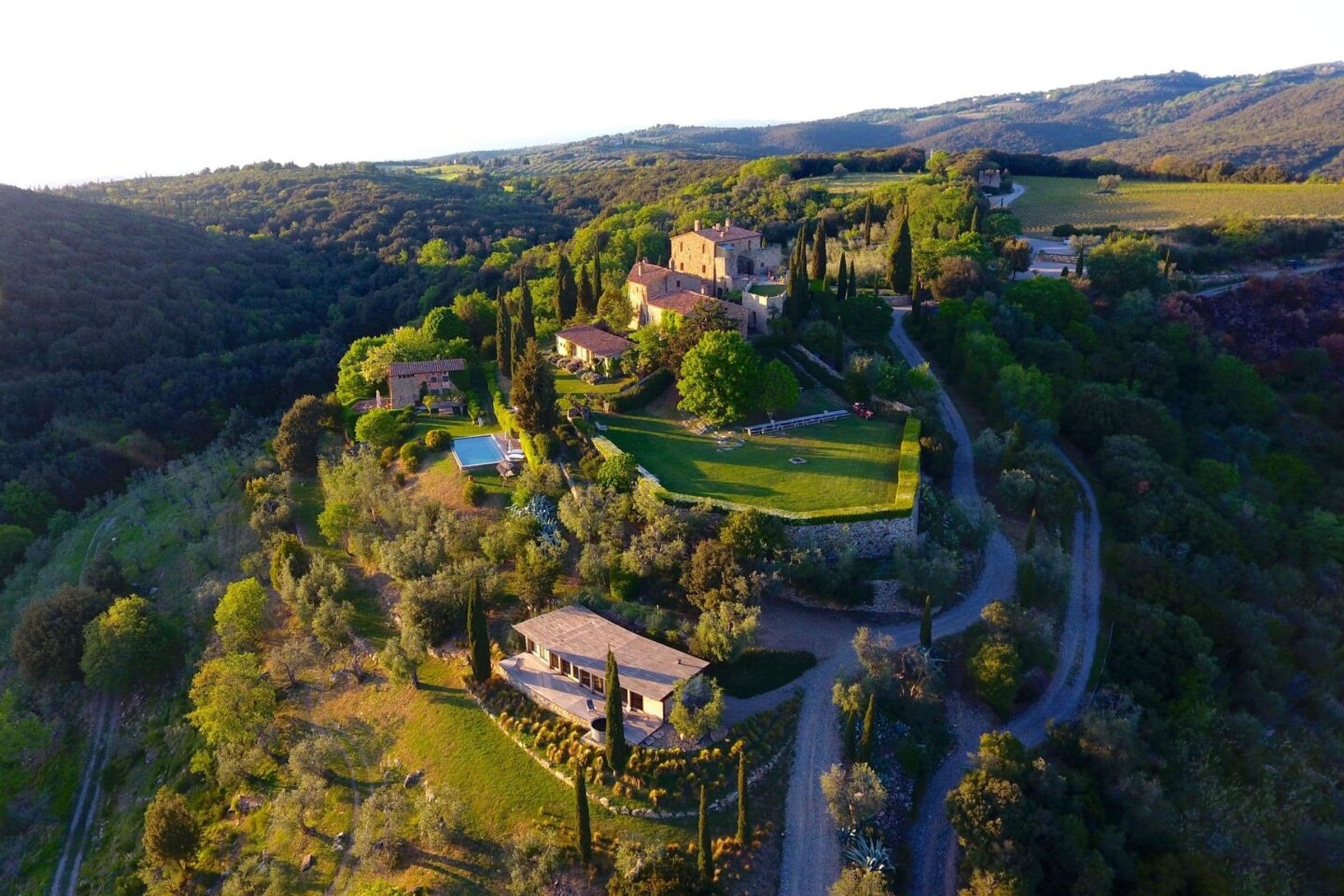
Villa options on the Peloponnese range from restored tower houses in the Mani region, the craggy southern finger of the peninsula, to contemporary coastal properties near Costa Navarino in Messinia. The Mani in particular suits architecture enthusiasts and walkers. Its stone towers, originally built as family fortifications, now function as some of the most atmospheric private rentals in the country.
Does northern Greece work for a villa holiday?
It can, though the accommodation market is less developed. Halkidiki, the trident-shaped peninsula south of Thessaloniki, provides the closest thing to island-style beach holidays on the mainland. The three "fingers," Kassandra, Sithonia and Athos, each have distinct characters: Kassandra is the most developed, Sithonia the most scenic and Athos the monastic republic accessible only by boat and only to male visitors.
Thessaloniki's airport (SKG) puts travellers within a 60 to 120-minute drive of most Halkidiki beaches. Pelion, the mountainous peninsula further south in Thessaly, provides another mainland option, with forest-covered slopes, traditional stone villages and beaches reachable only by foot or boat. We consider Pelion one of the most underappreciated corners of Greece.
Do the Dodecanese and Crete deserve consideration?
They do, and for quite different reasons.
Why choose Crete?
Crete is Greece's largest island, stretching roughly 260 kilometres from east to west, and it functions almost as a self-contained country. The western half, anchored by Chania and its Venetian harbour, tends to be greener and more popular with European visitors. The eastern half, around Agios Nikolaos and Sitia, is drier, quieter and more remote. Two airports serve the island: Chania (CHQ) in the west and Heraklion (HER) in the centre, both with direct international connections.
A Greece villa rental on Crete often comes with more space and land than equivalent island properties. Expect stone farmhouses with courtyards, modern builds above the Apokoronas coast or restored Venetian townhouses in Chania's old quarter. Crete suits longer stays of a week or more, giving time to drive the mountain gorges, eat at village tavernas inland and visit Knossos and the Archaeological Museum in Heraklion.
What do the Dodecanese offer?
Rhodes and Kos are the most visited Dodecanese islands, but Patmos, Symi and Karpathos hold more interest for travellers seeking quieter, more characterful stays. Patmos, a small island of about 34 square kilometres, combines a powerful sense of history, it is the site of the Monastery of Saint John and the Cave of the Apocalypse, with a sophisticated summer social scene. Access typically involves a flight to Kos or Leros followed by a ferry crossing.
Symi, reachable by fast ferry from Rhodes in about 50 minutes, rewards visitors with a neoclassical harbour that ranks among the most photogenic in the Mediterranean. Accommodation here tends towards restored sea captains' houses rather than purpose-built villas.
When is the best time to visit Greece?
Late May to late June and September to mid-October deliver the strongest combination of warm weather, manageable visitor numbers and open services. Daytime temperatures during these windows typically range from 25 to 32 degrees Celsius, the sea is comfortable for swimming (particularly from June onwards and through September) and flights are frequent without peak-season pricing.
July and August bring temperatures above 35 degrees Celsius on many islands and significantly higher visitor density, particularly on Santorini and Mykonos. We still enjoy high summer in Greece, but we steer towards the Ionian islands, northern Crete or the Peloponnese during this period, where green landscapes and occasional breezes soften the heat.
Easter in Greece, typically falling one to four weeks after western Easter, provides a culturally rich window. Many islands hold processions, midnight services and communal feasts that give travellers access to traditions rarely visible in summer. Temperatures in April hover around 18 to 22 degrees Celsius, warm enough for exploration but cool for extended beach days.
For those planning around school holidays, the final week of June and first week of September often represent the best compromise: full summer weather with slightly reduced demand.