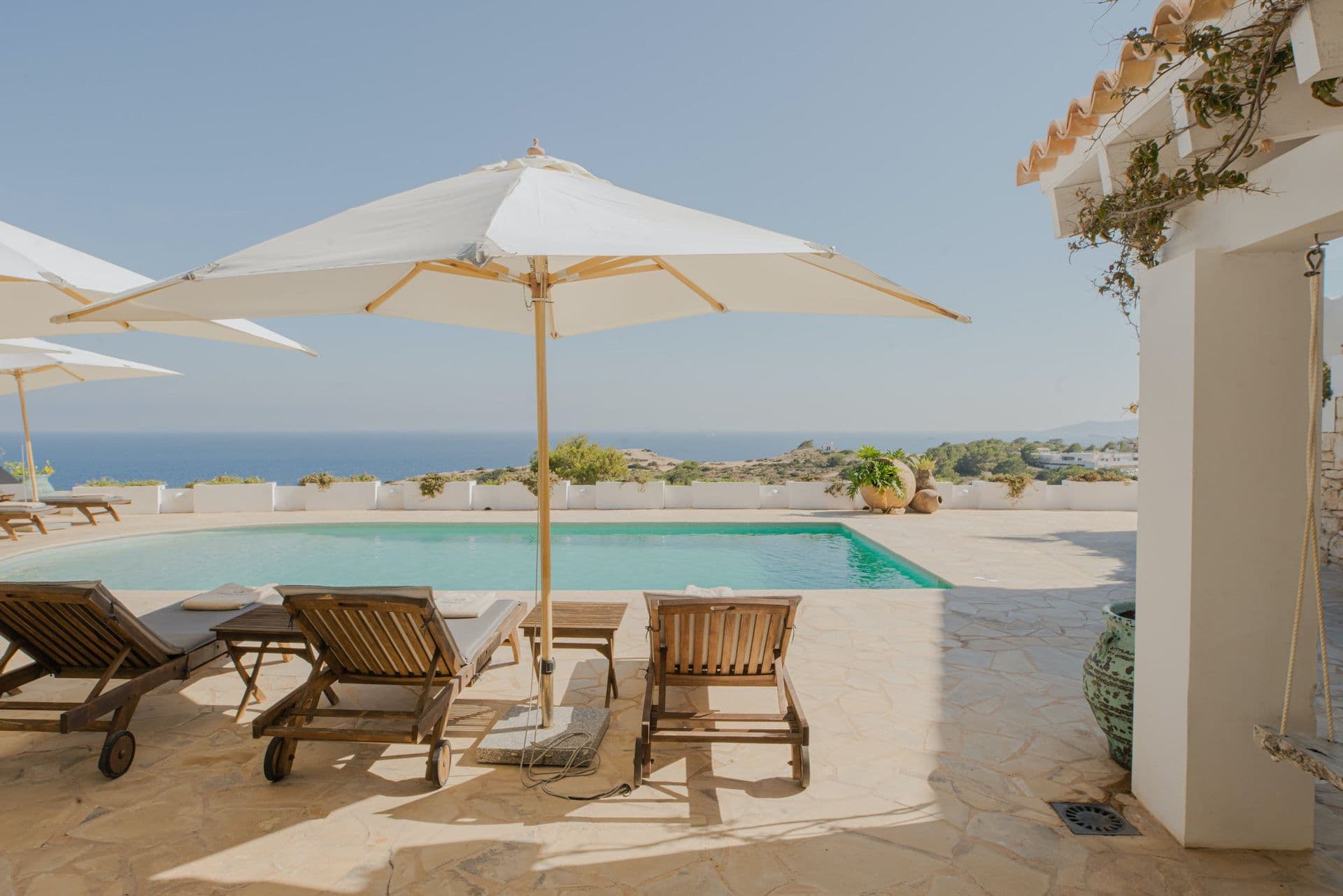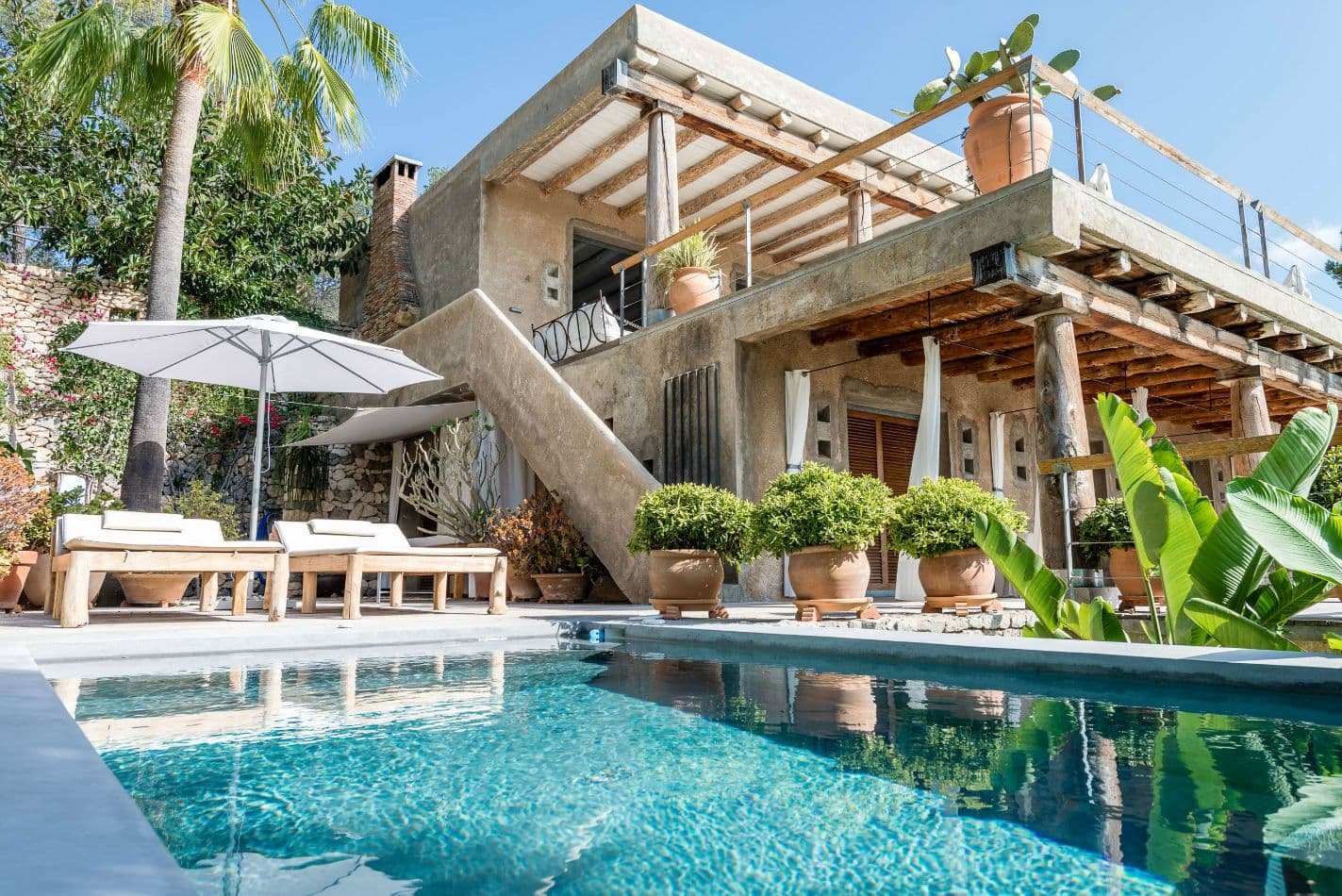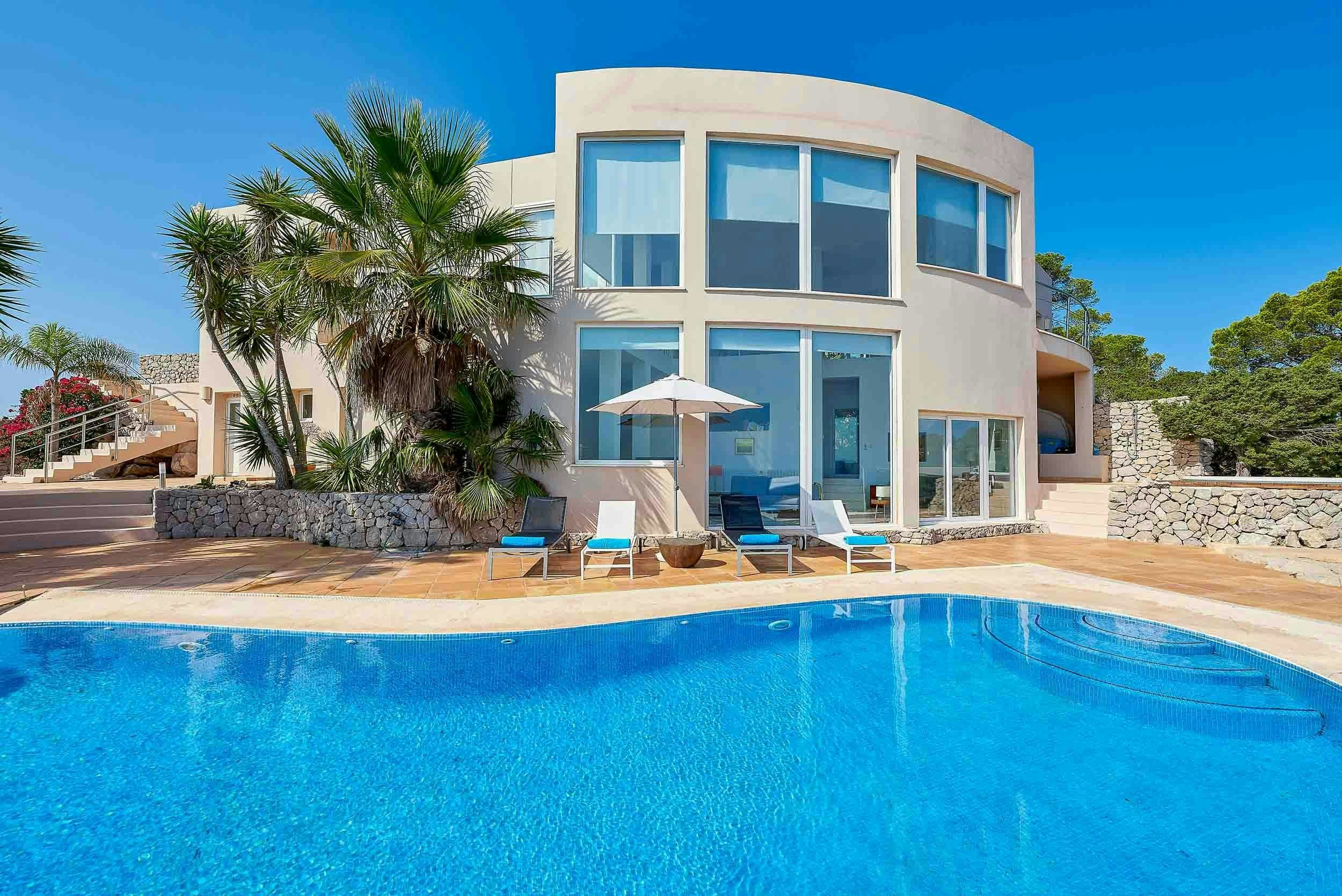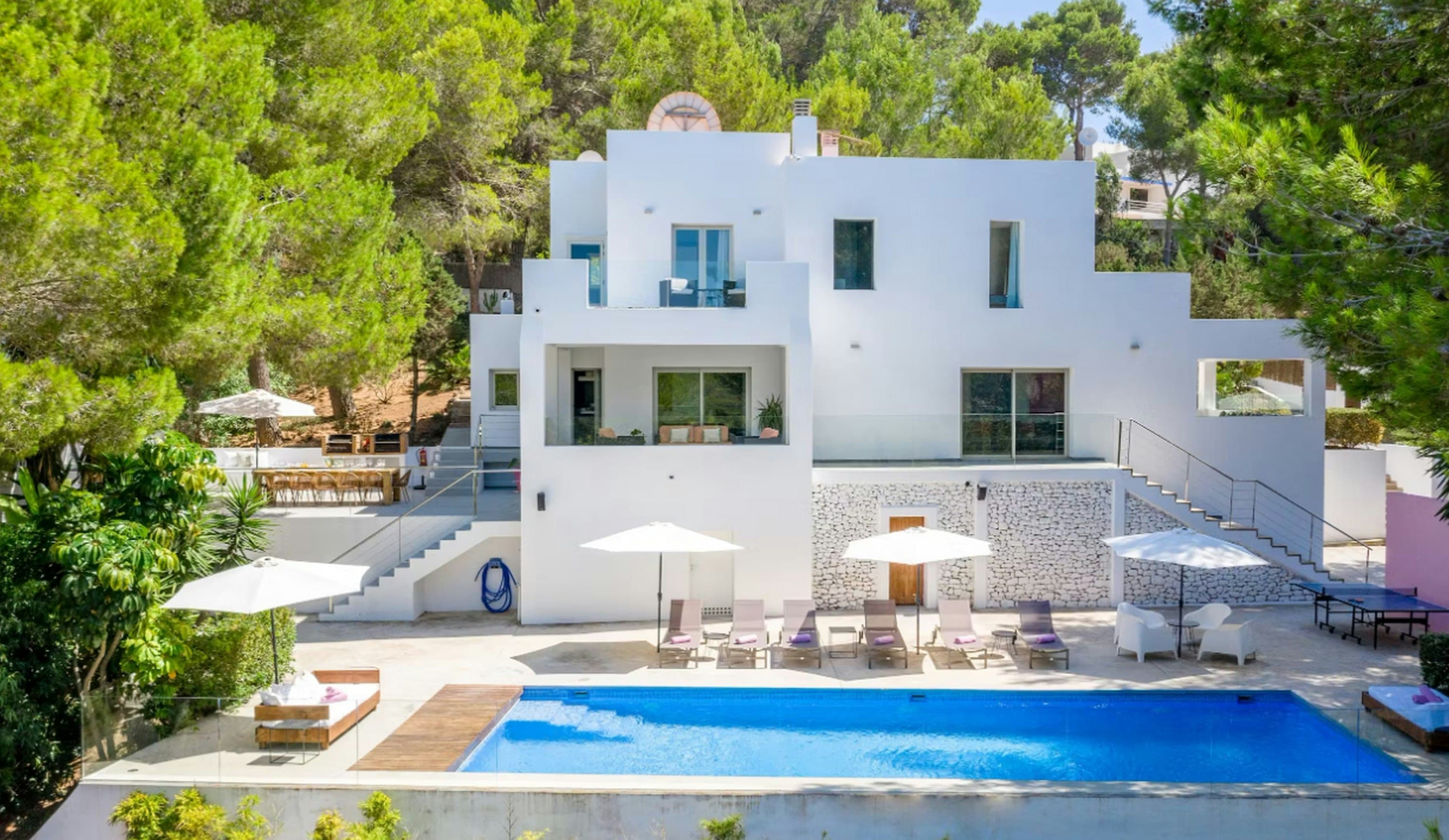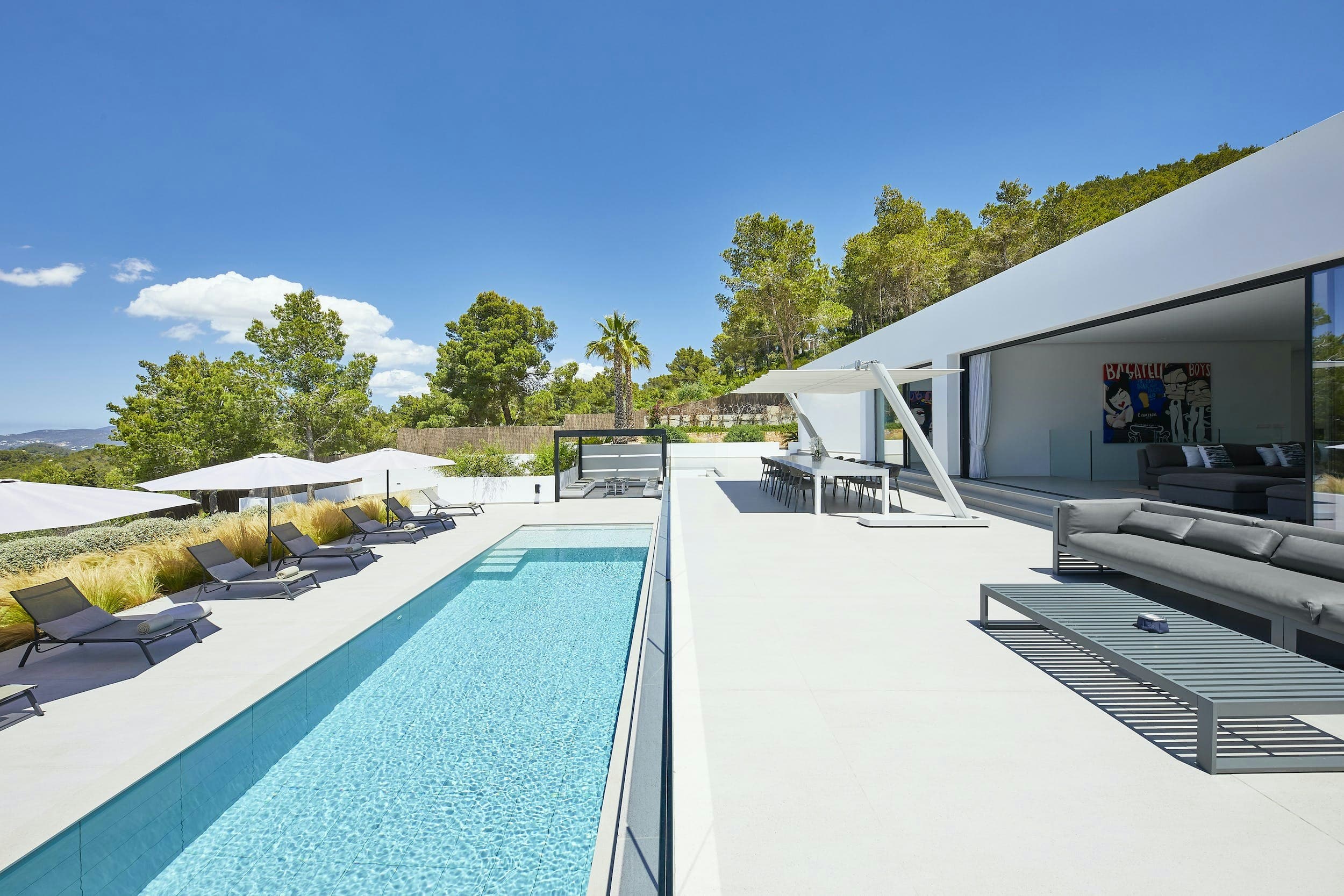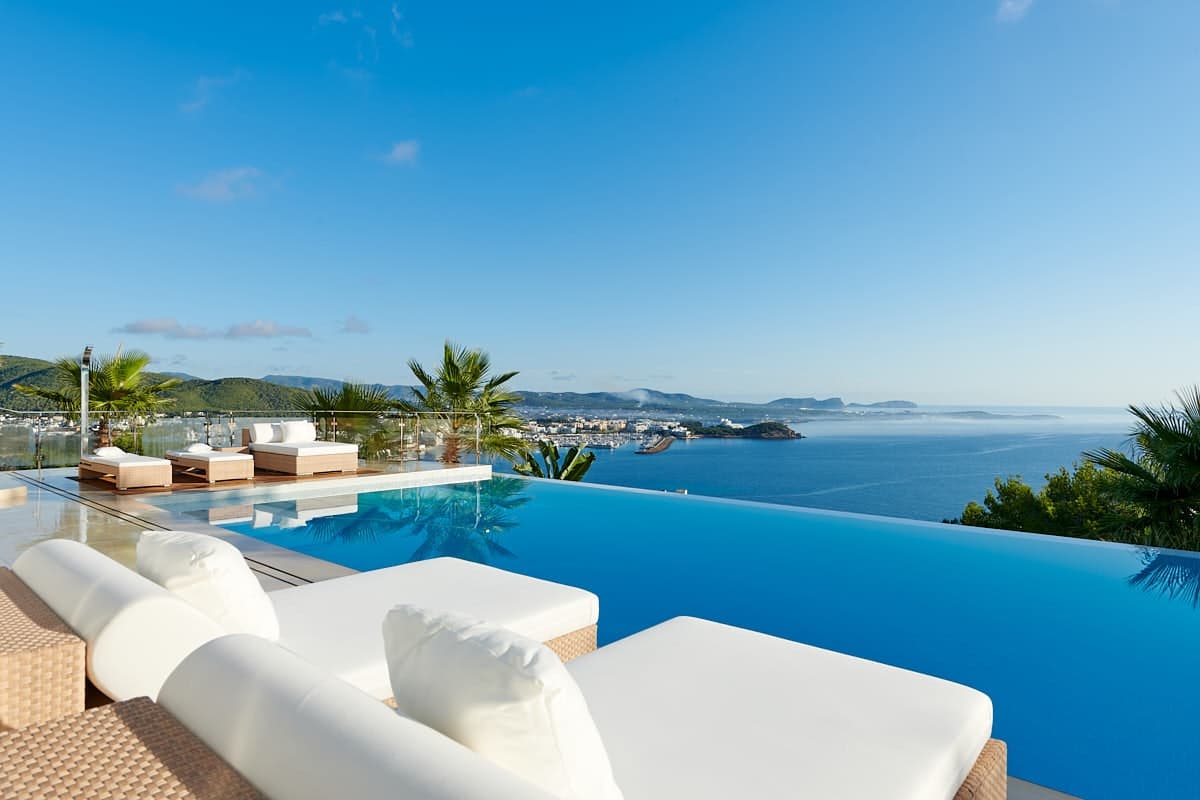

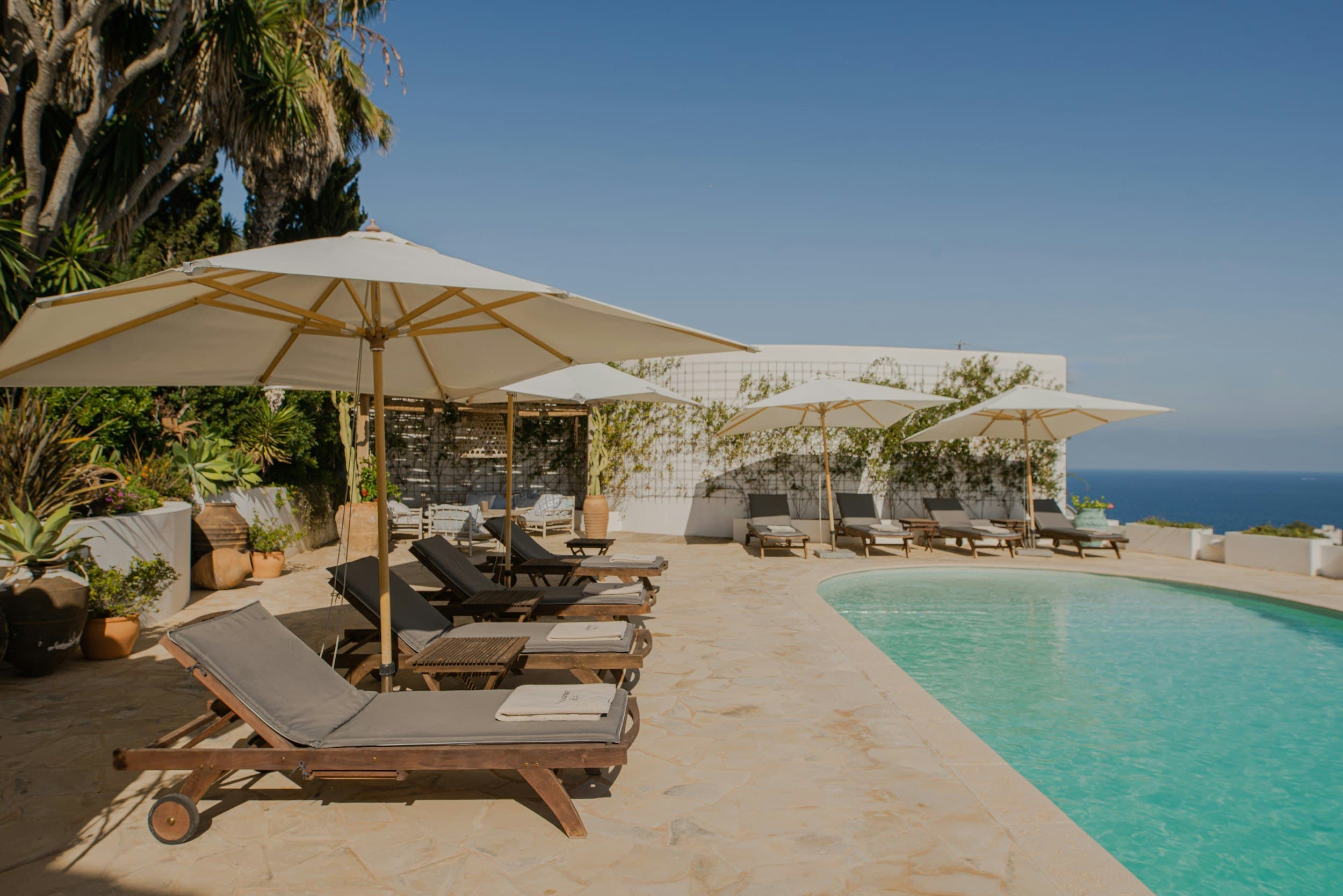
Ibiza is not a single place. The island spans 572 square kilometres and has five or six distinct personalities depending on where you land. A villa on the west coast is a different holiday entirely from one in Santa Eulalia, which is itself nothing like a property above Talamanca bay. Getting the area right matters more than most travellers expect. The island is compact: most journeys take 30 minutes or under. The difference is not distance but atmosphere, pace, and what a typical day looks like.
This guide covers the main areas, what each one delivers, and which properties we have there.
Santa Eulalia des Riu
Santa Eulalia is Ibiza's second town and its calmest base. It sits on the east coast, about 15 kilometres north of the airport, and has a working harbour, a good restaurant scene, and beaches that are gentler and less exposed than anything on the west coast. The Saturday market at Es Canar draws locals and long-term visitors rather than day-trippers. There are no clubs.
That last point is why families consistently choose this area. The town is walkable, the water is clear and sheltered, and the pace suits slow mornings without feeling remote. Ibiza Town is 20–25 minutes south; the west coast beaches are 25–35 minutes west.
Our Santa Eulalia villas run from $4,469 to $16,091 per night across seven properties. Vibrant Vinyasa (6 bedrooms) and Infinity Hills (5 bedrooms) sit at the accessible end of the range. Celestial Blue (9 bedrooms, from $12,411) and St Vetiver (7 bedrooms, from $16,091) are among the strongest sea-view properties on the east coast. For large groups, Ode to Balearic Sunsets (12 bedrooms, from $9,103) is the biggest option in this area.
Read our full Santa Eulalia villa guide
The West Coast and San Antonio Bay
The west coast is where the island's reputation lives. The late-afternoon light here faces open water, and the sunsets over Cala Conta and Cala Bassa are consistently the best on the island. San Antonio (Sant Antoni de Portmany), the largest town on this coast, has improved considerably from its package-holiday years. The bay waterfront is pleasant, the restaurants are good, and the beaches directly south are among Ibiza's best. From most west coast villas, San Antonio is 10–25 minutes by car.
The municipality of Sant Josep de sa Talaia covers most of this stretch and holds the largest share of our Ibiza collection: 19 properties ranging from Baby, You Can Drive My Car (5 bedrooms, from $2,112 per night) to Aphrodite's Oasis (8 bedrooms, from $22,278 per night). Most of our west coast properties sit in the $4,000–$10,000 range.
A few worth noting: Formentera Skies (6 bedrooms, $9,787) has a clear sight line to Formentera on bright days. Somewhere On The Horizon (7 bedrooms, $17,821) is among the most impressive large-scale properties in the collection. Yoga Nidra (6 bedrooms, $6,025) is a consistent pick for groups that want something considered without losing access to the west coast.
Read our full San Antonio and west coast villa guide
Ibiza Town and Talamanca
Ibiza Town (Eivissa) is the only part of the island where you can genuinely arrive on foot. Dalt Vila, the fortified old quarter, is a UNESCO World Heritage Site, and the marina below it has restaurants that hold their own in any European city. The clubs are either in town or a short taxi ride away. If going out is central to the trip, proximity to Eivissa makes everything easier.
Talamanca is the bay directly north of Ibiza Town, separated by a short headland and ten minutes on foot. The beach is long, the restaurants along the front are good at lunch, and the area feels like a neighbourhood rather than a resort.
Our three Talamanca properties all face the bay. Coastal View (6 bedrooms, from $9,076) and New Beat (6 bedrooms, from $6,287) both have sea-facing pools. Sunburst Eleganza (8 bedrooms, from $5,851) has a covered terrace well-suited to groups who want to eat outside every night. For parties of 14, Sun-Drenched Soul in Ibiza Town is the only property in our collection at that scale.
The South: Es Cubells
The southern tip of Ibiza is its quietest stretch with road access. Es Cubells sits on a cliff above the sea, with views across to Es Vedrà, the dramatic offshore rock. There are no towns here, no nightlife, and one road in.
The trade-off is distance. Ibiza Town is 30–40 minutes. The west coast beaches are 15–20 minutes. This area suits travellers who want complete quiet and strong sea views and are not planning to cover the whole island daily.
Tranquillity Glow (6 bedrooms, from $9,018) is our Es Cubells property. Clifftop position, sea views, and a scale well-suited to a group that wants the south to itself.
The North: Sant Joan de Labritja
The north is the least developed quarter of the island: pine-covered hills, small farms, and Benirràs beach, a horseshoe cove with a loyal following for its Sunday drum circle. There are no clubs. The pace is slow.
The Eyes of Benirràs (5 bedrooms, from $2,541 per night) is our only northern property. It sits above the bay for which it is named. At this price point, it is the most characterful base in our Ibiza collection.
The Interior: Santa Gertrudis de Fruitera
Santa Gertrudis is a village in the centre of the island, equidistant from most beaches and roughly 10 minutes from the airport. The central square has good restaurants and a market that feels genuinely local rather than tourist-facing. Inland properties tend to sit on larger plots, with almond orchards and carob trees in place of beach bars.
Staying here suits groups planning to move around the island rather than anchor to one area. It also works well for wellness trips: you are not beside a main road and the landscape encourages a different pace.
Ibiza Wellness (6 bedrooms, from $7,411) is built specifically for that use case, with a spa, yoga space, and grounds designed for retreats.
How to Choose
Most villa travellers should look at the west coast first. It has the widest property range, the best sunset beaches, and covers everything from accessible prices to the upper end of the market.
Families with younger children are generally better served by Santa Eulalia: calmer water, a proper town, and no need to drive to everything.
Groups of ten or more have the most options on the west coast and in Talamanca.
For those who want the island to themselves: look north or south.