
Tuscany covers 23,000 square kilometres of central Italy, stretching from the Apennines to the Tyrrhenian coast and containing 287 hilltop villages, 11 protected nature reserves and one of Europe's densest concentrations of Renaissance art. For visitors choosing a luxury villa rental, the question is rarely whether Tuscany delivers. It's which corner of Tuscany suits the trip.
Each sub-region carries a distinct character, climate and pace. Below, we walk you through the five sub-areas where our curators consistently book the most rewarding stays, with the reasoning behind each.
Which part of Tuscany should you choose?
Depends on the kind of trip. For first visits and couples, our curators most often recommend Chianti or Val d'Orcia. For coastal stays, Forte dei Marmi or the Argentario peninsula. For groups wanting Renaissance city access without the city, the hills around Florence or Lucca.
We'll cover each below with the practical detail you need to choose between them.
Is Chianti the right choice for a first villa stay in Tuscany?
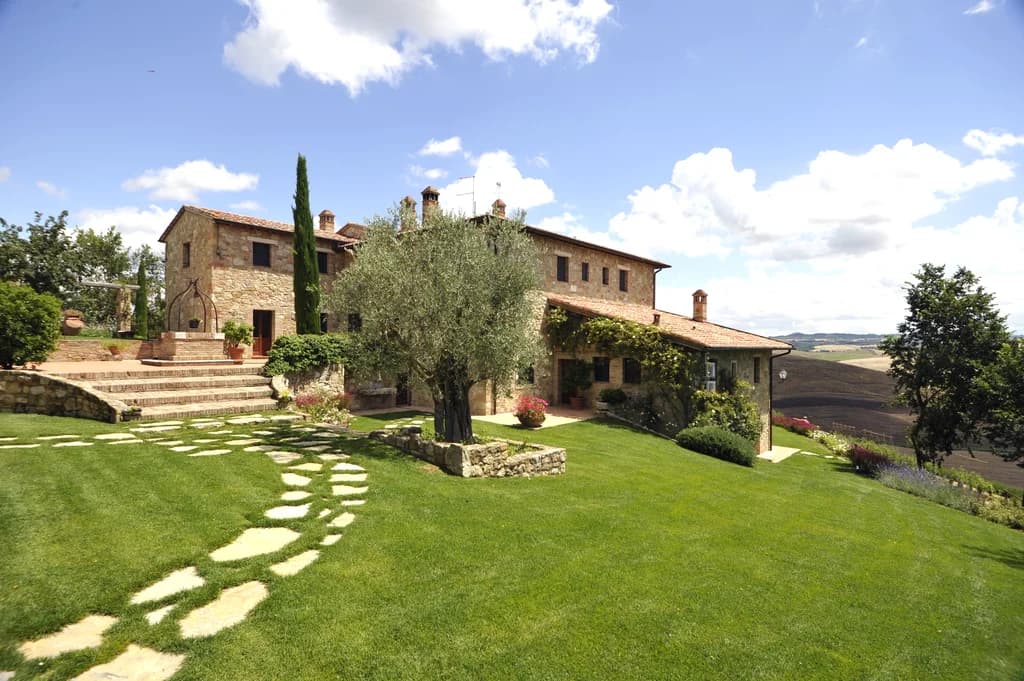
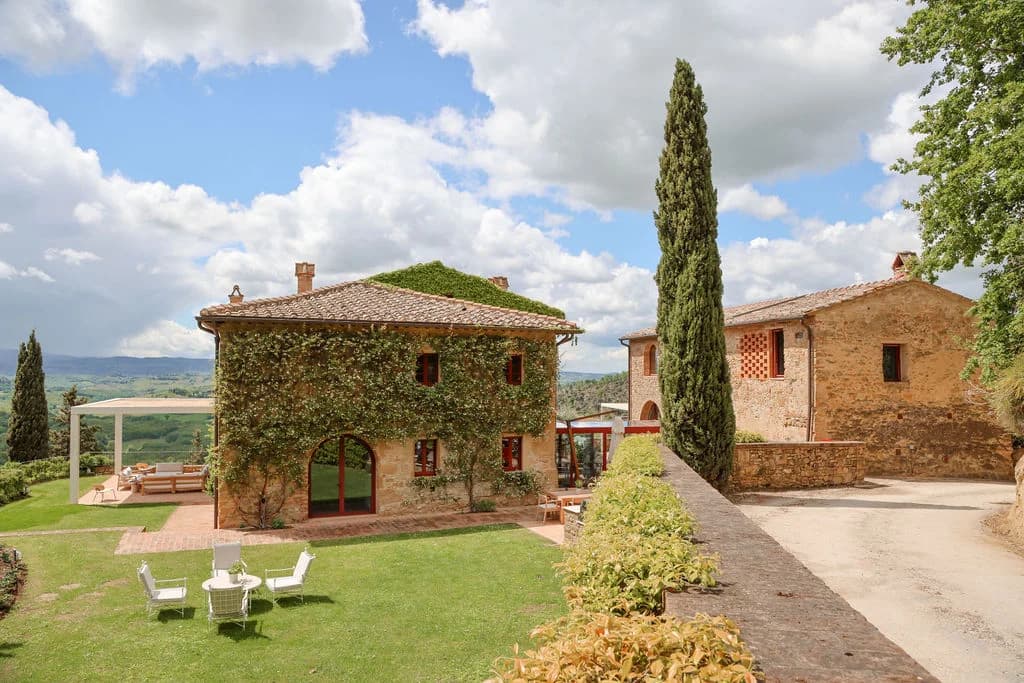
For most first-time visitors, yes. Chianti is the rolling vineyard country between Florence and Siena, covering roughly 70,000 hectares of designated wine territory. It's the Tuscany of postcards: cypress-lined drives, stone farmhouses and vineyards tipping down to medieval hilltop villages.
What kind of villas does Chianti have?
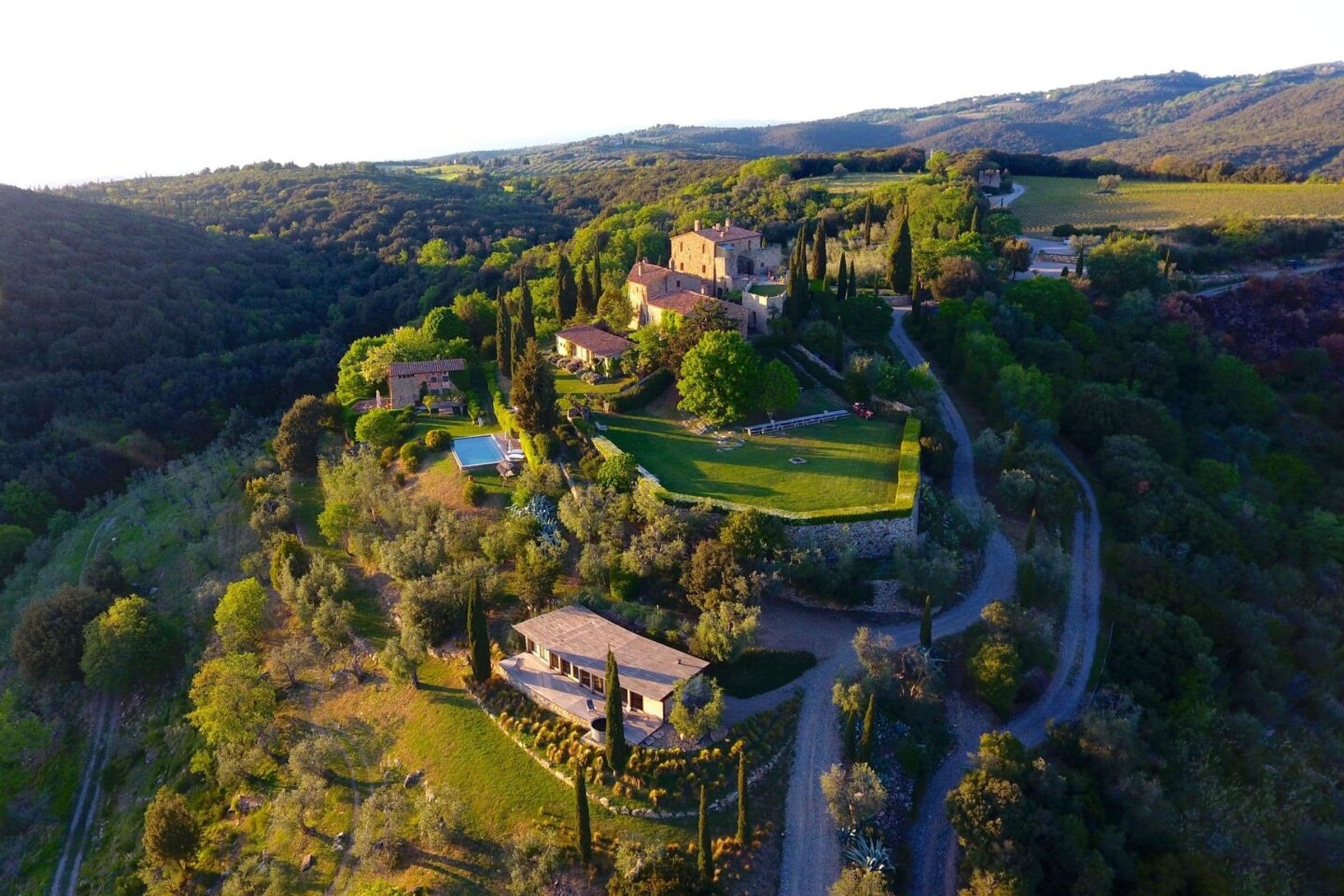
Chianti's strength is the density of distinguished restored properties. Our Tuscany collection spans converted 16th-century estates near Greve in Chianti to working wineries in Castellina with private vineyard tours included. A typical Chianti villa sleeps 8 to 14 guests, sits on 5 to 20 hectares of grounds and includes a private pool, olive grove and at least one terrace with valley views.
When does Chianti get too crowded?
Between mid-June and late August. Driving to lunch can mean negotiating tour buses on narrow strade bianche (white gravel roads). For peak summer trips we'd push you toward less-trafficked areas like the Crete Senesi or the Maremma instead. Drive times: Florence airport 45 minutes, Siena 30 minutes, Pisa airport 90 minutes.
What makes Val d'Orcia worth the drive south?
Val d'Orcia is an 18,500-hectare valley south of Siena, designated a UNESCO World Heritage Cultural Landscape in 2004 for its preserved Renaissance-era farming aesthetic. The Pienza-Montalcino-Montepulciano triangle anchors the area, with stone hill towns rising from wheat fields and sunflower meadows.
Who is Val d'Orcia best for?
Couples and small groups (4 to 8 guests) who want pace and quiet. The villas here are smaller than Chianti's grandest estates, often converted farmhouses with a more intimate footprint. Our highlights include a 17th-century rectory near San Quirico d'Orcia and a restored mill outside Pienza with a private cypress avenue.
Is Val d'Orcia good for wine lovers?
Some of Italy's most celebrated reds come from this valley: Brunello di Montalcino (which requires a minimum five years of ageing, two of which must be in oak) and Vino Nobile di Montepulciano. Most villas can arrange private cellar visits with the major estates. Drive times: Siena 40 minutes, Florence 90 minutes, Rome 2 hours.
Should you stay on the Tuscan coast at Forte dei Marmi?
If you want Tuscany's culture and food but with reliable summer beach weather, yes. Forte dei Marmi sits on the northern Tuscan coast, 25 minutes south of Pisa airport. The town has been a luxury beach destination since the 1950s, when Italian industrial families began building summer villas here. It remains the most exclusive stretch of Italian coastline north of Sardinia.
What's the catch with Forte dei Marmi?
Prices are notably higher than inland Tuscany during peak season, and the scene is more cosmopolitan than rural. The bagni (private beach clubs) require advance booking in summer, with established names like Bagno Roma Levante and Bagno Annetta booking out months ahead. Daytime highs reach 28 to 30°C in July and August; sea temperatures stay comfortable from late May to mid-October.
What kind of villas are available?
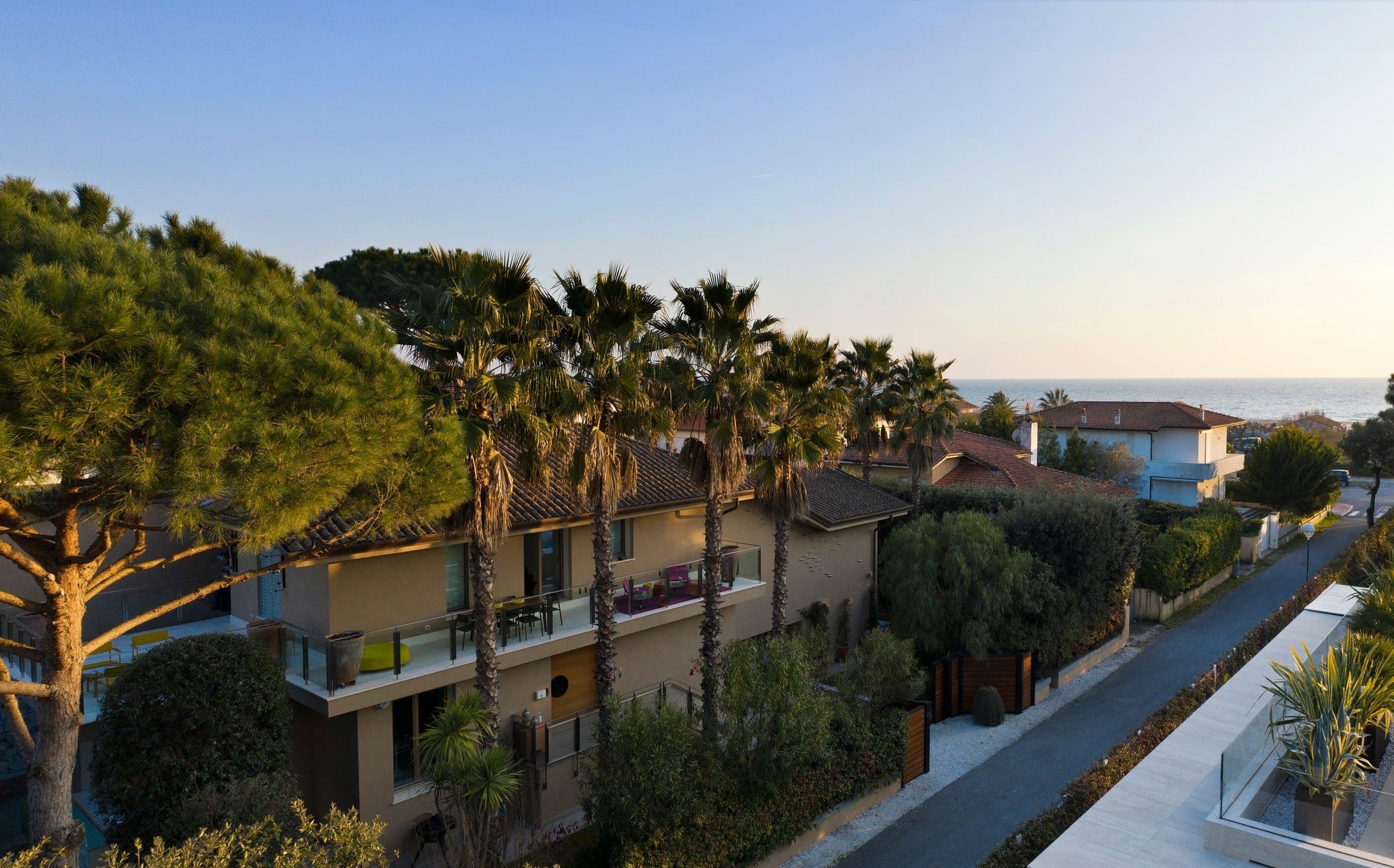
Our Forte villas typically sit within a 10-minute walk of the sea, with private gardens (no direct beachfront, by local zoning) and access to one of the established bagni. For travellers seeking quiet, we'd suggest the Maremma instead. Drive times: Pisa airport 25 minutes, Florence 90 minutes, Lucca 30 minutes.
Why do we send group bookings to the Maremma?
Because it's Tuscany's quietest, wildest stretch, with the largest private estates in our collection. The Maremma covers Tuscany's southwestern coast and inland hills, from Grosseto down to the Lazio border. This is the least developed and least visited part of the region, with 25,000 hectares of nature reserve, important Etruscan archaeological sites and a coastline of pine forest backed by working ranches.
What kind of villas are in the Maremma?
Larger estates (10 to 16 guests), often with riding stables, private vineyards or direct access to sandy beaches at Cala Violina or Marina di Alberese. The atmosphere is materially quieter than Chianti or Val d'Orcia. Mobile signal can be patchy in the deep Maremma; we'd flag this for guests bringing work along.
Is the Argentario peninsula different?
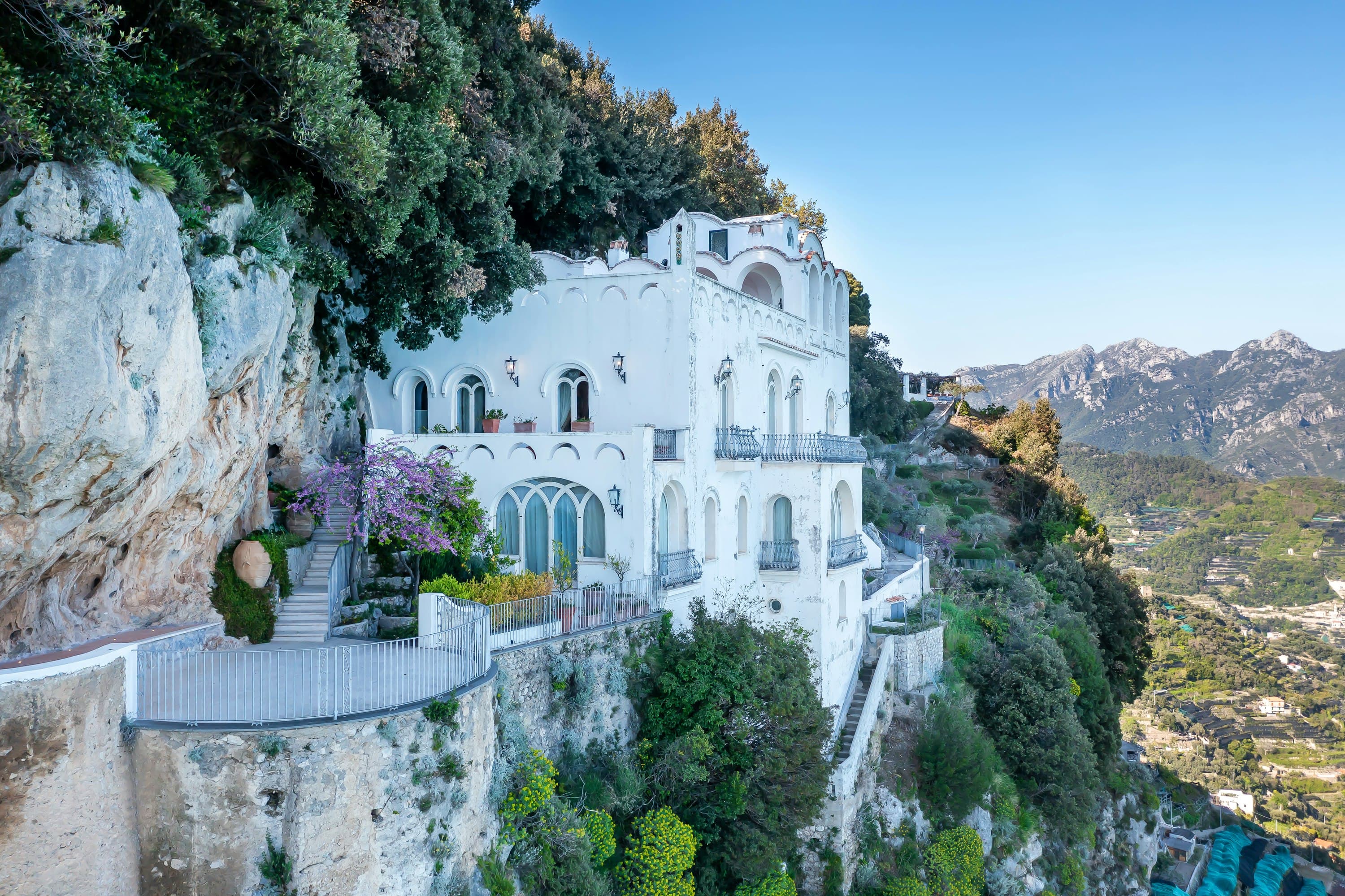
Yes. The peninsula at the southern tip presents a different proposition: clifftop villas overlooking the Tyrrhenian, with proximity to the islands of Giglio and Giannutri (90-minute private boat trips to either). Drive times: Pisa airport 2 hours, Rome airport 90 minutes, Siena 90 minutes.
Can you stay near Florence and Lucca without being in the cities?
Yes, and we'd argue it's the better play. For travellers prioritising Renaissance cities but wanting villa privacy, the hills around Florence and Lucca strike the right balance. Our preferred areas are Fiesole and the Mugello (north of Florence) and the hills west of Lucca towards the Versilia.
What's the trade-off versus staying in the cities?
These stays typically run 25 to 45 minutes from city centres, close enough for evening dinners in Florence or Lucca but far enough that you wake up in countryside silence. Properties here include restored monasteries, classical 18th-century villas and modern architectural houses on terraced hillsides.
The advantage over a city hotel: significantly more space, private pools and gardens at a fraction of the cost of comparable city accommodation. The trade-off: you commit to driving for every dinner and museum visit.
When should you visit Tuscany for a luxury villa stay?
May and September are our top recommendations for first-time visitors. Both months deliver reliable warm weather (averaging 22 to 26°C), open swimming pools, full restaurant service and significantly thinner crowds than peak July and August. May has the additional advantage of long daylight (sunset around 8:45 PM by month's end) and the lowest rainfall of the swimming season.
What about peak summer and August holidays?
For travellers tied to school holidays, late June and the second half of August are the more comfortable peak-season windows. The first three weeks of August are the hottest and busiest period across all of Italy, when Italians themselves take their main holiday. Cities can feel oppressive but villa stays in Chianti or Val d'Orcia remain pleasant.
Is there value in autumn?
Yes, particularly for food and wine travellers. October has a different appeal entirely: the vendemmia (wine harvest) is in full swing, vineyards turn copper-gold and prices drop noticeably. Mid-October to early November is our pick for travellers prioritising food and wine over swimming.
Is Tuscany worth it with children?
For families with children of any age, yes, but the right sub-region matters. Val d'Orcia and Chianti are the most child-friendly, with gentle landscapes, fenced pools (on most of our properties) and short drives between activities. The Maremma's wilder landscape suits older children who can manage longer days and quieter evenings.
We'd flag two practical considerations. First, many smaller villas in Val d'Orcia don't have fenced pools, so families with young swimmers should filter for that feature when browsing our Tuscany destination page. Second, lunch service in rural Tuscany typically runs 12:30 to 2:30 PM and dinner from 7:30 PM; restaurants close in between. With young children, planning around these hours saves frustration.
How do you get to Tuscany?
Three Italian airports serve the region. Florence airport (FLR) is the most central; Pisa airport (PSA) covers western Tuscany including Forte dei Marmi and Lucca; Rome airports (FCO or CIA) work best for the Maremma and southern Tuscany.
Which airport should you fly into?
Depends where in Tuscany you're heading. Florence for Chianti, Val d'Orcia and the eastern hills. Pisa for the coast, the Versilia and Lucca. Rome for the southern Maremma and Argentario peninsula.
How long is the flight to Tuscany?
From major European hubs, roughly 2 to 3 hours. London to Florence is 2 hours 15 minutes; Paris and Frankfurt are slightly shorter; Madrid and Amsterdam slightly longer. From the US East Coast, direct flights to Rome run 8 to 9 hours; West Coast adds another 2 to 3 hours via a European connection. From the Middle East, expect 6 to 7 hours direct from Dubai or Doha. From Asia, plan for at least one connection.
What about private flights or rail?
Florence and Pisa both accept private aviation; the closest dedicated private terminal is at Florence Peretola. For travellers in Western Europe, direct rail runs from Paris (Frecciarossa via Turin or Milan, around 11 hours) and 6 hours from Zurich. We arrange ground transfers from any of the three Tuscan airports as standard with our villa bookings.
How do we curate Tuscan villas?
Selectively. Tuscany has more luxury rental inventory than any single editor could meaningfully visit, so our curatorial position is selective by design. We focus on properties where the owner-operator relationship is direct (no large management chains), where the architectural restoration meets a higher standard than the regional average and where recent development hasn't compromised the surrounding landscape.
In practical terms: we visit every villa in our Tuscan collection before it goes live in the directory. We refuse properties where the photography exaggerates space, where the access road is unmarked or dangerous or where the staff aren't fluent in English. These criteria reduce the pool considerably but produce a collection where any villa we recommend would meet our standard.
For travellers comparing destinations, you might also be interested in our Amalfi Coast guide for southern Italy options.
Frequently asked questions
Which Tuscan sub-region provides the best value?
The Maremma and Val d'Orcia consistently provide better space-per-pound than Chianti or Forte dei Marmi, particularly outside July and August. For travellers prioritising villa quality over location prestige, both are stronger picks.
Can you arrange private chefs and concierge services in Tuscany?
Yes. Every villa in our collection includes optional private chef services arranged through vetted local chefs. Concierge support covers winery visits, helicopter transfers to Florence or Rome, private guided tours of the Uffizi or Pitti Palace and bespoke driving routes through the region.
What's the minimum villa rental period in Tuscany?
Most owners require a 7-night minimum during high season (mid-June to mid-September) and a 5-night minimum at other times. A handful of properties accept 3 or 4-night stays in shoulder season.
Do villas come with staff?
Most of our larger Tuscan villas (10+ guests) include a housekeeper and maintenance staff during stays. Smaller properties (4 to 8 guests) typically include a welcome and check-in service plus mid-stay clean. Private chefs, drivers and butlers are arranged on request.
Is Tuscany expensive?
It varies considerably. A typical 8-guest villa in Chianti during peak season runs £8,000 to £20,000 per week; the same villa in shoulder season might run £4,500 to £10,000. Val d'Orcia and the Maremma are generally 20% to 30% lower for comparable space; Forte dei Marmi runs 20% to 40% higher. Browse our Tuscany collection for current pricing.
How safe is Tuscany?
Very safe by international standards. Petty crime exists in city tourist areas (Florence, Pisa) but is rare in rural villa locations. We'd flag the usual road-safety considerations: Italian rural roads are narrow with confident local driving; we recommend automatic hire cars for visitors not used to manual gearboxes.
Browse our full Tuscan villa collection, or compare with our properties in Provence and the Algarve.