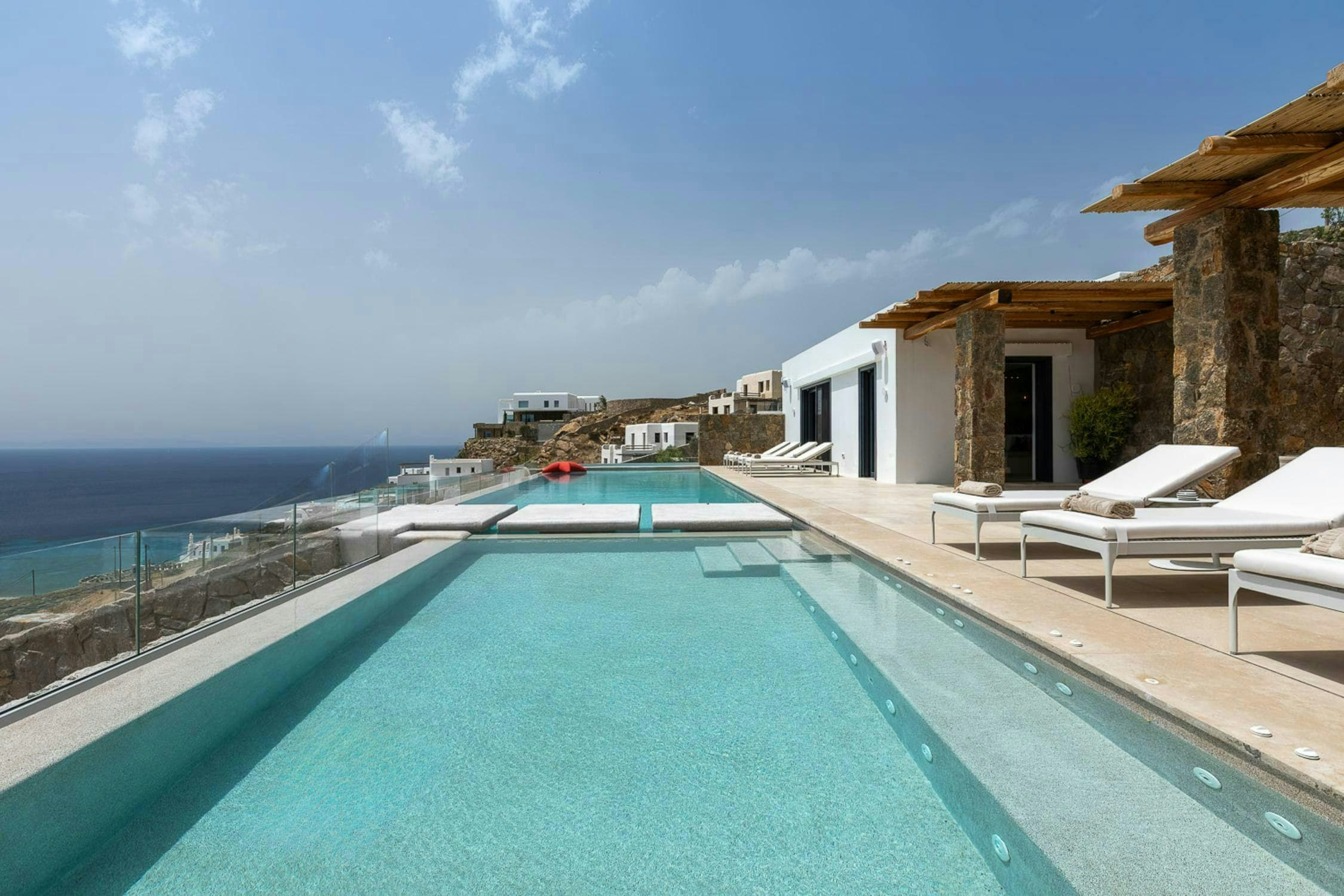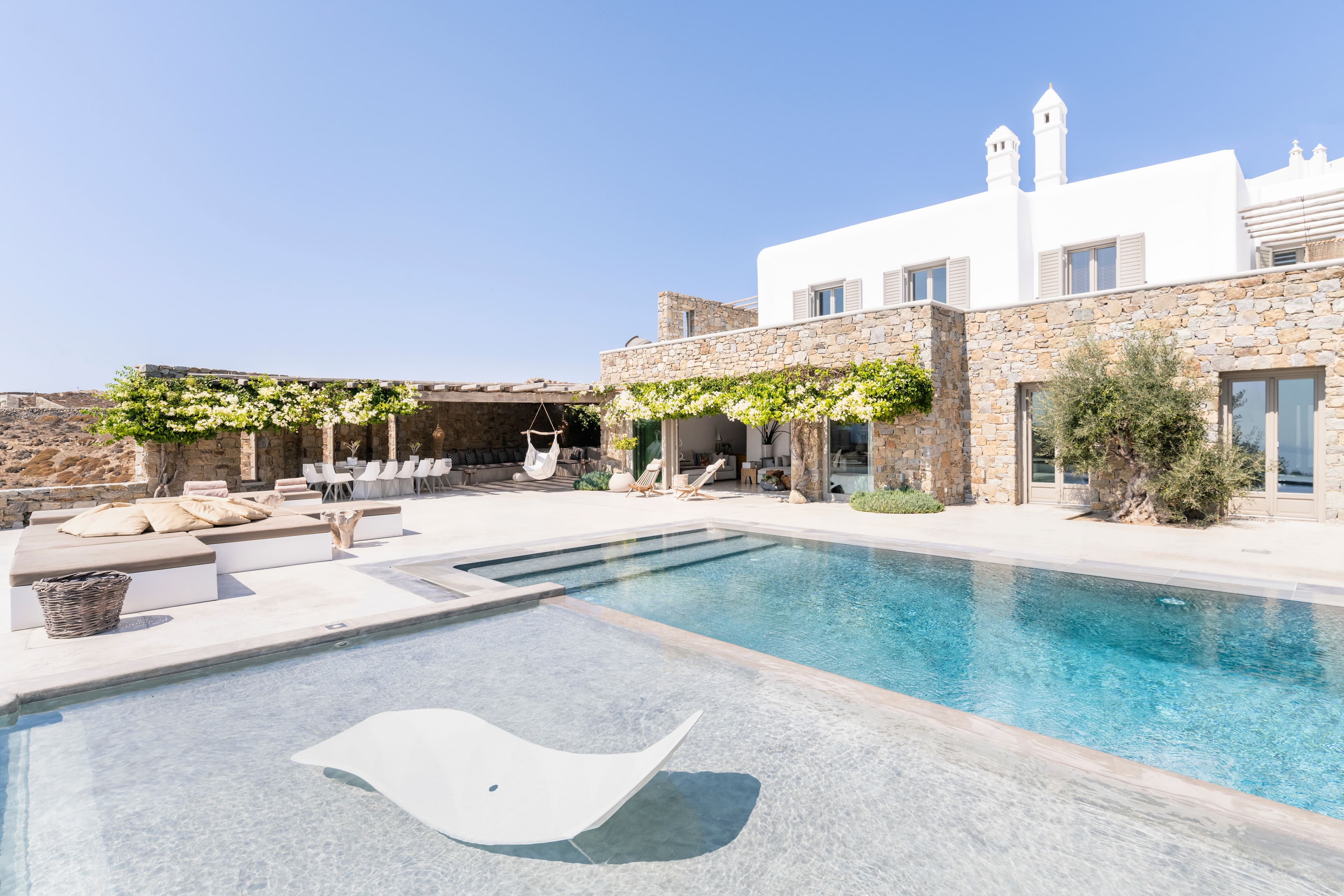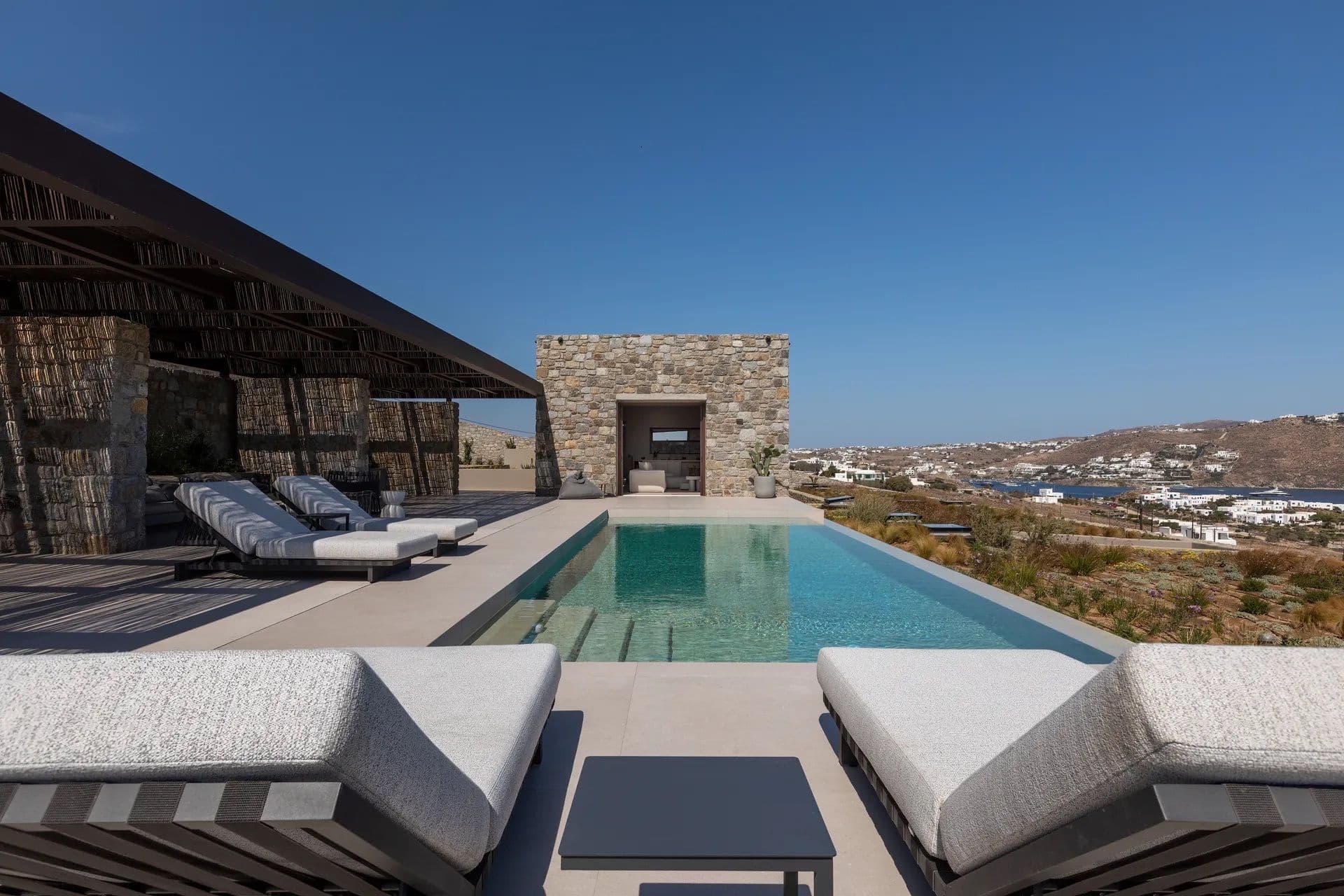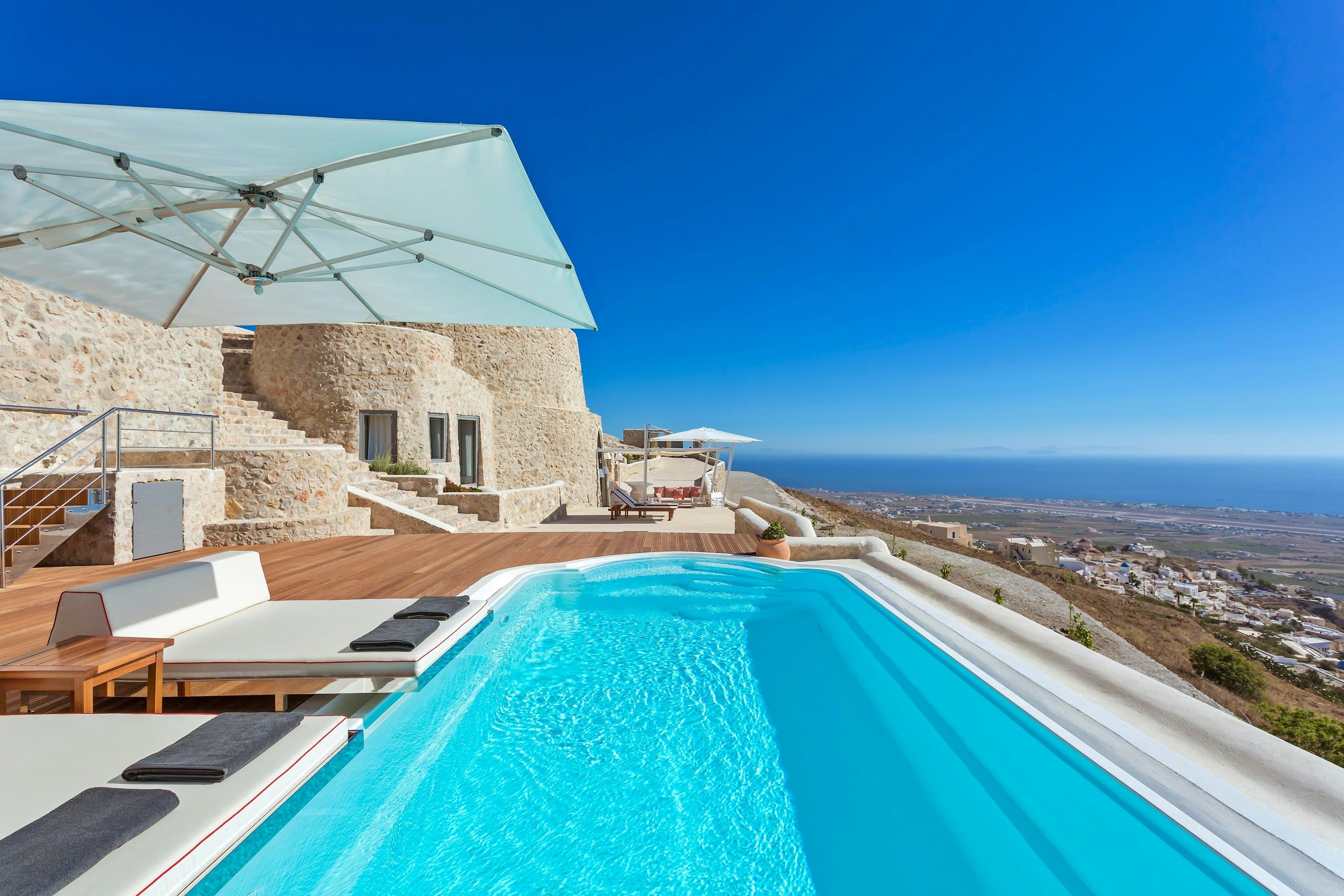
The Cyclades archipelago spans roughly 2,500 square kilometres of the Aegean Sea, with Mykonos and Santorini sitting approximately 115 kilometres apart and drawing the vast majority of visitors to this corner of Greece. Both islands reward travellers with brilliant light, warm seas and excellent accommodation, yet they deliver remarkably different holidays. We have spent considerable time on each, and the honest truth is that the mykonos vs santorini question has no universal answer. It depends entirely on what you want from your trip. Our guide to the best hotels in the Greek islands covers both in detail, but here we will help you work through the decision point by point.
What kind of holiday does each island suit?
Mykonos suits travellers who want energy, social dining and easy beach days, while Santorini suits those prioritising drama, romance and a slower pace. That single sentence does most of the heavy lifting, but the nuance matters.
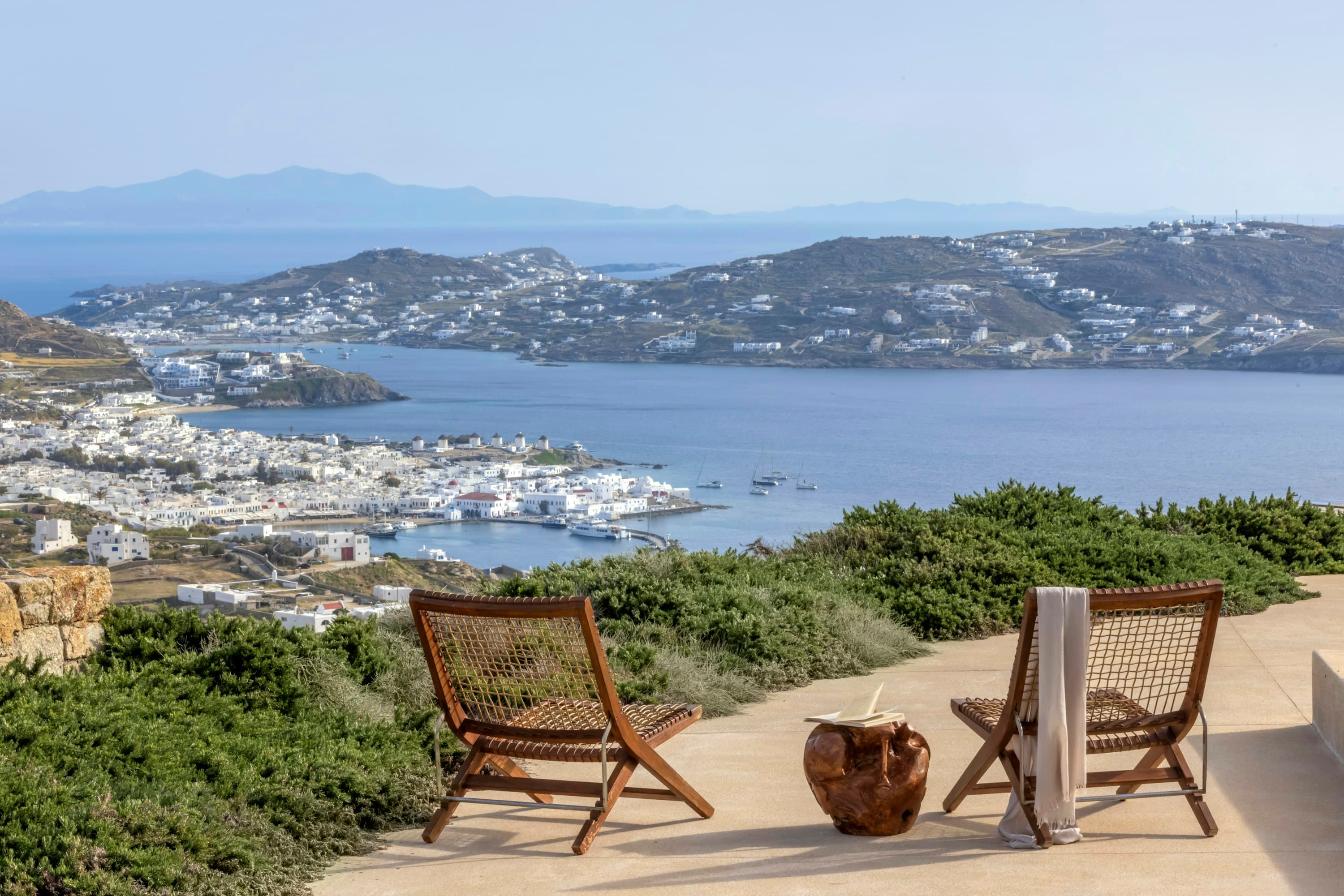
Mykonos Town (Chora) is a labyrinth of whitewashed lanes, bougainvillea and late-night cocktail bars. The south coast beaches, from Psarou to Super Paradise, pulse with music from late morning onwards between June and September. Yet the island also has a quieter north side: Agios Sostis and Fokos feel genuinely remote, with no sunbed concessions and very few visitors.
Santorini's caldera, formed by a volcanic eruption around 1600 BCE, creates a visual spectacle that no other Greek island can match. Oia and Fira cling to the cliff edge, and the views across to Thirassia and the volcanic islets shift colour throughout the day. The pace here is contemplative rather than kinetic: long lunches, wine tastings at Santo Wines or Venetsanos Winery, sunset watching from a private terrace.
Is Mykonos or Santorini better for couples?
For couples weighing mykonos vs santorini for couples, the answer hinges on energy levels and shared interests. Santorini is the more traditionally romantic of the two, with its caldera-view suites, candlelit restaurants in Oia and quiet volcanic beaches at Red Beach and Vlychada. Many couples find the island's compact geography means they can fill three or four days without feeling rushed.
Mykonos provides a different kind of romance: long afternoons at a beach club followed by cocktails on the old harbour, then dinner at Remezzo or Kikí's Tavern in Agios Sostis. Couples who enjoy nightlife will find far more to do after 23:00 on Mykonos than on Santorini, where most restaurants wind down by midnight.
We think the best approach for couples with a week to spare is to visit both. The ferry from Mykonos to Santorini takes around two to three hours on a high-speed service with SeaJets or Minoan Lines, and the combination gives you contrast. Our Santorini accommodation picks include several properties with private plunge pools ideal for couples.
What about Mykonos or Santorini for honeymoon trips?
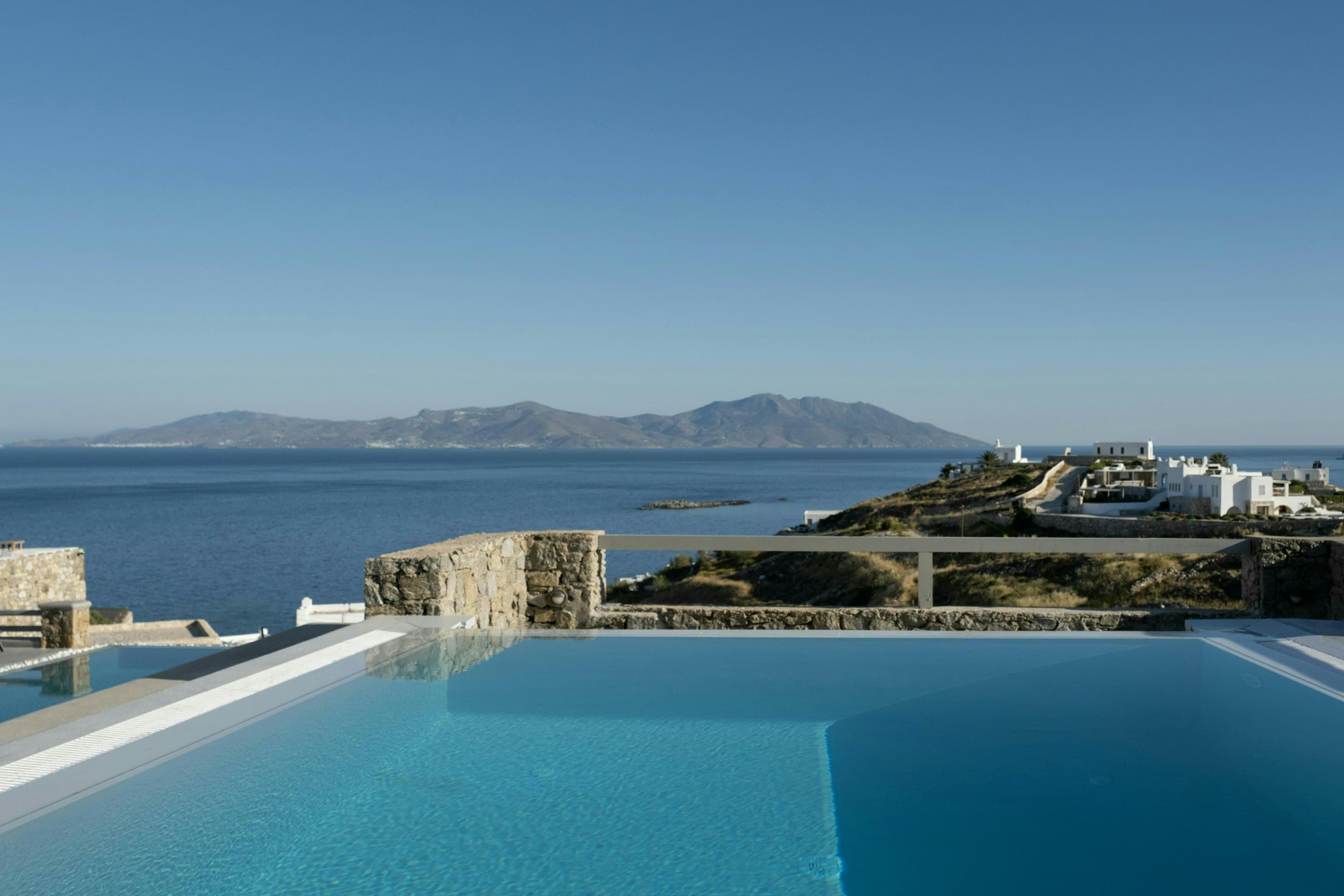
Santorini wins the mykonos or santorini for honeymoon debate for most couples, and the reason is straightforward: the caldera creates a sense of occasion that very few places on earth replicate. Oia's Canaves Oia Epitome and the Katikies Hotel both specialise in honeymoon suites with infinity pools that seem to spill into the Aegean. Fira and Imerovigli provide similar views at slightly lower price points.
Mykonos can work brilliantly for honeymooners who prefer a livelier setting. Couples who want to mix daytime relaxation with evenings at Scorpios or Nammos will find the energy infectious rather than intrusive. The key is choosing accommodation away from the party beaches: Ornos, Agios Ioannis and the Aleomandra coast all provide calm.
If your honeymoon budget allows one exceptional meal, we suggest Lycabettus Restaurant at the Myconian Utopia on Mykonos (for its terrace overlooking Elia Beach) or Selene in Fira on Santorini (for its modern Cycladic tasting menu). Both merit advance booking, especially between July and August.
Which island works better for families?
Mykonos edges ahead in the mykonos vs santorini for families comparison, largely because of its beaches. Families with young children will find Ornos and Platis Gialos ideal: the water is shallow, the sand is soft and tavernas sit within easy walking distance. Older children and teenagers tend to enjoy the buzz of Mykonos Town, where gelaterias, watersports and boat trips keep them occupied.
Santorini's beaches are darker, rockier and often accessed by steep paths. Perissa and Kamari, on the east coast, are the most family-friendly options, with volcanic black sand and a seafront lined with restaurants. The caldera side of the island, where most of the famous views are, involves significant steps and narrow walkways that can challenge pushchairs and small legs.
That said, Santorini's cultural attractions, including the Akrotiri archaeological site (a Minoan settlement preserved under volcanic ash) and the Museum of Prehistoric Thera in Fira, engage curious children far more effectively than Mykonos's limited museum scene. We recommend Santorini for families with children aged eight and above, and Mykonos for those with younger ones.
When is the best time to visit?
May to mid-June and September to mid-October deliver warm weather, manageable crowds and lower accommodation prices on both islands. We favour early June and late September in particular: daytime temperatures hover around 25 to 28°C, the sea is swimmable and you can dine at popular restaurants without booking three weeks ahead.
July and August bring peak heat (regularly exceeding 35°C), peak prices and peak crowds. Oia's sunset viewpoint becomes uncomfortably packed, and Mykonos's party scene reaches full volume. If you must visit in high summer, book accommodation and restaurants well in advance and plan activities for early morning or late afternoon.
October remains surprisingly viable. Many hotels stay open until late October, the sea temperature lingers around 22°C and you can explore Akrotiri or wander Mykonos Town in near solitude. Rain becomes more likely from mid-October, but dry spells of five or six days are common.
How do you get there?
Both islands have airports with direct flights from European cities between April and October. Mykonos (JMK) receives flights from London, Paris, Rome, Amsterdam and many other hubs, with a flight time from London of approximately three hours and forty minutes. Santorini (JTR) has a similar roster of connections.
From Athens, Aegean Airlines and Sky Express operate year-round domestic flights of around 40 to 50 minutes to each island. Ferries from Piraeus take roughly five hours on a high-speed vessel to Mykonos and around five to eight hours to Santorini, depending on the service and stops.
Transferring between the two islands is simple. High-speed ferries run daily from May to October, covering the route in two to three hours. We suggest booking through a platform such as Ferryhopper, which shows all operators and schedules on a single page. Our practical guide to island-hopping in Greece walks through the logistics in greater detail.
Where should you stay on each island?
On Mykonos, location determines your experience more than almost any other factor. Here is a quick breakdown by area:
Mykonos Town (Chora): The heart of the island. Walking distance to restaurants, bars and the old harbour. Best for couples and solo travellers who want to be in the thick of things.
Ornos: A 10-minute drive south of Chora. A calm, sandy bay with a village feel. Ideal for families and couples who want beach access without the party scene.
Agios Ioannis: Quiet, west-facing and famous as the backdrop to the film Shirley Valentine. Exceptional sunset views towards Delos.
Elia and Kalo Livadi: The southeast coast. Longer beaches, fewer crowds, a 20 to 25-minute drive from Chora. Good for travellers with a hire car.
On Santorini, the caldera villages dominate the accommodation market:
Oia: The most photographed village, at the northern tip. Premium prices, extraordinary light and the famous sunset. Best for honeymooners and couples.
Fira: The capital, with more dining options, better transport links and a slightly younger crowd. A good base if you want to explore the whole island.
Imerovigli: Between Fira and Oia, and the highest point on the caldera rim. Quieter, with arguably the best panorama. A favourite of ours for its balance of views and tranquillity.
Kamari and Perissa: East coast beach towns. Considerably cheaper, with a relaxed atmosphere. Best for families and budget-conscious travellers.
Browse our curated Mykonos hotel collection for specific property recommendations.
Where should you eat?
On Mykonos, we return again and again to Kikí's Tavern at Agios Sostis. There is no phone, no reservation system and no electricity: you queue, you wait, and you eat some of the best grilled meat and salads on the island. Arrive before 13:00 to avoid a long wait. For seafood, Kounelas in Mykonos Town has served simply prepared fish to locals since the 1960s. Couples celebrating a special occasion should look at Matsuhisa Mykonos (Nobu's outpost at the Belvedere Hotel) or the tasting menu at Karavaki in the Myconian Ambassador.
On Santorini, Selene in Fira remains the island's most respected restaurant, with a menu rooted in Cycladic ingredients and techniques. Metaxy Mas in Exo Gonia serves generous Cretan-influenced dishes at prices that feel refreshingly honest for Santorini. For caldera-view dining, Ambrosia in Oia strikes a balance between spectacle and substance, with its grilled octopus and white aubergine dishes particularly good. Lucky's Souvlaki in Fira handles the casual end of the spectrum with excellent gyros and cold Mythos beer.
How do you get around?
On Mykonos, local buses connect Mykonos Town to the main beaches (Ornos, Platis Gialos, Paradise Beach, Elia) from roughly April to October. Services run every 20 to 40 minutes in summer. A hire car or ATV gives you access to the quieter north coast, and we recommend booking through a local agency such as EasyRentCars Mykonos rather than the international chains, which tend to charge more.
On Santorini, the bus network operates from Fira's central station and connects to Oia, Kamari, Perissa and Akrotiri. Hire cars are useful but come with a caveat: parking in Oia and Fira is extremely limited in July and August. Scooters and ATVs are popular, though the narrow roads and steep drops demand caution, especially at night. Taxis exist on both islands but can be difficult to find during peak hours. We recommend downloading the KTEL bus app or saving the timetable to your mobile before you travel.
For mobile data, purchasing a local SIM card from Cosmote or Vodafone Greece at the airport will cost around 10 to 20 euros for a prepaid plan with several gigabytes of data. Most hotels provide reliable Wi-Fi, but a local SIM proves invaluable for navigation and ferry updates. Greece uses the euro, and card payments are widely accepted, though small tavernas and bus services sometimes prefer cash.
For travellers considering a wider Cyclades itinerary, our guide to Paros and Naxos covers two neighbouring islands that complement both Mykonos and Santorini beautifully.
How do the costs compare?
Santorini and Mykonos rank among the most expensive Greek islands, and neither qualifies as a budget destination in high season. A caldera-view suite in Oia typically starts at 400 to 600 euros per night in July and August, while a comparable boutique property in Mykonos Town or Ornos ranges from 300 to 500 euros. Both islands drop their rates significantly in May, early June, late September and October, often by 30 to 50 per cent.
Dining costs run higher on Santorini's caldera rim (expect 80 to 120 euros for two at a mid-range restaurant with wine) than in Mykonos Town (60 to 100 euros for a similar meal). Beach clubs on Mykonos carry a premium: a sunbed at Nammos or Scorpios can run from 50 to over 200 euros per person, depending on the area and the season.
Frequently asked questions
Is Mykonos or Santorini more romantic?
Santorini generally feels more romantic, thanks to its caldera views, intimate cave hotels and quieter evening atmosphere. The island's geography creates a natural intimacy, with most restaurants and terraces oriented towards the sea and the sunset. Mykonos can also be romantic, particularly in its quieter corners like Agios Ioannis and Ornos, but its reputation leans more towards socialising and nightlife than candlelit seclusion.
Can you visit both Mykonos and Santorini in one trip?
You can, and we actively encourage it if your trip lasts seven days or more. High-speed ferries connect the two islands in approximately two to three hours, with multiple daily departures from May through October. We suggest spending three nights on one island and three or four on the other. Start with Mykonos for energy, then move to Santorini to decompress, or reverse the order depending on your preferences.
Which island is better for nightlife?
Mykonos is the clear leader for nightlife in the Cyclades and one of the most prominent nightlife destinations in the Mediterranean. Clubs such as Cavo Paradiso (open since 1993), Skandinavian Bar in Mykonos Town and the beach club scene at Paradise and Super Paradise run until dawn throughout summer. Santorini has bars and late-evening restaurants, particularly along the caldera in Fira, but nothing approaching the scale or intensity of Mykonos after midnight.
How many days do you need on each island?
Three full days on each island gives you enough time to see the highlights without rushing. On Mykonos, that allows a day in Chora, a beach day and a day trip to the archaeological island of Delos (a UNESCO World Heritage Site, roughly 30 minutes by boat). On Santorini, three days covers Oia and Fira, a visit to Akrotiri, a wine tasting and an afternoon on the east coast beaches.
Is the santorini vs mykonos choice difficult for a first visit to Greece?
Not especially, provided you are honest about your priorities. Choose Santorini if you want volcanic landscapes, cultural sites and a slower pace. Choose Mykonos if you want beaches, social energy and varied nightlife. Both islands have excellent food, welcoming locals and superb light. First-time visitors to Greece often enjoy combining both with a few days in Athens at either end of the trip, which also simplifies flights and ferry connections.
Are the islands accessible for travellers with mobility challenges?
Both islands present challenges. Santorini's caldera villages involve steep staircases, narrow cobbled paths and very few lifts or ramps, making wheelchair access extremely difficult in Oia and parts of Fira. The east coast towns of Kamari and Perissa are flatter and more manageable. Mykonos Town also has cobblestones and steps, but the beach areas of Ornos and Platis Gialos present fewer barriers, with some hotels providing accessible rooms at ground level. We recommend contacting your chosen hotel directly to discuss specific mobility needs before booking.