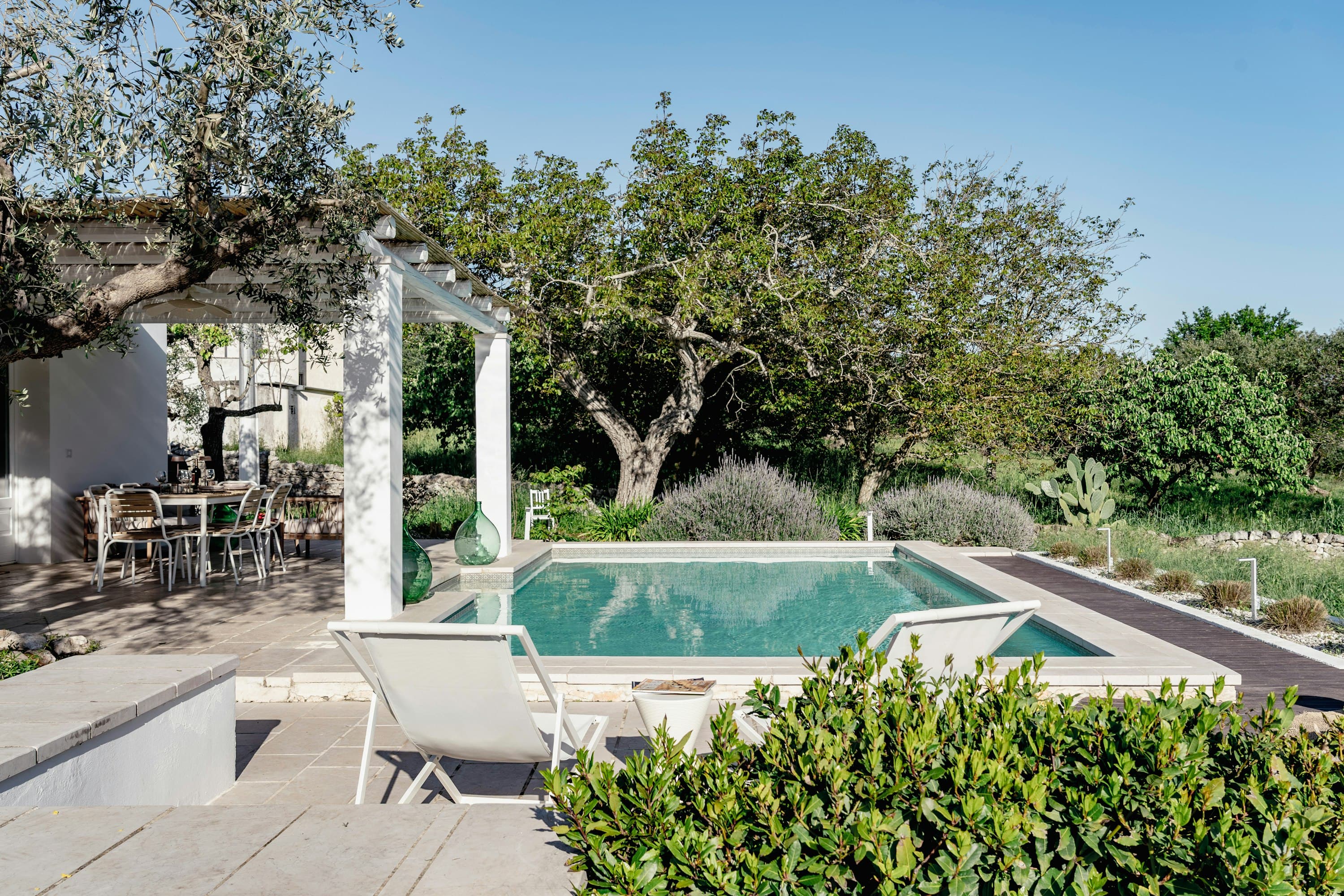

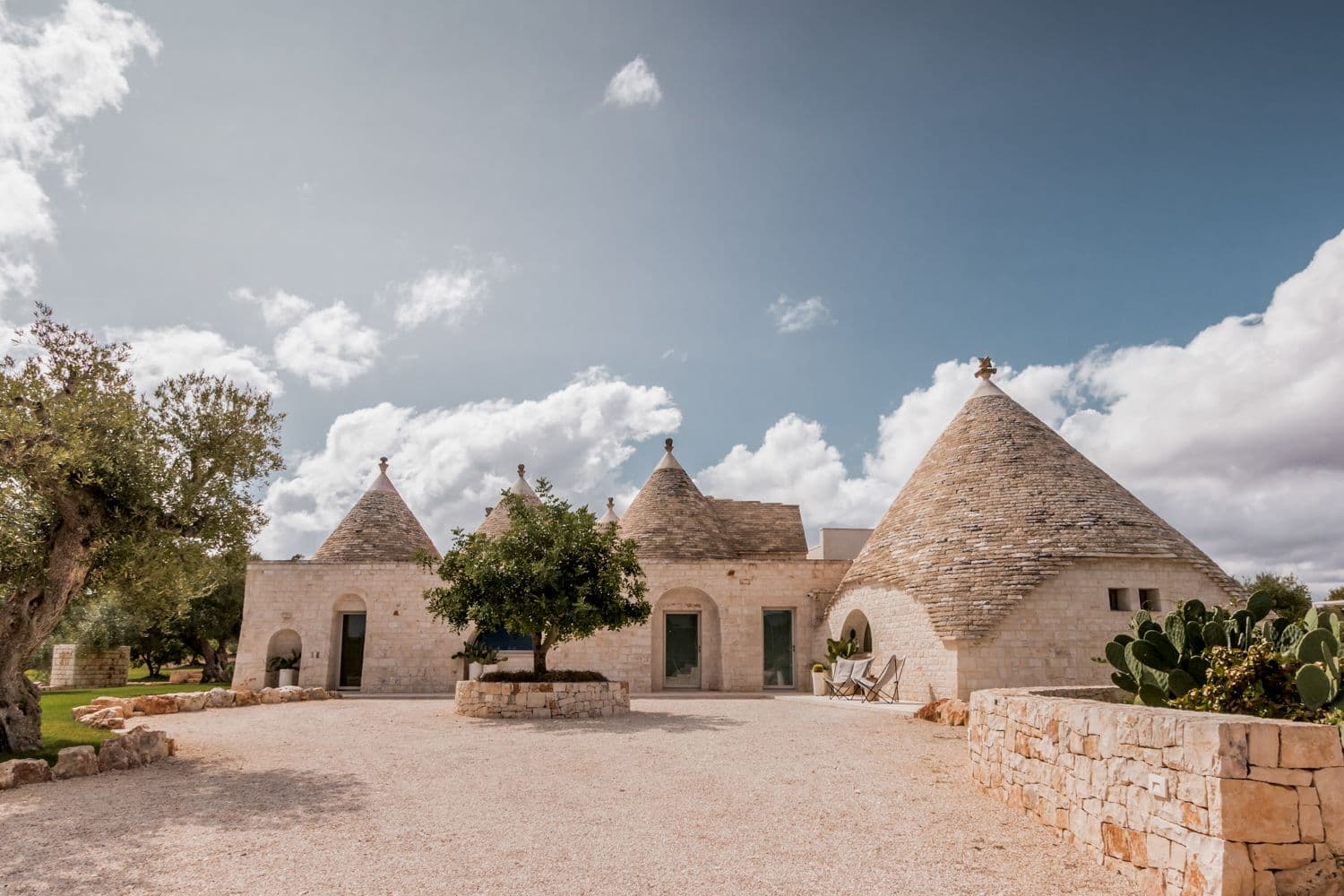
Puglia stretches roughly 400 kilometres along the heel of Italy's boot, and that length means choosing where to base yourself matters more here than in almost any other Italian region. The landscape shifts from the olive groves and white hilltop towns of the Valle d'Itria to the baroque grandeur of the Salento and the dramatic cliff-backed coves of the Adriatic coast. We have spent weeks driving between these areas, and the honest truth is that no single town gives you everything. But three places come up again and again as the strongest bases: Ostuni, Lecce and Polignano a Mare. In our guide to Italy's most distinctive stays, we cover the country region by region. Here, we focus purely on Puglia and break down what each base does best, who it suits and how to make the most of your time.
Why does your base matter so much in Puglia?
It matters because the region is long and narrow, and distances between key areas are greater than most travellers expect. Ostuni to Lecce is roughly 80 kilometres and takes a little over an hour by hire car. Polignano a Mare sits about 35 kilometres south of Bari, placing it closer to the northern sights but further from the Salento. Public transport links exist but remain slow and infrequent outside the main Bari to Lecce rail corridor.
Choosing the right base depends on what you prioritise: food, beaches, architecture, a central position for day trips or simply the feeling of a place after dark. We will walk through each of the three towns in detail, then cover a few alternatives for travellers with specific needs.
Is Ostuni the best place to stay in Puglia as a base?
Ostuni is the most practical base for first-time visitors who want to explore broadly, because it sits almost exactly at the midpoint of the region's most popular sights. From Ostuni, you can reach Alberobello's trulli in about 25 minutes, the caves of Polignano in 40 minutes, Lecce in just over an hour and Matera (technically in Basilicata) in around 75 minutes. That central position makes it the strongest all-round base for anyone planning day trips by hire car.
What is the town itself like?
Ostuni earns its nickname, La Città Bianca, from the whitewashed houses that climb a hillside above an expanse of ancient olive groves reaching towards the coast. The centro storico is compact and genuinely beautiful: a tangle of narrow lanes, small piazzas and a 15th-century cathedral with an unusual rose window. After dark, the old town fills with locals and visitors eating at restaurants like Osteria del Tempo Perso, where the dining room is carved into a natural cave.
The town has a year-round population of around 30,000, which means it feels like a real place rather than a stage set, even in high summer. Markets run on Saturdays. Cafés along Piazza della Libertà fill with older men reading newspapers in the morning and families eating gelato in the evening. We have always found it a generous, unhurried town.
What about beaches near Ostuni?
Ostuni's coastline, roughly 8 to 10 kilometres from the old town, runs along a designated marine reserve with clean, shallow water and a mix of sandy and rocky stretches. The best-known beaches include Pilone, Gorgognolo and Costa Merlata, all reachable in about 15 minutes by car. They lack the drama of Polignano's cliffs but suit families and anyone who prefers sandy entry to the sea.
For those wondering where to stay in Puglia for beaches specifically, Ostuni strikes a useful balance: close enough to swim daily, but with a proper town to return to in the evening. You are not marooned in a resort.
What kind of accommodation defines Ostuni?
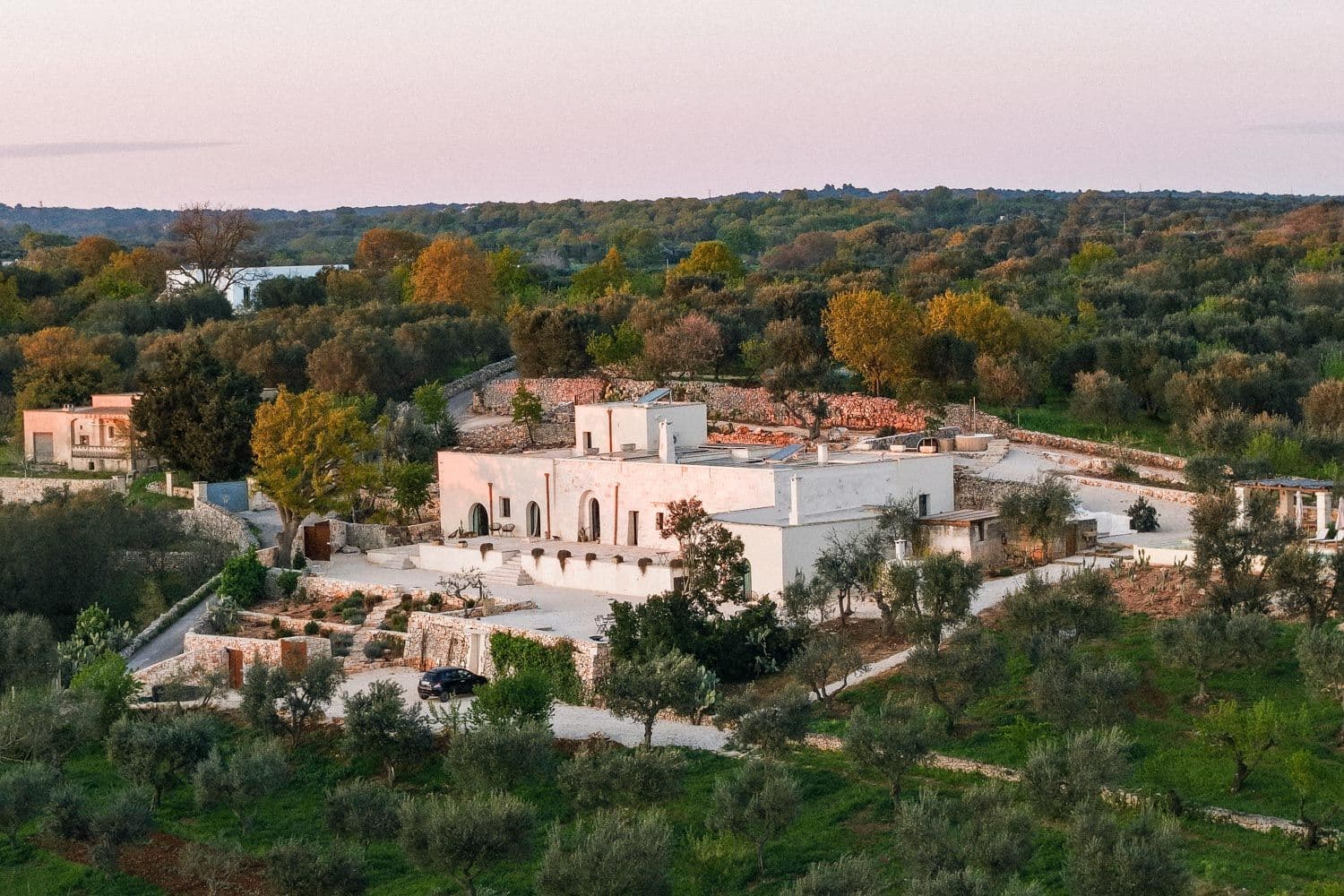
The area around Ostuni is the heartland of the masseria, the fortified farmhouse that has become Puglia's signature accommodation type. Properties range from simple agriturismo stays with a few rooms and a shared pool to high-end conversions with spa facilities and cookery schools. In the old town itself, you will find a growing number of boutique guesthouses in converted palazzi, typically with four to eight rooms and a roof terrace.
We recommend Ostuni to couples, families and small groups visiting Puglia for the first time who want a flexible base with strong accommodation options and easy access to the Valle d'Itria.
Is Lecce the right choice for culture and food?
Lecce is the clear choice for anyone who prioritises architecture, food culture and a vibrant evening atmosphere above all else. The city contains the highest concentration of baroque architecture in southern Italy, with more than 40 churches and numerous civic buildings constructed from the local pietra leccese, a warm, honey-coloured limestone that carvers could work almost like wood.
What makes Lecce feel different from the rest of Puglia?
Lecce feels like a city, not a town, and that changes the rhythm of a stay. It has a university with around 25,000 students, a professional theatre, independent bookshops, excellent wine bars and restaurants that cater to locals rather than tourists for most of the year. The food scene is rooted in Salentine tradition: rustico leccese (a puff-pastry parcel filled with béchamel, mozzarella and tomato), pasticciotto (a custard-filled pastry), ciceri e tria (a chickpea and fried pasta dish) and some of the best street food in southern Italy.
The Piazza del Duomo, enclosed on three sides with a single entrance, creates one of the most theatrical public spaces in the country. The Basilica di Santa Croce, with its elaborate façade completed over roughly 200 years, rewards close attention. We found ourselves returning to it at different times of day just to watch the light change on the stone.
How does Lecce work as a base for beaches?
Lecce sits roughly 12 kilometres from the Adriatic coast and about 25 kilometres from the Ionian coast, placing it within easy reach of both. The Adriatic side around San Foca and Torre dell'Orso has rocky coves and clear water. The Ionian side, particularly around Porto Selvaggio and Gallipoli, tends towards sandier beaches with warmer, calmer water.
This dual-coast access is a genuine advantage. You can choose your beach based on wind direction: if the Adriatic is rough (common when the tramontana blows), the Ionian is often calm, and vice versa. A hire car makes this easy. Without one, local buses run to the main coastal towns but on limited schedules.
What should you expect from accommodation in Lecce?
Lecce's accommodation centres on palazzo conversions within the old town walls. These tend towards a more urban, design-led feel than the rural masserias around Ostuni. Rooms in historic buildings with high vaulted ceilings, exposed stone and contemporary furnishings are common. Several excellent small hotels operate in the streets around the Duomo and along Via Palmieri. We have written about several of our preferred properties in our Puglia accommodation guide.
We recommend Lecce to couples and friends who love food, architecture and urban atmosphere, and who want their evenings to feel as rich as their days.
Should you choose Polignano a Mare for the coast?
Polignano a Mare is the most visually dramatic of the three, and it earns its reputation. The old town sits on limestone cliffs that drop vertically into the Adriatic, with houses built right to the edge. The view from the Ponte Borbonico (the old bridge entering the centro storico) over Lama Monachile, the small pebble cove framed by cliff walls, is one of the most photographed scenes in Puglia.
Who does Polignano suit?
Polignano suits travellers who want a compact, walkable coastal base with immediate access to the sea. The old town is small enough to explore in a couple of hours, but it packs in enough good restaurants, gelaterias (try Il Super Mago del Gelo) and aperitivo bars to keep evenings interesting. It also has a direct train connection to Bari, roughly 35 minutes, making it a viable base even without a hire car.
The town works well for shorter stays of two or three nights, perhaps as part of a longer Puglia itinerary. For a week-long trip, it can feel limited in scope unless you plan regular day trips. Its northern position means Lecce and the Salento are 90 minutes or more away, which limits your range.
What about accommodation in Polignano?
The old town has a growing number of boutique hotels and guest rooms, many with terraces or balconies giving views over the sea. Space is tight in the centro storico, so rooms tend to be smaller than what you will find in Ostuni or Lecce. Outside the old town, several larger hotels and B&Bs line the coast road, with easier parking and often lower rates.
We recommend Polignano for couples on shorter trips, anyone arriving via Bari without a hire car and travellers who prioritise a dramatic coastal setting above all else.
What about other bases in Puglia?
Three other areas deserve mention for travellers with specific priorities.
Is the Valle d'Itria worth considering?
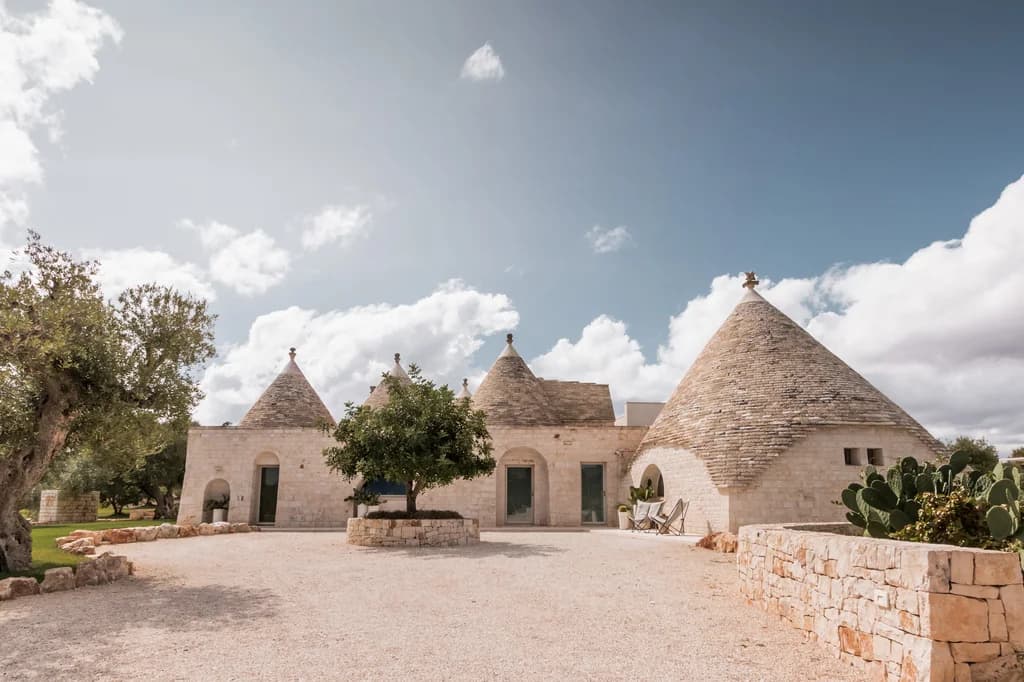
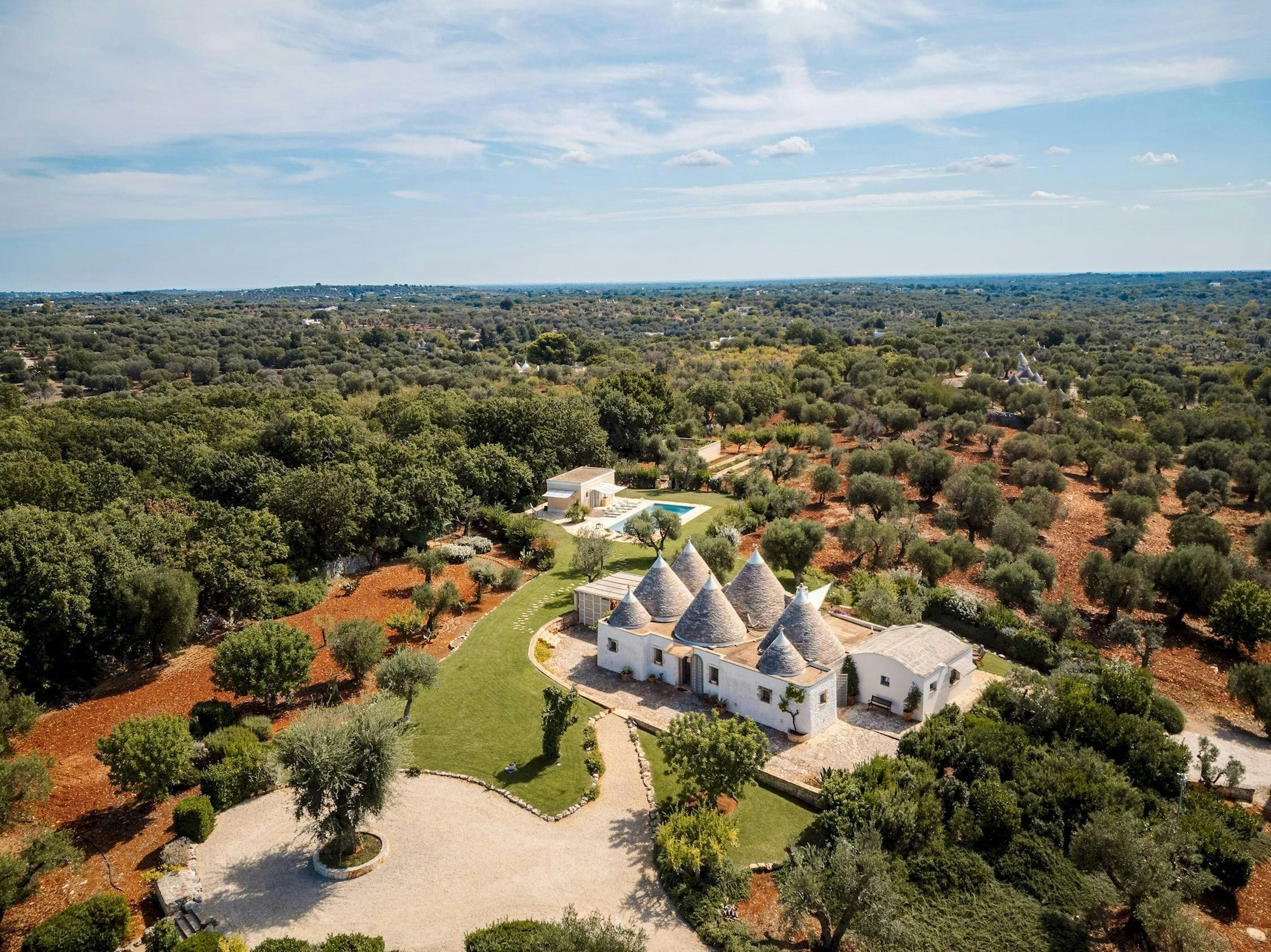
The triangle of towns between Alberobello, Martina Franca and Locorotondo forms the heart of the Valle d'Itria and suits anyone wanting a rural, slow-paced stay among olive groves and trulli. Martina Franca has the strongest town centre: a handsome baroque core with good restaurants and a prestigious opera festival each July and August. Locorotondo is smaller and quieter, with fine wine producers nearby. Alberobello draws large day-trip crowds but empties dramatically by evening.
Could you base yourself in or near Monopoli?
Monopoli, roughly 10 kilometres south of Polignano, provides a less touristic coastal alternative with a working fishing port, a good old town and several sandy beaches within walking distance. It suits families well and has better parking than Polignano. We consider it one of the more underrated towns along this stretch of coast.
What about Gallipoli or Otranto in the deep south?
Both Gallipoli (Ionian coast) and Otranto (Adriatic coast) work well for beach-focused stays in the Salento, particularly in June or September when they are busy but not overwhelmed. Gallipoli has a compact island old town and access to some of the best sandy beaches in the region. Otranto has a remarkable cathedral with a 12th-century mosaic floor and a more rugged coastline. Both sit at least 40 minutes from Lecce, so they function best as destinations in their own right rather than day-trip bases.
When is the best time to visit Puglia?
May to mid-June and mid-September to mid-October provide the best combination of warm weather, manageable crowds and full access to restaurants and beaches. July brings heat, often above 35°C, and rising visitor numbers. August is the peak: Italian domestic tourism fills every coastal town, beach prices rise sharply and inland temperatures can be punishing.
April is lovely for wildflowers and walking but too cool for comfortable swimming. Late October brings shorter days but autumn food markets, new-season olive oil and lower prices across the board.
We have visited in every month from April to October and find early June and late September the most rewarding. The light is extraordinary, the sea is warm enough for swimming and you will not queue for a table at dinner.
For more guidance on timing and seasonal considerations, see our guide to planning a stay in southern Italy.
How to reach your base
Bari Karol Wojtyła Airport receives flights from most major European cities year-round, with additional seasonal routes in summer. Brindisi Salento Airport, roughly 40 kilometres from Lecce, serves as the better gateway for the southern half of the region. Both airports have hire car desks.
From Bari airport, approximate drive times are: 40 minutes to Polignano a Mare, 60 to 70 minutes to Ostuni and roughly 90 minutes to Lecce. From Brindisi airport, Lecce is about 40 minutes, Ostuni around 30 minutes and Polignano roughly 70 minutes.
We strongly recommend a hire car for any stay based in Ostuni or the Valle d'Itria. In Lecce and Polignano, you can manage without one for the town itself, but a car opens up the coast and the countryside enormously.
Frequently asked questions
What is the best place to stay in Puglia for a first visit?
Ostuni provides the strongest all-round base for first-time visitors because of its central position between the Valle d'Itria, the coast and the main sights. You can reach Alberobello, Polignano, Lecce and Matera on day trips without any single drive exceeding 90 minutes. The town itself has excellent restaurants, a beautiful old quarter and a good range of accommodation from masserias to boutique guesthouses.
Where should you stay in Puglia for beaches?
If beaches are your primary focus, consider Polignano a Mare for dramatic cliff-backed coves, Ostuni's coastline for family-friendly sandy stretches or the Salento coast near Lecce for the widest variety. The area between Torre dell'Orso and Otranto on the Adriatic side and Porto Selvaggio to Gallipoli on the Ionian side contains some of the finest coastal scenery in the region. A hire car lets you explore multiple beaches in a single day from any of these bases.
How many days do you need in Puglia?
We recommend a minimum of five nights to get a meaningful sense of the region, and seven to ten nights if you want to combine two bases. A common and effective itinerary splits time between a northern base (Ostuni or Polignano) and a southern one (Lecce), with three or four nights in each. This avoids long daily drives and lets you experience the genuinely different character of each area.
Is it worth hiring a car in Puglia?
A hire car transforms a Puglia trip. Public transport connects the main towns along the Bari to Lecce rail line, but reaching beaches, rural masserias, smaller hill towns and the best restaurants typically requires a car. Roads are generally good and well signed. Parking in old town centres can be tight, so we suggest choosing accommodation with dedicated parking where possible.
Ostuni, Lecce or Polignano: which should you pick?
Choose Ostuni for a central base with easy access to the broadest range of sights. Choose Lecce for architecture, food and evening atmosphere. Choose Polignano for a short, dramatic coastal stay with good transport links to Bari. Each town excels at something different, and none of them will disappoint. If you can manage two bases, an Ostuni and Lecce combination covers the region beautifully. You can read more about how we approach these kinds of decisions in our guide to choosing a base in Italy.
Is Puglia suitable for families?
Puglia works extremely well for families. The beaches around Ostuni and along the Ionian coast near Gallipoli have shallow, calm water suited to younger children. Masserias with pools provide a comfortable base between excursions. The food is simple and child-friendly: focaccia, pasta with tomato sauce, grilled fish, gelato. Towns are generally safe and walkable. We suggest families prioritise accommodation with a pool and outdoor space, as midday heat in July and August makes a shaded retreat essential.