Puglia stretches roughly 400 kilometres along the heel of Italy's boot, from the Gargano promontory in the north to the sun-bleached tip of Santa Maria di Leuca in the south. This southern region has become one of Europe's most compelling destinations for travellers seeking authenticity over spectacle, and its accommodation reflects that shift. Where Tuscany leans on the villa, Puglia leans on the masseria: a fortified farmhouse, often centuries old, reimagined as a place of quiet luxury. We have spent considerable time across Puglia's sub-regions, and in this guide we share the retreats that have left the deepest impression. If you are beginning to plan a broader Italian journey, our guide to Italy's most distinctive boutique hotels is a useful starting point.
The range of puglia boutique hotels has expanded significantly since the early 2010s, yet the region retains a character quite unlike the Amalfi Coast or Lake Como. Accommodation here tends to be low-rise, thick-walled and surrounded by olive groves rather than manicured hedgerows. Rooms are finished in local tufa stone. Breakfast involves burrata that was made that morning. This is a region where luxury comes without performance.
Why stay in the Valle d'Itria?
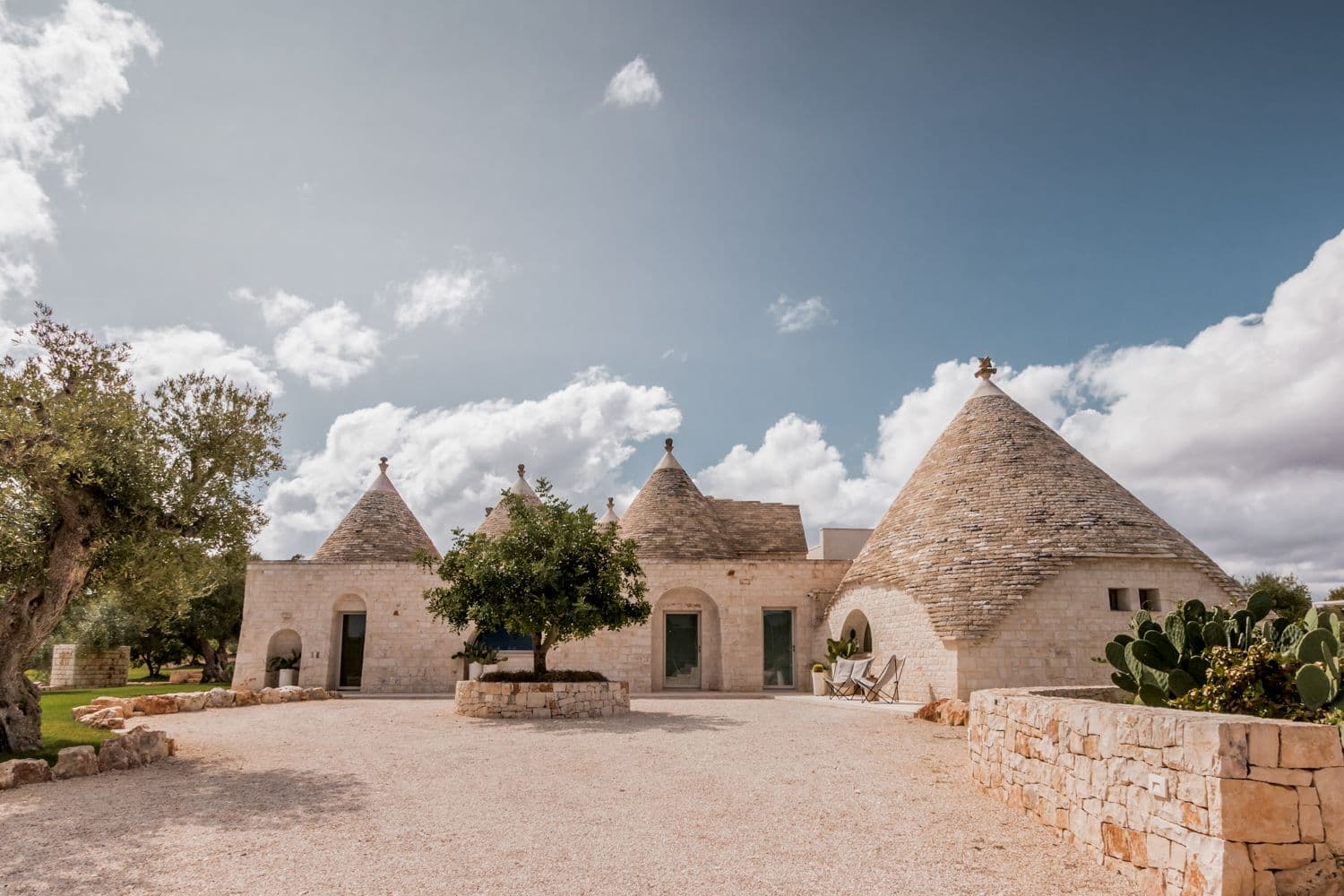
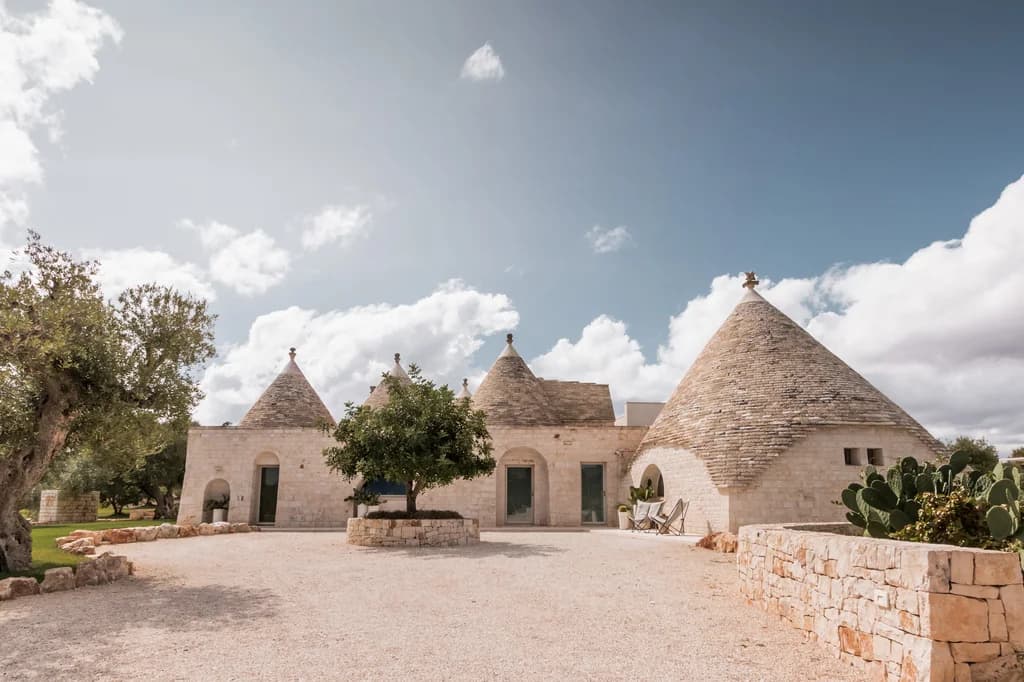
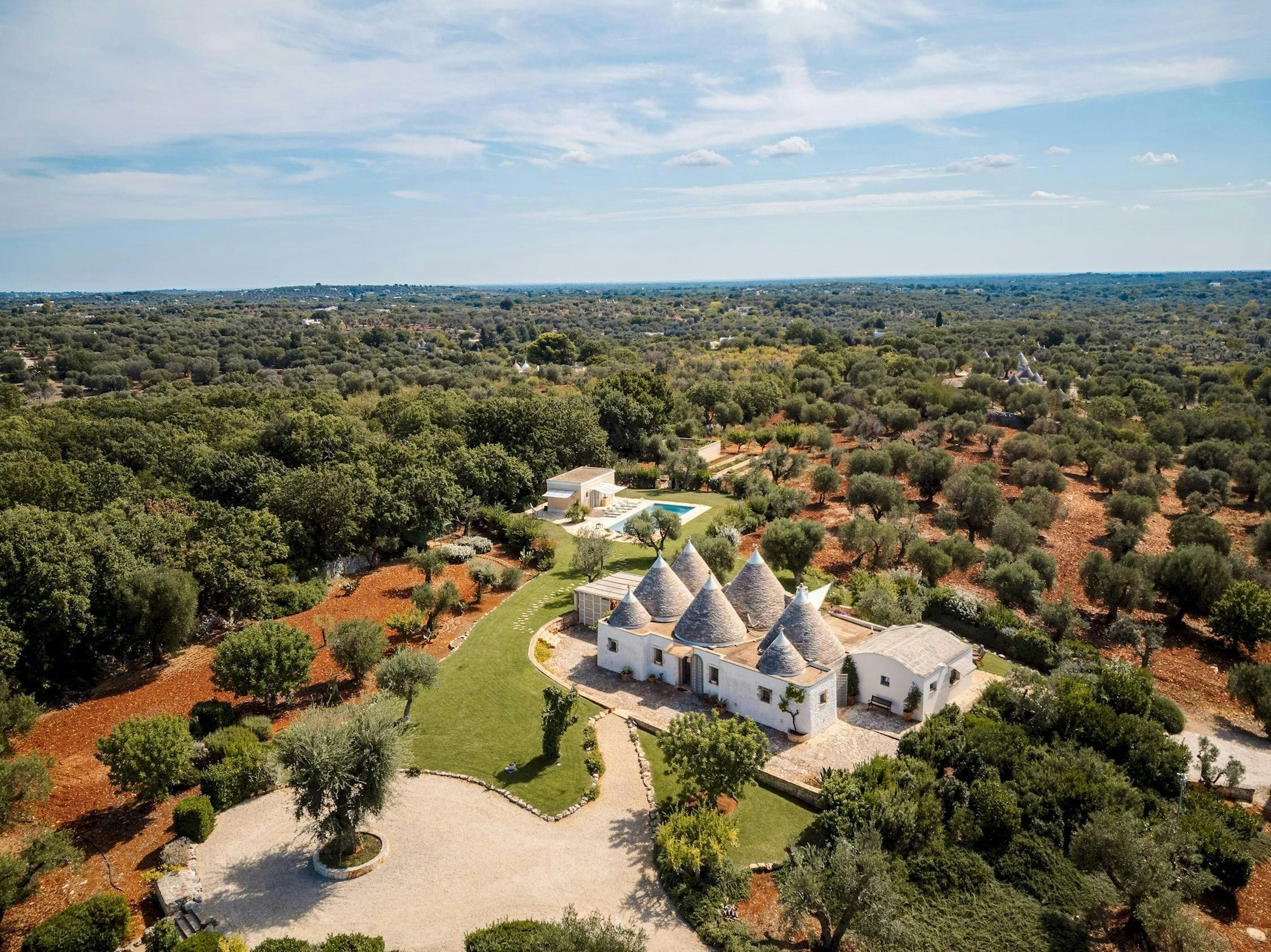
The Valle d'Itria, the undulating limestone plateau between Ostuni, Locorotondo and Martina Franca, is the emotional centre of Puglia's hotel scene. Its white-walled hill towns, dry-stone walls and thousands of conical trulli create a landscape unlike anywhere else in the Mediterranean. Most of the region's best-known masseria properties sit within a 20-to-30-minute drive of one another here, making it an ideal base for first-time visitors.
What defines a masseria puglia stay in this area?
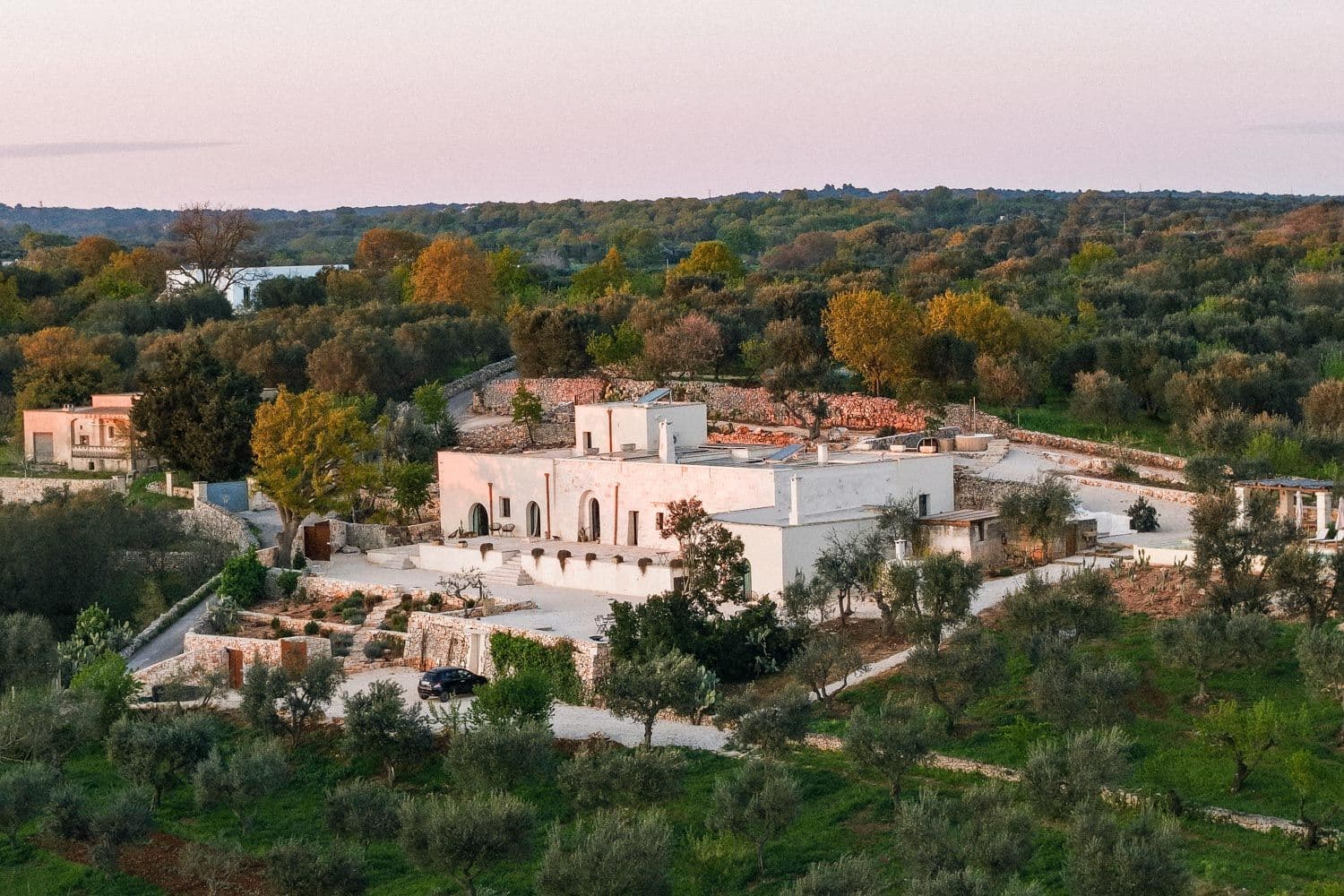
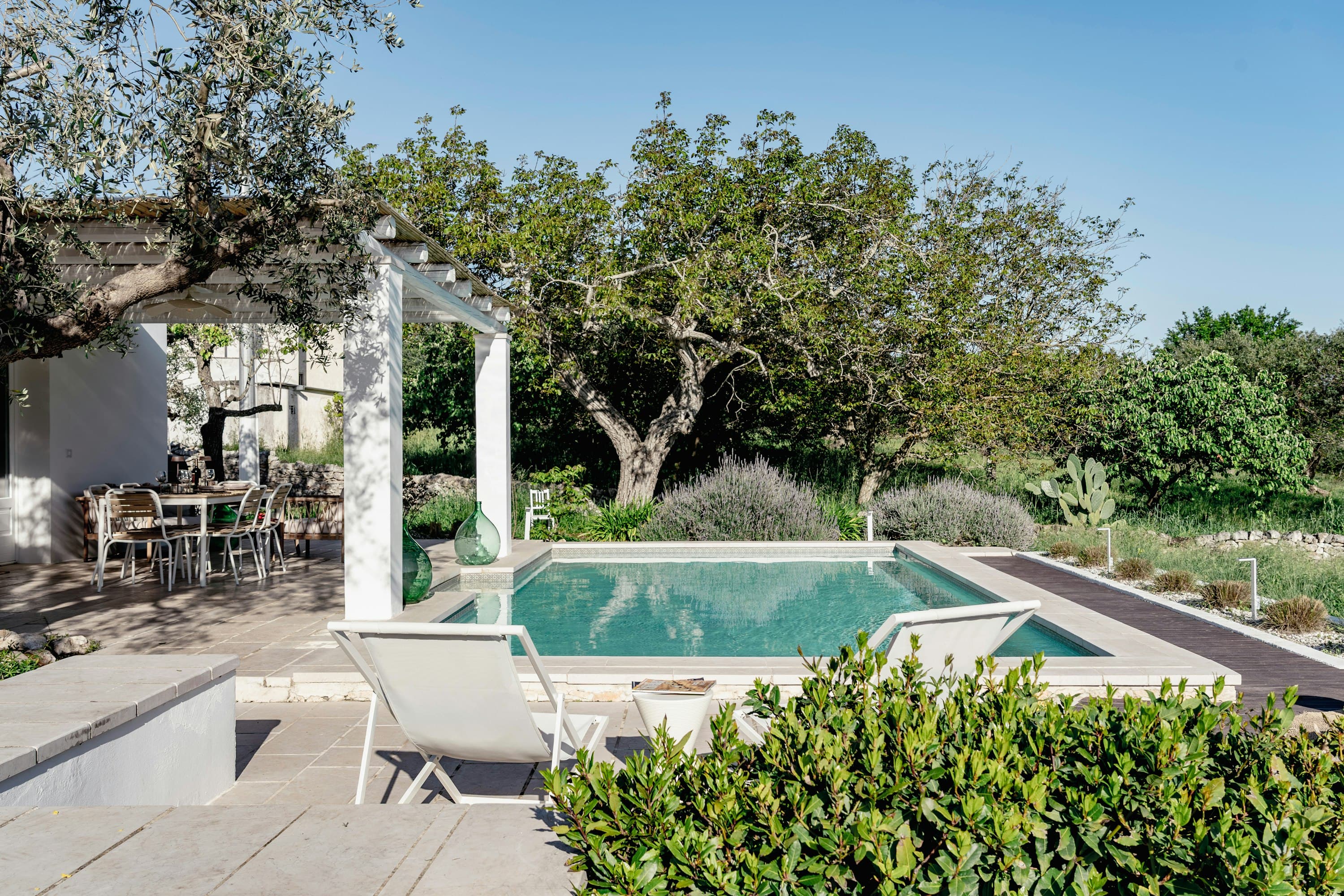
A masseria in the Valle d'Itria typically dates from the 16th to 18th century and was originally built as a working agricultural estate. Today's conversions preserve the heavy stone exteriors, internal courtyards and vaulted ceilings while adding swimming pools, kitchen gardens and spa facilities. Properties like Masseria San Domenico, roughly 8 kilometres from Fasano, and Masseria Torre Maizza nearby set the template for this style of luxury. Rooms tend to be generously sized, with whitewashed walls and antique furnishings that avoid the catalogue feel of chain hotels.
The best masseria puglia properties in this corridor maintain a genuine connection to the land. Several still produce olive oil, and a handful keep small flocks of sheep. Guests who value agricultural atmosphere over contemporary design will find the Valle d'Itria deeply rewarding. Access is straightforward: Bari Karol Wojtyła Airport sits roughly 60 kilometres north, and a hire car will have you among the olive groves in under 90 minutes.
What makes Ostuni's boutique hotel scene distinctive?
Ostuni, known locally as the Città Bianca, rises from the Puglian plain as a chalk-white hilltop settlement visible from kilometres away. Its centro storico is a tight maze of stairways, arched passages and small piazzas, and the accommodation that has emerged within and around these streets carries a particular intimacy. Ostuni boutique hotels tend to be smaller than the surrounding masserie, often with fewer than 15 rooms, and they place you within walking distance of restaurants, markets and the evening passeggiata.
Who do Ostuni boutique hotels suit best?
Couples and small groups who want to explore on foot rather than rely on a hire car for every meal will thrive here. Properties such as La Sommità Relais, set within a 16th-century palazzo in the old town, combine historic architecture with a rooftop restaurant and views across the olive-tree plain to the Adriatic. The scale is human: staff remember your name, the courtyard seats perhaps 20 for dinner, and the town's rhythms become your own.
For those seeking something slightly outside the walls, several converted farmhouses sit within a 5-to-10-minute drive of Ostuni's centre. These properties offer pools and garden space while keeping the town's evening energy within easy reach. We consider this combination of rural calm and walkable culture one of Puglia's great advantages over more remote Tuscan or Umbrian equivalents. Our selection of southern Italy's finest small hotels includes several Ostuni properties worth considering.
Is the Salento peninsula worth the extra drive?
Absolutely, and increasingly so. The Salento, the slender land mass south of a line between Taranto and Brindisi, has a different character from the Valle d'Itria. The landscape flattens, the architecture shifts towards Baroque, and the coastline alternates between low rocky shelves and sandy bays with water that rivals the Greek islands for clarity. Lecce, the Salento's cultural capital, sits roughly 150 kilometres south of Bari and 40 kilometres south of Brindisi Airport.
What kind of luxury boutique hotels puglia travellers find in the Salento?
The Salento's hotel scene skews younger and more design-forward than the Valle d'Itria. In Lecce itself, properties occupy converted convents and aristocratic palazzi, with interiors that mix contemporary Italian design with original frescoed ceilings and stone columns. Patria Palace Hotel, facing the Basilica di Santa Croce, has long been a reliable anchor in the city centre, though newer openings have raised the bar for design.
Outside Lecce, the coastline between Otranto and Gallipoli has attracted a wave of boutique properties. Some occupy former masserie that were too far south to benefit from the first wave of agritourism development. Others are new builds designed to complement the low, sun-baked landscape. The beaches here, particularly around Pescoluse and Porto Selvaggio, are among the finest in mainland Italy. For travellers who have already explored the Valle d'Itria on a previous trip, the Salento represents the natural next step. We cover coastal accommodation in more detail in our guide to Italy's best seaside retreats.
How does the Monopoli and Polignano a Mare coastline compare?
Monopoli and Polignano a Mare sit along Puglia's Adriatic coast, roughly 30 to 50 kilometres south of Bari. This stretch has a grittier, more maritime energy than the pastoral Valle d'Itria just inland. Polignano a Mare is famous for its dramatic sea cliffs and the beach wedged into a cove beneath the old town. Monopoli, less photographed but equally compelling, has a working fishing harbour, a Romanesque cathedral and a growing number of carefully restored townhouse hotels.
What characterises the best boutique hotels in Puglia's coastal towns?
The best boutique hotels in puglia's Adriatic towns tend to be compact conversions of historic townhouses or small palazzi. Room counts rarely exceed 10 or 12, and many incorporate original stone vaulting, iron balconies and terraces with sea views. Don Ferrante in Monopoli, built into the old defensive walls, is a notable example: its rooms look directly over the harbour, and its terrace restaurant serves seafood landed that day.
These towns suit travellers who enjoy a sense of place beyond the hotel grounds. You can walk to dinner, browse a morning market and swim from rocks within a few hundred metres of your room. Bari Airport is only 30 to 45 minutes by hire car, making this coast the most accessible part of Puglia for short breaks of three or four nights. If you appreciate the combination of old-town character and sea proximity, our guide to Mediterranean coastal towns covers similar destinations across southern Europe.
What about the Gargano and northern Puglia?
The Gargano peninsula, the rocky spur that juts into the Adriatic north of Foggia, remains Puglia's least developed area for boutique accommodation. This is not necessarily a disadvantage. The Foresta Umbra, a beech and oak woodland at the peninsula's heart, and the sea stacks of the coast near Vieste and Mattinata create a landscape that feels more Dalmatian than southern Italian.
Are there reliable boutique options in the Gargano?
Accommodation options are fewer and more modest here than in the Valle d'Itria or Salento. A handful of well-run agriturismo properties and small family hotels provide comfortable bases, though travellers accustomed to the polish of a masseria should adjust expectations. The Gargano rewards those who prioritise landscape and solitude. Access requires either a hire car from Bari (approximately two hours) or a flight into Foggia's small airport, which has limited seasonal connections.
For most first-time visitors, we recommend using the Gargano as a two-or-three-night extension to a longer Puglia itinerary rather than a primary base. The coastline between Mattinata and Vieste, best explored by boat, justifies the journey on its own.
When is the best time to visit Puglia?
May to early June and September to mid-October represent the ideal windows. During these months, daytime temperatures sit between 22 and 30 degrees Celsius, the sea is warm enough for swimming from late May onwards, and the crowds of July and August have either not yet arrived or have departed. Hotel rates during these shoulder periods can run 20 to 40 per cent below peak-season prices, and availability at the most sought-after masseria properties improves considerably.
July and August bring heat that regularly exceeds 35 degrees, along with higher prices and busier coastal roads. These months suit travellers who enjoy a full Mediterranean summer atmosphere, but we find the experience more relaxed either side of the peak. Winter, from November to March, is cool and quiet: many rural properties close, but Lecce and Bari remain lively, and truffle and olive-harvest seasons add a culinary dimension that the warmer months lack. Our seasonal travel calendar for Italy provides a month-by-month breakdown across the country.
Spring wildflowers carpet the Valle d'Itria in April and early May, and the almond blossom around Agrigento and across parts of southern Puglia arrives as early as February. Travellers who time a visit for late April will find the landscape at its greenest, the light at its softest and the restaurants beginning to fill with the first seasonal produce.
Frequently asked questions
How do we reach Puglia from the UK?
Bari and Brindisi both receive direct flights from several UK airports, with journey times of approximately two and a half to three hours. Ryanair, British Airways and Wizz Air operate seasonal and year-round routes. Bari is the more practical gateway for the Valle d'Itria and northern Puglia, while Brindisi is closer to Ostuni, the Salento and Lecce. A hire car is essential for exploring masseria properties and rural areas, though Lecce and Bari function well without one.
What is the difference between a masseria and a boutique hotel?
A masseria is a specific building type: a fortified farmhouse or agricultural estate, usually dating from the 15th to 18th century, often surrounded by olive groves or agricultural land. A boutique hotel is a broader category defined by small scale, independent ownership and distinctive design. In Puglia, many luxury boutique hotels puglia travellers seek are in fact converted masserie, but boutique properties also occupy townhouse palazzi, former convents and contemporary new builds. The masseria label implies a rural setting and agricultural heritage; a boutique hotel may sit in the heart of a town.
How many nights do we need for a first visit to Puglia?
We recommend a minimum of five nights for a first visit, which allows two to three nights in the Valle d'Itria or Ostuni area and two nights in either the Salento or the Adriatic coast. Seven to ten nights permit a more thorough exploration, including a day trip to Matera (technically in neighbouring Basilicata, roughly 65 kilometres from the Valle d'Itria) and time to enjoy the slower rhythms that define this region. Shorter breaks of three or four nights work well if focused on a single area such as Monopoli or Lecce.
Is Puglia suitable for families?
Many masseria properties welcome families, and several have made specific provision with children's pools, cooking classes and connected family suites. The Valle d'Itria is particularly well suited to families: the landscape is gentle, the distances between towns are short, and the food culture means even cautious young eaters tend to find something they enjoy. Some of the smaller boutique hotels in Puglia's town centres, particularly those with fewer than eight rooms, cater primarily to couples and may not accept young children. We always recommend confirming a property's family policy before booking.
Do we need a hire car in Puglia?
For any itinerary that includes masseria properties or multiple towns, yes. Public transport links the larger centres, including a reasonable rail connection between Bari, Monopoli and Lecce, but rural accommodation and smaller coastal towns are impractical to reach without a car. Roads are generally well maintained, though signage in the Salento can be inconsistent. Parking in historic town centres such as Ostuni and Locorotondo requires patience during summer months; arriving before mid-morning or after early evening usually resolves this.
What should we budget for a boutique hotel in Puglia?
Rates vary significantly by season and property type. During May, June and September, expect to pay between €180 and €350 per night for a well-regarded boutique hotel in a town such as Ostuni or Lecce. A top-tier masseria with full resort facilities typically ranges from €300 to €700 per night in the same period. July and August premiums can add 30 to 50 per cent. Smaller agriturismo properties and family-run guesthouses provide excellent quality from around €100 to €160 per night, often with breakfast included. Puglia remains notably better value than the Amalfi Coast or the Italian Lakes for comparable levels of comfort and character.